Josephus
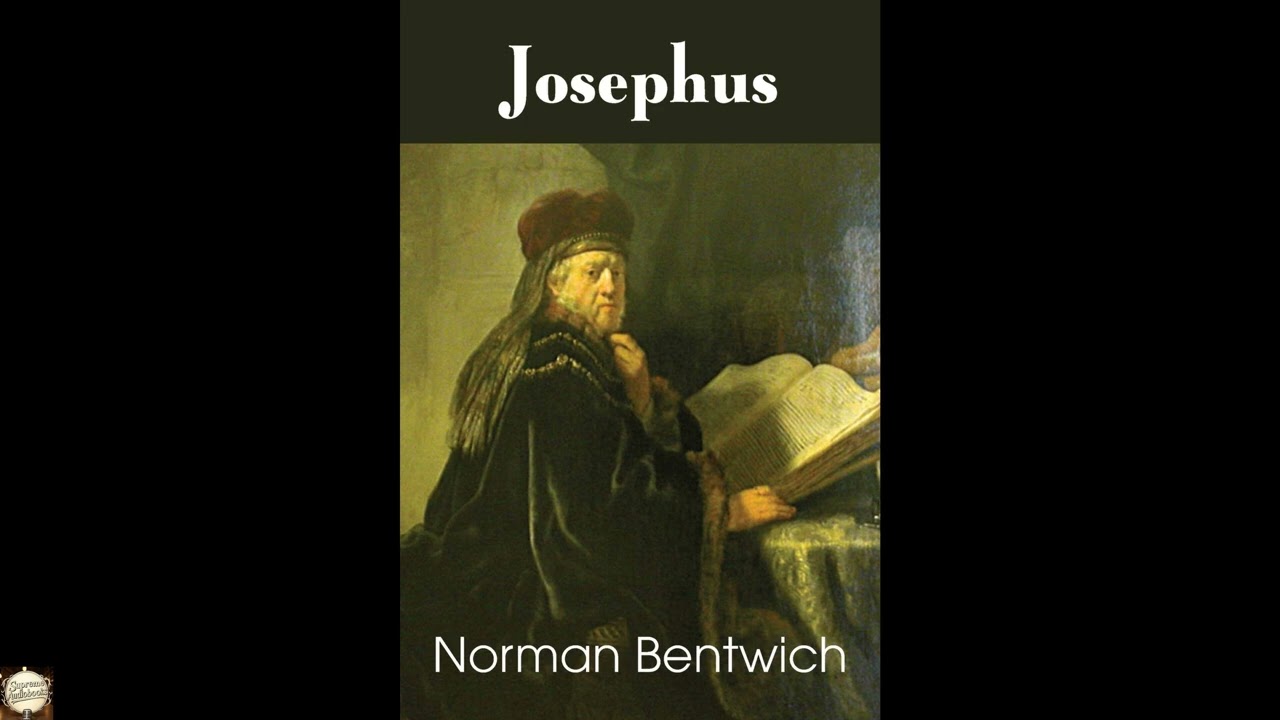
The name Josephus echoes through history, an often-controversial figure whose firsthand accounts remain indispensable for understanding a pivotal period. This audiobook brings to life Norman Bentwich's profound biographical sketch of Flavius Josephus, the first-century Jewish historian whose writings offer an unparalleled, if sometimes problematic, window into the Jewish-Roman War and the destruction of the Second Temple. Why should a listener care about a man born two millennia ago? Because Josephus navigated an impossible ethical landscape, torn between loyalty to his people and the necessity of survival under imperial rule. His struggle with identity, the burden of witnessing catastrophe, and the complex act of writing history from a place of deep personal compromise resonate with profound relevance today, inviting us to consider the pressures faced by individuals caught in the crucible of world-altering events. Bentwich's biography reconstructs the dramatic life of Yosef ben Matityahu, later known as Flavius Josephus, a man of priestly lineage born in Jerusalem around 37 CE. The narrative opens with a picture of Judea, a province simmering with religious fervor and political unrest under the heavy hand of Roman occupation. As a young man, Josephus received a comprehensive education, aligning himself with the Pharisees before taking on significant responsibilities within the Jewish resistance movement. His military acumen saw him appointed a general in Galilee when the Great Revolt against Rome erupted in 66 CE. Bentwich meticulously details the escalating conflict, the fervor of the Jewish rebels, and the overwhelming might of the Roman legions led by Vespasian and later his son Titus. The story follows Josephus through the bitter sieges and desperate battles, culminating in his capture by the Romans. It is at this critical juncture that Josephus's life takes its most famous and contentious turn. Following his capture, he prophesied that Vespasian would become emperor, a prediction that eerily came true. This act, interpreted by some as divine foresight and by others as opportunistic betrayal, earned him the favor of the Roman general and a new name, Flavius Josephus. From then on, he served as an interpreter and advisor to the Romans, a deeply compromised position from which he witnessed the siege and devastating destruction of Jerusalem and its sacred Temple in 70 CE. The biography then shifts to his life in Rome, where, under imperial patronage, he dedicated himself to writing his voluminous works: The Jewish War, Antiquities of the Jews, and Against Apion. These texts, intended partly to explain Jewish history and culture to the Roman world and partly to justify his own actions, form the core of his enduring legacy. Bentwich skillfully navigates the complexity of Josephus's narrative choices, presenting a man who strove to preserve the memory of his people even as he chronicled their defeat and, in some ways, apologized for their resistance. Norman Bentwich, born in London in 1883, was a distinguished figure in British law, academia, and the Zionist movement. His education at Trinity College, Cambridge, laid the groundwork for a prolific career that bridged legal scholarship with a deep commitment to Jewish affairs and international relations. Bentwich’s professional life saw him hold significant posts, notably as the first Attorney General of Mandate Palestine from 1920 to 1931, where he played a crucial role in establishing the legal framework of the nascent administration. His academic pursuits led him to a professorship in International Relations at the Hebrew University of Jerusalem, further cementing his connection to the region and its history. Bentwich authored numerous books throughout his life, many of which focused on international law, the League of Nations, and Jewish history and identity. Works like Palestine (1934), The Mandates System (1930), and biographies of figures such as Judah Magnes and Philo Judaeus, demonstrate his breadth of interest and his unwavering dedication to intellectual inquiry concerning the Jewish people and global governance. He stood as a prominent intellectual voice during a tumultuous century, advocating for justice and peace through his scholarship and public service. His ability to fuse detailed historical analysis with a nuanced understanding of political and ethical dilemmas made him uniquely suited to interpret a figure as complex as Josephus, placing the ancient historian within a wider framework of Jewish survival and identity through the ages. Bentwich died in 1971, leaving behind a substantial body of work that continues to inform discussions on international law, Zionism, and the historical experience of the Jewish people. The life of Josephus, as presented by Bentwich, enacts several profound themes. First, it grapples with the concept of loyalty and betrayal. Josephus's decision to switch sides from Jewish general to Roman chronicler forces listeners to confront the ambiguous line between pragmatism and perfidy. His writings show him constantly justifying his actions, arguing that he foresaw God's will and sought to save what could be saved, an argument that resonates with the dilemma of maintaining identity under duress. Second, the book highlights the power and politics of historical narrative. Josephus was writing for a Roman audience, shaping the story of Jewish resistance and Roman victory. Bentwich’s biography implicitly raises questions about how much of Josephus's account is objective history and how much is self-serving apology or even propaganda. His descriptions of the zealots, for example, often portray them in the worst possible light, a perspective that some scholars argue aimed to distance mainstream Judaism from radical rebellion in the eyes of the empire. A third significant theme is survival and cultural preservation in the face of utter devastation. Josephus, despite his controversial choices, ensured that the history of the First Century Jewish people, their customs, laws, and the catastrophic events that befell them, would not be lost. His voluminous Antiquities of the Jews is an attempt to present the entire scope of Jewish history to a Gentile world, effectively preserving a cultural memory that might otherwise have vanished. This act of documentation, however fraught with personal bias, serves as a testament to the human need to record, to remember, and to explain. Bentwich underscores this monumental achievement, revealing the historian's enduring contribution despite the moral quagmires he navigated. When Norman Bentwich wrote "Josephus" in 1914, Europe stood on the precipice of the First World War. This period was characterized by surging nationalism, profound political instability, and the nascent but rapidly growing Zionist movement. Bentwich, as a British Jew deeply engaged with international law and the future of Palestine, would have viewed Josephus through a lens shaped by these contemporary concerns. The biography emerged during a time when intellectuals were grappling with questions of national identity, the clash of empires, and the role of history in shaping collective consciousness. Josephus's dilemma—caught between a powerful empire and a struggling nation—would have resonated deeply with the political tensions of the early 20th century. Bentwich’s interest in a figure who attempted to bridge cultures and interpret one people to another might have reflected a wider hope for understanding and reconciliation amidst brewing global conflict, or perhaps, an examination of the deep historical roots of Jewish vulnerability and resilience. Listening to Bentwich's "Josephus" as an audiobook offers a singular opportunity to immerse oneself in this pivotal historical narrative without the distractions of print. A skilled narrator can bring clarity to the numerous ancient names, shifting allegiances, and intricate political machinations of the Roman and Judean worlds. The several hours of listening provide ample space for the story to unfold gradually, allowing the nuances of Josephus's character and Bentwich's scholarly perspective to fully register. Listen for the thoughtful pacing that balances historical exposition with the dramatic tension of a life lived on the edge of empires, and for the voice that conveys both the scholarly authority of Bentwich and the underlying human drama of Josephus's choices. The atmosphere created through narration allows the weight of history and the moral complexities of survival to permeate, offering a truly reflective experience.
Enjoyed Josephus? A few ways to support us
Audible & Amazon links are affiliate; we may earn a small commission at no extra cost.
About this production
Human narration by a volunteer reader from LibriVox.org, the public-domain audiobook project. LibriVox volunteers record literary works whose copyright has expired in the United States, releasing the resulting recordings into the public domain.
Josephus by Norman Bentwich. The underlying text is in the U.S. public domain. We do not republish any modern copyrighted edition, translation, or commentary.
The 4K cinematic visuals accompanying this audiobook are generated by an AI image model from prompts derived from the source text. No copyrighted photos, paintings, or stock footage are used. AI generation is disclosed on every video on our YouTube channel as required by YouTube's altered/synthetic content policy.
English subtitles are transcribed from the LibriVox recording with OpenAI Whisper. Translations into the 11 other supported languages are produced by Meta's NLLB-200 neural translation model. No human translator's copyrighted translation is used.
Questions about sourcing or rights? See our DMCA & Sourcing policy or contact us.
Enjoyed this audiobook?
If you'd like to own a copy of Josephus or hear a professionally produced edition, the links below help support free audiobook production at no extra cost to you.
As an Amazon Associate we earn from qualifying purchases. Audible / print links are affiliate.