Joe Wilson and His Mates
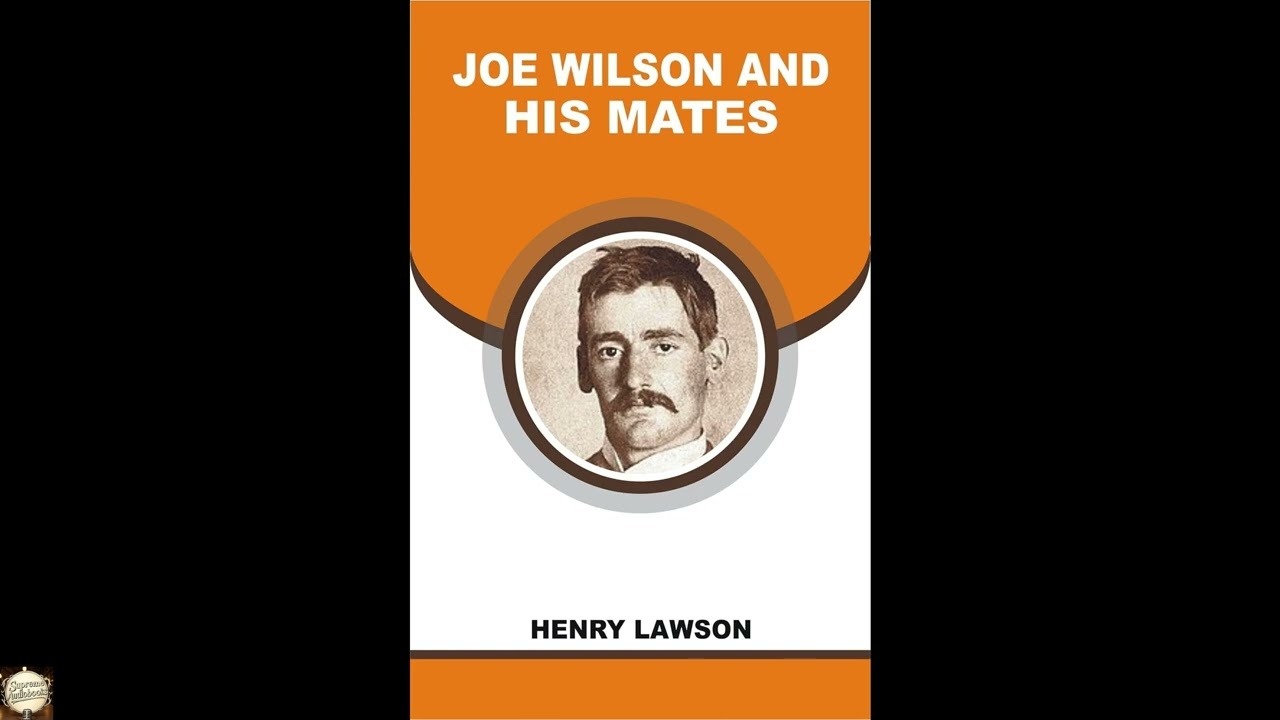
Henry Lawson’s Joe Wilson and His Mates stands as a pivotal collection in the landscape of Australian literature, offering an unvarnished window into the lives of ordinary people battling extraordinary circumstances in the vast, unforgiving bushland. Through the plainspoken, deeply felt recollections of its titular character, listeners are invited to experience a world defined by hardship, resilience, and the quiet dignity of human connection. It’s a book that resonates as powerfully today as it did more than a century ago, revealing universal truths about love, loss, and the unyielding human spirit against the backdrop of a uniquely Australian experience. This is not a tale of grand heroes or dramatic quests, but a series of poignant episodes that celebrate the everyday struggles and small triumphs that truly shape a life, offering a profound sense of recognition for anyone who has ever faced adversity with courage and camaraderie. The narrative centers on Joe Wilson, a quintessential "battler" of the Australian outback, recounting significant moments from his life, particularly his early married years with his wife, Mary. The setting is primarily the sun-baked, dust-choked plains and isolated settlements of rural New South Wales at the turn of the twentieth century. Joe and Mary’s story begins with the hopeful, yet challenging, endeavor of building a home and a future together. They move to a small selection, a piece of land granted for farming, and contend with the relentless forces of nature—drought, floods, and the sheer emptiness of the vast interior. Their initial optimism slowly grinds against the harsh realities of pioneering life, from the constant struggle to make ends meet to the profound isolation that often tested the strongest of wills. Their experiences are peppered with encounters with an array of colorful and often eccentric characters who form Joe's "mates" – fellow bushmen, struggling farmers, itinerant workers, and the occasional wise old timer. These men provide not just companionship but also a vital network of support, sharing what little they have, offering a helping hand, or simply a listening ear around a campfire. The stories follow Joe and Mary as they raise their children, face personal tragedies, and navigate the complex emotional terrain of marriage under immense pressure. It’s an honest portrayal of love—sometimes strained, often silent, but always enduring—and the quiet strength required to sustain a family against the odds. The collection avoids a dramatic climax in favor of presenting life as a series of ongoing challenges and moments of shared humanity, building a portrait of a man coming to terms with his past and present. Henry Lawson, born in 1867 in a tent on the Gulgong goldfields near Grenfell, New South Wales, was the son of a Norwegian sailor-turned-miner, Niels Hertzberg Larsen, and Louisa Lawson, a prominent suffragist, feminist, and publisher. His childhood was marked by poverty, the harsh realities of the Australian bush, and the onset of deafness at age nine, which profoundly affected his social interactions and contributed to a lifelong sense of isolation. Lawson spent much of his early life moving between the bush and Sydney, working various jobs from a coach-painter to a telegraph line worker, experiences that deeply informed his writing. He began contributing verse and stories to The Bulletin, a Sydney-based magazine that championed Australian nationalism and bush literature, quickly establishing himself as a powerful voice for the common Australian. Lawson's career truly blossomed in the 1890s, a period often referred to as the "Bulletin School" of Australian literature. His collections, such as While the Billy Boils (1896) and Joe Wilson and His Mates (1901), cemented his reputation. He traveled widely, even spending time in England, but always returned to Australia, the land that was both his inspiration and his tormentor. Despite his literary success, Lawson struggled with alcoholism and mental health issues throughout his life, often living in poverty and relying on the generosity of friends and patrons. He passed away in 1922, leaving behind a body of work that profoundly shaped the perception of Australian identity, earning him a place as one of the nation's most revered—and often most tragic—literary figures. At its core, Joe Wilson and His Mates enacts the powerful theme of mateship, that uniquely Australian bond of solidarity and mutual support among men facing shared hardships. This is evident in countless small scenes, such as Joe and his friend Bob sharing a scarce meal, offering each other comfort after a setback, or simply providing company in the overwhelming silence of the bush. It's a pragmatic, unspoken loyalty that transcends mere friendship, often proving essential for survival. Hand-in-hand with mateship is the theme of resilience, highlighted by Joe and Mary's constant battle against the elements and economic struggle. We see them, for instance, enduring a prolonged drought that threatens to ruin their livelihood, yet they persist, finding small measures of hope and working tirelessly despite repeated setbacks. Another prominent theme is the ambivalent relationship between humanity and the vast, often indifferent Australian landscape. The bush is depicted not merely as a backdrop but as a powerful, almost sentient force that both sustains and defeats its inhabitants. Lawson’s descriptions convey its stark beauty, its immense scale, and its capacity for cruelty. The isolation imposed by this landscape often gives rise to a profound sense of loneliness, particularly for characters like Mary, who struggles with the lack of female companionship and the crushing weight of domestic duties in a remote setting. Her quiet suffering, her occasional periods of melancholy, and her unwavering devotion to her family against this backdrop of isolation speak volumes about the emotional toll exacted by their harsh existence. The publication of Joe Wilson and His Mates occurred at a significant juncture in Australian history, just as the Commonwealth of Australia was federated in 1901. This era was marked by a surging sense of Australian nationalism, a desire to define a distinctive national identity separate from its British colonial roots. Writers like Lawson, often associated with The Bulletin magazine, played a crucial role in forging this identity by focusing on the "bush legend" – tales of the stoic, resourceful bushman, the camaraderie of mateship, and the unique challenges of life in the outback. These stories helped to create a shared cultural mythology for a nascent nation, contrasting with the more genteel, European-influenced literature that had previously dominated. The book emerged from a period of intense social and political change, reflecting the aspirations and anxieties of a people grappling with their place in the world and striving to articulate their own voice. Listening to Joe Wilson and His Mates as an audiobook offers a singular opportunity to immerse oneself in Lawson's world. The plainspoken, conversational style of his prose, often mirroring the rhythm of bush speech, truly comes alive when read aloud. A skilled narrator can capture the subtle humor, the deep pathos, and the understated courage embedded in Joe Wilson's reflections. The several-hour runtime allows for a sustained engagement with Joe's life story, letting the cumulative effect of his experiences build gradually. Pay attention to the quiet moments, the authentic dialogue, and the evocative descriptions of the Australian landscape—how the narrator's voice can convey the dust in the air, the silence of a vast plain, or the weary camaraderie of men around a fire. The aural experience enhances the intimacy of Joe's storytelling, making his world feel immediate and deeply personal.
Enjoyed Joe Wilson and His Mates? A few ways to support us
Audible & Amazon links are affiliate; we may earn a small commission at no extra cost.
About this production
Human narration by a volunteer reader from LibriVox.org, the public-domain audiobook project. LibriVox volunteers record literary works whose copyright has expired in the United States, releasing the resulting recordings into the public domain.
Joe Wilson and His Mates by Henry Lawson. The underlying text is in the U.S. public domain. We do not republish any modern copyrighted edition, translation, or commentary.
The 4K cinematic visuals accompanying this audiobook are generated by an AI image model from prompts derived from the source text. No copyrighted photos, paintings, or stock footage are used. AI generation is disclosed on every video on our YouTube channel as required by YouTube's altered/synthetic content policy.
English subtitles are transcribed from the LibriVox recording with OpenAI Whisper. Translations into the 11 other supported languages are produced by Meta's NLLB-200 neural translation model. No human translator's copyrighted translation is used.
Questions about sourcing or rights? See our DMCA & Sourcing policy or contact us.
Enjoyed this audiobook?
If you'd like to own a copy of Joe Wilson and His Mates or hear a professionally produced edition, the links below help support free audiobook production at no extra cost to you.
As an Amazon Associate we earn from qualifying purchases. Audible / print links are affiliate.