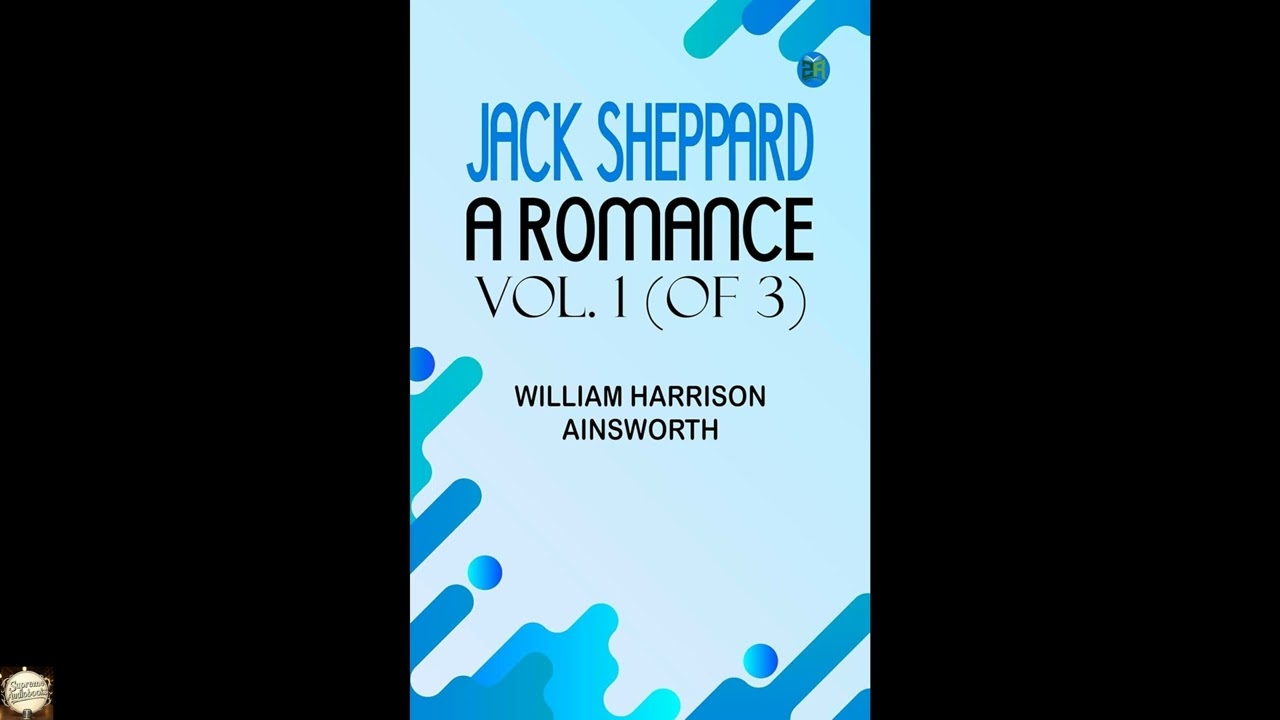
Jack Sheppard: A Romance Vol. 1
Step into the grimy, gaslit alleys of eighteenth-century London, a world where the line between hero and villain blurs, and the hangman’s noose looms large over ambitious spirits. William Harrison Ainsworth’s Jack Sheppard: A Romance Vol. 1 plunges listeners into the sensational life of one of England’s most infamous highwaymen and escape artists. This isn’t simply a historical novel; it’s a vivid, often unsettling examination of social mobility, the making of a criminal legend, and the dark underbelly of a society both fascinated and appalled by its rebellious figures. Even today, the story of Jack Sheppard – a clever, charismatic scoundrel who continually outwitted the law – holds a potent mirror to our own enduring fascination with anti-heroes and the complex forces that shape destiny, making this dramatic account as compelling now as it was at its controversial debut. The story begins in the year 1703, not with Jack Sheppard himself, but with the nefarious "Thief-Taker General" Jonathan Wild, who holds a secret connection to two young boys born that very night. One of these is Jack Sheppard, whose mother, a widowed laundress, lives in grinding poverty in the squalid district of Westminster. The other, Thames Darrell, arrives under mysterious circumstances, apparently of noble birth but cast adrift and placed under the care of Jack's mother. As the boys grow, their paths diverge: Thames, sensitive and studious, is educated by a kind clergyman and destined for a more respectable life, while Jack, quick-witted and restless, is apprenticed to Mr. Wood, a kind-hearted carpenter. Despite his promising trade and the efforts of his mother and Master Wood to keep him on the straight and narrow, Jack's inherent impulsiveness and his association with the dangerous influence of Jonathan Wild draw him towards petty crime. As Jack comes of age, his audacious spirit and natural charm quickly make him a ringleader among the local rogues and street urchins. He falls in with a crew of pickpockets and housebreakers, becoming particularly adept at escaping capture and confinement. His reputation as a wily, defiant figure begins to spread throughout London’s underworld, much to the chagrin of Jonathan Wild, who sees Jack’s independence as both a threat and a potential asset to be exploited. The escalating conflict between the ambitious young criminal and the established, corrupt authority of Wild forms the primary tension as Jack's early adventures unfold, setting the stage for a dramatic showdown between two master manipulators, one fueled by a thirst for freedom, the other by a lust for power and control. William Harrison Ainsworth, born in Manchester in 1805, carved out a significant, if often debated, niche in Victorian literature. The son of a solicitor, Ainsworth initially pursued a career in law before his passion for writing and literature ultimately triumphed. He married Anne Frances Ebers, the daughter of a prominent London publisher, which further cemented his connection to the literary world. Throughout his life, Ainsworth became known for his historical romances, often collaborating with illustrators like George Cruikshank, whose vivid etchings brought his stories to life for a wide readership. Ainsworth edited several influential literary magazines, including Bentley's Miscellany and Ainsworth's Magazine, where he helped publish other notable writers of his time. Though once a close friend of Charles Dickens, their relationship cooled over literary differences and career trajectories. His other celebrated works include Rookwood, The Tower of London, Old St. Paul's, and Windsor Castle, all demonstrating his flair for dramatic storytelling rooted in historical events and settings. While his popularity waned somewhat in later years, Ainsworth remains an important figure for his role in popularizing the historical novel and for his contribution to the "Newgate novel" subgenre, which frequently featured notorious criminals as central figures. He passed away in 1882, leaving behind a body of work that captures the imagination and often the controversies of the Victorian reading public. Ainsworth’s Jack Sheppard enacts several compelling themes that resonate far beyond its historical setting. One prominent theme is the impact of social inequality and the making of a criminal. The novel starkly contrasts Jack’s impoverished upbringing with the more privileged circumstances of Thames Darrell, suggesting how environment and lack of opportunity can propel individuals towards a life of crime. Jack's initial petty thefts, for example, are often born of mischief and a desire for excitement, but they quickly escalate as he becomes entangled in a system that offers little upward mobility to those from his background, showing how societal structures can effectively funnel individuals into illicit careers. Another powerful theme is the nature of rebellion against authority, particularly as personified by Jack's repeated escapes from various prisons and the clutches of Jonathan Wild. Jack’s acts are not just criminal; they are a defiant challenge to the established order, an assertion of individual freedom against oppressive forces. Each escape, whether from St. Giles' Roundhouse or Newgate Prison, becomes a symbolic victory, transforming him from a mere thief into a folk hero who embodies the spirit of resistance. This constant struggle against capture highlights a third theme: the ambiguity of morality, where the notorious criminal often appears more sympathetic and admirable than the corrupt officials and power brokers who seek to control him. Jack Sheppard emerged in 1839, a time of profound social change and literary ferment in England. This period, the early years of Queen Victoria’s reign, saw a burgeoning fascination with crime and justice, fueled by public executions and newspaper reports that chronicled the lives of notorious figures. The novel was part of a controversial literary trend known as the "Newgate novel," which drew inspiration from the historical "Newgate Calendar" – a record of the lives and crimes of prisoners at London's infamous Newgate Prison. Authors like Ainsworth and Edward Bulwer-Lytton (with his Paul Clifford) were criticized for seemingly glamorizing criminals and presenting them in a sympathetic light, leading to considerable moral outcry and debate in the press. This literary movement, to which Jack Sheppard was a central contribution, reflected a broader societal conversation about the causes of crime, the harshness of the penal system, and the romantic appeal of individuals who defied social norms. While some viewed these novels as dangerous incitements to lawlessness, others saw them as powerful critiques of a society that created its own monsters through poverty and injustice. Ainsworth, like his contemporary Charles Dickens (whose Oliver Twist also touched on similar themes), capitalized on the public's thirst for dramatic narratives steeped in the history and underworld of London, creating a sensational account that became an instant bestseller despite—or perhaps because of—its controversy. Listening to Jack Sheppard: A Romance Vol. 1 as an audiobook transforms the historical novel into an immediate, breathing experience. The narrator's performance brings out the rapid-fire dialogue and the distinct voices of London's varied inhabitants, from the street-smart slang of Jack and his gang to the cunning pronouncements of Jonathan Wild, and the more refined tones of Thames Darrell. The "several hours" run length allows for a deliberate pacing, allowing listeners to fully immerse themselves in the intricate details of Ainsworth’s Georgian London, savoring the suspense of each escape attempt and the tension of every confrontation. An accomplished reader can effectively convey the shifting atmosphere, from the squalor of the rookeries to the more respectable (though still morally compromised) establishments, ensuring that the listener isn't merely following a plot but truly inhabiting a vivid, dangerous world where every choice has dire consequences.
Enjoyed Jack Sheppard: A Romance Vol. 1? A few ways to support us
Audible & Amazon links are affiliate; we may earn a small commission at no extra cost.
About this production
Human narration by a volunteer reader from LibriVox.org, the public-domain audiobook project. LibriVox volunteers record literary works whose copyright has expired in the United States, releasing the resulting recordings into the public domain.
Jack Sheppard: A Romance Vol. 1 by William Harrison Ainsworth. The underlying text is in the U.S. public domain. We do not republish any modern copyrighted edition, translation, or commentary.
The 4K cinematic visuals accompanying this audiobook are generated by an AI image model from prompts derived from the source text. No copyrighted photos, paintings, or stock footage are used. AI generation is disclosed on every video on our YouTube channel as required by YouTube's altered/synthetic content policy.
English subtitles are transcribed from the LibriVox recording with OpenAI Whisper. Translations into the 11 other supported languages are produced by Meta's NLLB-200 neural translation model. No human translator's copyrighted translation is used.
Questions about sourcing or rights? See our DMCA & Sourcing policy or contact us.
Enjoyed this audiobook?
If you'd like to own a copy of Jack Sheppard: A Romance Vol. 1 or hear a professionally produced edition, the links below help support free audiobook production at no extra cost to you.
As an Amazon Associate we earn from qualifying purchases. Audible / print links are affiliate.