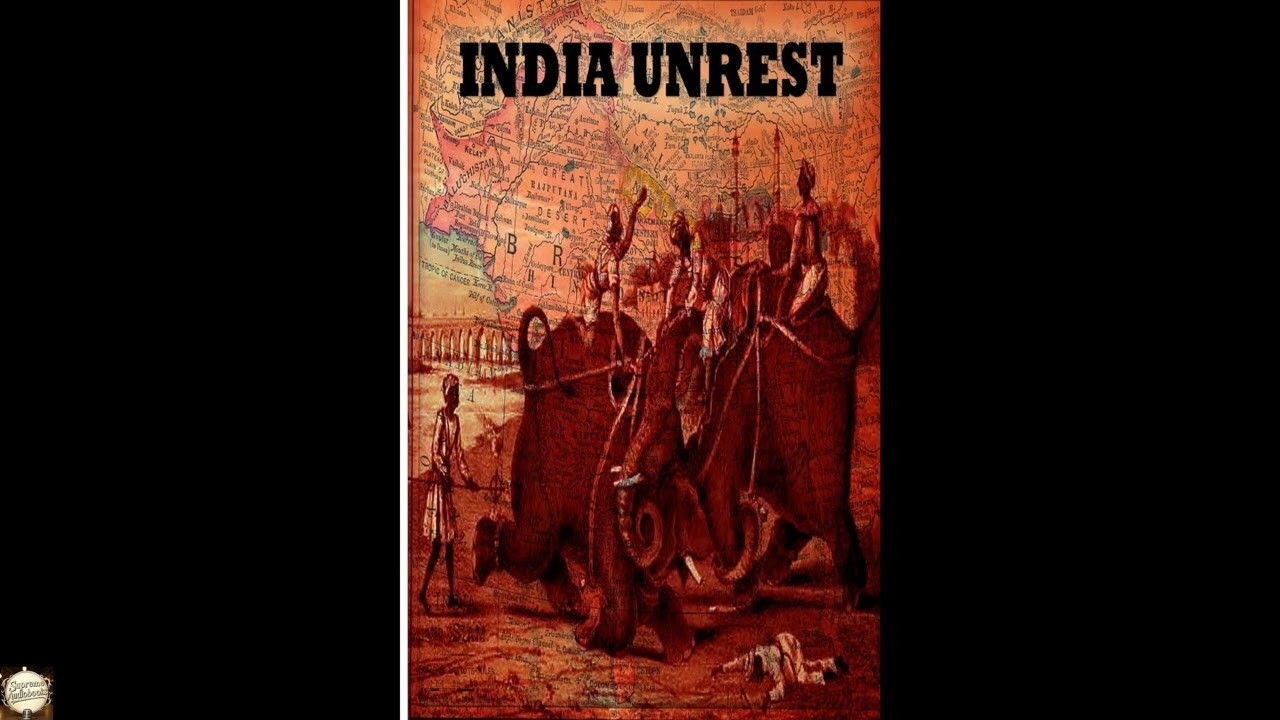
Indian Unrest
Valentine Chirol's Indian Unrest stands as a pivotal historical document, a sweeping assessment of the political and social ferment gripping India at the dawn of the twentieth century under the considerable weight of British rule. This is not a fictional tale, but rather a sharp, incisive examination of a colonial empire grappling with the stirrings of national identity and dissent. For today's listener, the book offers more than just a window into the past; it provides essential context for understanding the complex origins of modern India, the enduring legacy of colonialism, and the dynamics of political awakening that continue to shape nations across the globe. It reveals the challenges inherent in governing diverse populations, the friction between imperial power and local aspirations, and the powerful, sometimes destructive, force of burgeoning nationalism, making it an urgent and relevant listen for anyone interested in global affairs or the history of resistance. Chirol's analysis unfolds in the crucible of early 20th-century India, a period often remembered as the zenith of the British Raj, yet simultaneously a time of escalating tension and opposition. The setting is less a fixed backdrop and more an active participant: the sprawling subcontinent, with its myriad languages, religions, and social structures, all subjected to a centralized, foreign administration. The "characters" in this profound real-life drama are the diverse factions operating within this complex political landscape: the British civil servants and military officers striving to maintain order and control, the prominent Indian thinkers and political activists advocating for greater self-rule, the leaders of various religious communities—Hindu and Muslim—each navigating their own communal interests, and the vast, often voiceless, rural population caught between these powerful forces. The central conflict animating Chirol's detailed reporting is the intensifying struggle between the British imperial project, driven by notions of paternalistic governance and economic extraction, and the rapidly coalescing Indian nationalist movement, demanding autonomy and a voice in their own destiny. Chirol meticulously investigates the myriad causes and manifestations of this "unrest," from the administrative policies imposed by the British to the economic conditions that fueled discontent, from the rising tide of religious revivalism among both Hindus and Muslims to the transformative impact of Western education. He traces the emergence of political organizations, records specific instances of protest and public agitation, and scrutinizes the legislative responses attempted by the British to quell the rising tide of disaffection. The narrative arc, therefore, is not a personal journey of a fictional protagonist, but rather the unfolding story of a nation's awakening, presented as a series of interconnected events and intellectual debates, laying bare the profound and often irreconcilable differences that defined a critical historical juncture, without presuming to predict the ultimate resolution of India's future. Valentine Chirol, born in Berlin in 1857 to British parents and educated across Europe, carved out a distinguished career as a journalist, editor, and foreign correspondent, becoming one of the most influential commentators on global affairs of his era. His early career included stints in the diplomatic service, which provided him with invaluable insights into the workings of international relations and government. He joined The Times newspaper in 1892, rapidly rising through its ranks to become its foreign editor in 1899, a position he held for over a decade. This role afforded him extensive opportunities for travel, particularly in the Middle East and India, where his on-the-ground observations informed his influential dispatches and later, his books. Chirol was knighted in 1912, a recognition of his significant contributions to public discourse and his role in shaping British foreign policy thinking. Beyond Indian Unrest, Chirol penned several other notable works that cemented his reputation as a keen observer of imperial politics. These include The Middle Eastern Question (1903), a foundational text for understanding the geopolitical complexities of that region, and Indian Old and New (1921), a later reflection on the changes he had witnessed in India. His autobiography, Fifty Years in a Changing World (1927), offers a personal perspective on a period of immense global transformation. While not associated with a specific literary movement in the fictional sense, Chirol's place in the canon is as a preeminent figure in political journalism and imperial commentary, whose writings provided essential, albeit often distinctly British-centric, analyses of geopolitical situations. His detailed reports and carefully reasoned arguments remain indispensable for anyone seeking to understand the intellectual currents and policy debates that characterized the British Empire in its later stages. The book powerfully illustrates several core themes that resonate far beyond the specific historical moment. Foremost among these is Imperialism and Resistance, a constant tension between the colonizer's perceived right to rule and the colonized people's increasingly vocal demand for self-determination. Chirol meticulously details the various legislative acts and administrative reforms proposed by the British — often intended as concessions or improvements — and contrasts them with the diverse Indian responses, ranging from cautious acceptance to outright rejection and widespread protest. For instance, he details how even attempts at limited self-governance, like the Morley-Minto Reforms, were met with frustration by Indian nationalists who viewed them as insufficient and symbolic rather than substantive steps towards true autonomy, exposing the fundamental gap between imperial intention and nationalist aspiration. Another prominent theme is Cultural Clashes and Misunderstandings, highlighting the profound disconnect between British and Indian worldviews that often bred mutual suspicion and resentment. Chirol offers observations on how British legal and administrative systems, imposed with a view toward efficiency and universal principles, often disrupted traditional Indian social structures and cultural practices, sometimes inadvertently fueling opposition. He also notes how religious revivalism within India, seen by many Indians as a spiritual and cultural resurgence, was frequently interpreted by British authorities as a dangerous form of sedition or an obstacle to modernization. Furthermore, Chirol underscores The Role of Education and Intellectuals in shaping the unrest, showing how Western education, introduced by the British, ironically served to introduce Indian minds to concepts of liberty, self-governance, and national identity, thus inadvertently arming them with the intellectual tools to challenge colonial rule. He points out the emergence of Indian-language newspapers and nationalist pamphlets, directly fueled by increased literacy and political awareness among the educated populace, acting as powerful agents of change. The book also touches upon the Internal Divisions within India itself, grappling with the complexities of Hindu-Muslim relations, caste issues, and regional loyalties that complicated the idea of a unified Indian nation, a challenge Chirol often frames from a British perspective as a justification for continued imperial presence. Indian Unrest was published in 1910, emerging at a critical juncture in both British imperial history and India's path towards self-determination. Politically, the British Empire was at its global zenith, yet signs of internal strain were becoming undeniable. The partition of Bengal in 1905 had ignited widespread and often violent protest across India, galvanizing nationalist sentiment under leaders like Bal Gangadhar Tilak. The British government, under Liberal ministries, was attempting to balance imperial control with limited reforms, such as the Morley-Minto Reforms of 1909, which sought to expand Indian representation in legislative councils. Culturally, there was an intense debate within Britain about the nature and future of empire, with a persistent belief in the "White Man's Burden" coexisting uneasily with growing awareness of colonial abuses and the costs of maintaining control. In India, a burgeoning cultural renaissance was coinciding with political awakening, giving rise to new forms of artistic expression and intellectual thought. The work emerged precisely because the British government and public could no longer ignore the escalating instability in India. Chirol, with his extensive access to officials and his journalistic acumen, was uniquely positioned to provide a comprehensive, albeit undeniably British-centric, analysis for an audience wrestling with the future of their "jewel in the crown." His insights were intended to inform policy and shape public opinion back in Britain, making the book a direct response to tangible signs of dissent that demanded serious consideration and explanation. It chronicled a changing reality that challenged existing imperial assumptions. Listening to Indian Unrest as an audiobook offers a compelling way to engage with this foundational historical text. A thoughtful, measured narration brings clarity to Chirol's complex historical and political arguments, allowing the listener to absorb the intricate details and perspectives at their own pace. With a run length of several hours, it is perfectly suited for extended periods of focused listening, whether during commutes, while attending to daily tasks, or during dedicated study sessions. As you listen, pay attention to the nuances in Chirol's own perspective – his attempts at journalistic objectivity alongside the inherent biases of his time and position. The narrator's voice can convey the gravity of the issues, allowing the atmosphere of a colonial report to become immediately accessible. This allows the listener to better appreciate how Chirol structures his arguments, the evidence he presents, and the way he interprets events, all contributing to a richer understanding of a pivotal moment in global history.
Enjoyed Indian Unrest? A few ways to support us
Audible & Amazon links are affiliate; we may earn a small commission at no extra cost.
About this production
Human narration by a volunteer reader from LibriVox.org, the public-domain audiobook project. LibriVox volunteers record literary works whose copyright has expired in the United States, releasing the resulting recordings into the public domain.
Indian Unrest by Valentine Chirol. The underlying text is in the U.S. public domain. We do not republish any modern copyrighted edition, translation, or commentary.
The 4K cinematic visuals accompanying this audiobook are generated by an AI image model from prompts derived from the source text. No copyrighted photos, paintings, or stock footage are used. AI generation is disclosed on every video on our YouTube channel as required by YouTube's altered/synthetic content policy.
English subtitles are transcribed from the LibriVox recording with OpenAI Whisper. Translations into the 11 other supported languages are produced by Meta's NLLB-200 neural translation model. No human translator's copyrighted translation is used.
Questions about sourcing or rights? See our DMCA & Sourcing policy or contact us.
View 10 famous quotes from this book →
Enjoyed this audiobook?
If you'd like to own a copy of Indian Unrest or hear a professionally produced edition, the links below help support free audiobook production at no extra cost to you.
As an Amazon Associate we earn from qualifying purchases. Audible / print links are affiliate.