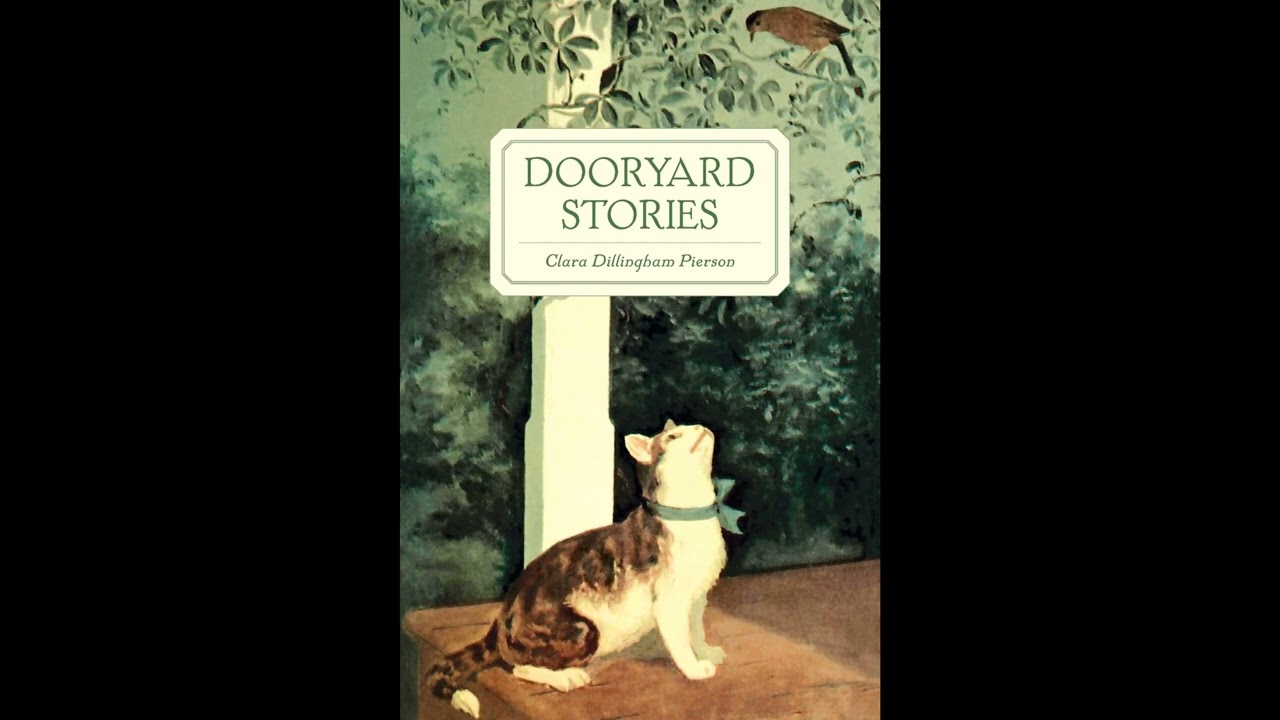
Dooryard Stories
Step into a world often overlooked, a realm bustling with drama, humor, and gentle wisdom, all unfolding just beyond your threshold. Clara Dillingham Pierson's Dooryard Stories invites listeners to rediscover the wonder in the everyday, transforming the familiar stretch of garden, fence line, and porch into a stage for remarkable lives. These are not grand epics but intimate tales, each a finely wrought miniature that brings the hidden lives of small creatures into vivid focus. Why should these simple narratives resonate with us today? Because in a world often loud and overwhelming, Dooryard Stories offers a quiet refuge, reminding us to slow down, observe the subtle miracles around us, and find profound lessons in the humble lives of a toad, a bee, or a busy ant. This collection serves as a delightful antidote to distraction, rekindling a sense of childlike curiosity about the natural world that surrounds us all. The setting for these narratives is precisely what the title suggests: the dooryard. This encompasses the patch of grass, the dusty path, the flower beds, and the overgrown corners adjacent to a human dwelling. Within this confined yet infinitely detailed landscape, Pierson introduces a cast of characters who are the true inhabitants of this tiny kingdom. A diligent beetle, a chatty robin, a self-important grasshopper, a family of bustling ants, and a philosophical old toad are just a few of the personalities listeners will meet. Each story typically centers on one or a small group of these creatures, observing their daily routines, their interactions with their neighbors, and the small challenges they face in their quest for sustenance, shelter, or simply to understand their place in the world. The arc of Dooryard Stories is episodic, with each tale presenting a self-contained vignette. There isn't a single overarching conflict or a continuous plotline spanning the entire collection. Instead, the narrative tension arises from the miniature dramas of survival and coexistence: the ant who learns cooperation, the butterfly’s fleeting but beautiful existence, the squirrel’s industrious preparations for winter, or the frog’s patient wait by the pond. These stories gently illustrate the cycle of life, the natural order of things, and the quiet struggles and triumphs that fill the lives of creatures often dismissed as insignificant. Listeners will find themselves drawn into the intricate web of relationships, understanding the motivations and perspectives of a world that, while small, is every bit as complex and meaningful as our own. The beauty lies in the observation, the careful rendering of natural behaviors imbued with a touch of anthropomorphic charm, making these animal characters surprisingly relatable without diminishing their essential wildness. Clara Dillingham Pierson was an American author who made her distinctive mark on children's literature during a period of expanding interest in nature and outdoor life. Born in the latter half of the nineteenth century, Pierson's quiet but keen observational skills were clearly honed in settings that allowed for close communion with the natural world. While specific details of her early life are not widely known, her writing suggests an upbringing or lifestyle that fostered a deep appreciation for the creatures and plants inhabiting the immediate vicinity of a home. She seems to have possessed a remarkable ability to see the inherent drama and personality in the seemingly mundane activities of insects, birds, and small mammals. Pierson’s approach aligned with a growing movement to connect children with nature through engaging, accessible narratives. Her literary output extended beyond Dooryard Stories, with other well-loved collections such as Among the Meadow People, Among the Farmyard People, and Among the Forest People. These titles reflect her consistent focus on specific natural environments and the creatures dwelling within them, cementing her reputation as a leading voice in anthropomorphic nature tales for young readers. Her work occupies a cherished corner of the early children's literature canon, recognized for its gentle moralizing and its capacity to cultivate a sense of wonder and respect for the environment. She represents a strand of authors who, at the turn of the twentieth century, sought to educate as much as to entertain, offering children a window into worlds just beyond their own perception. Beyond their endearing characters and engaging plots, Dooryard Stories enacts several profound themes. One primary theme is the interconnectedness of nature. The stories consistently show how the actions of one creature, no matter how small, can affect others in the dooryard ecosystem. For instance, the diligent beetle’s efforts to clean up stray seeds might provide sustenance for an ant colony, or the robin’s success in finding worms directly influences the growth of its nestlings. Another central theme is the beauty and wonder in the everyday. Pierson encourages us to look closer at the familiar world, transforming a common weed into a vital shelter or a puddle into a bustling metropolis for tiny aquatic life. The intricate architecture of a spider’s web, a beetle’s determined tunneling, or a bee’s tireless work are presented as small marvels, inviting readers to share in the author’s appreciative gaze. The collection also subtly instills moral lessons and character building. While never heavy-handed, many stories feature characters who learn from their mistakes or demonstrate virtues like perseverance, kindness, and humility. A boastful grasshopper might find itself humbled, while a cooperative ant reaps the rewards of working together. These narratives gently guide young listeners toward understanding positive social behaviors through the allegorical actions of the animal characters. Finally, the act of writing and reading Dooryard Stories itself promotes observation and curiosity. Pierson's detailed descriptions and empathetic portrayals directly encourage listeners to adopt a similar attentive stance towards their own surroundings, fostering a deeper appreciation for the natural world and a habit of careful inquiry. The emergence of Dooryard Stories can be understood within the broader cultural and literary context of the late nineteenth and early twentieth centuries. This period saw a significant rise in public interest in nature studies, particularly for children. As urbanization and industrialization expanded, there was a concerted effort to maintain a connection to rural values and the natural world, often viewed as essential for moral development and character formation. Educators and authors alike championed "nature study" as a vital component of a child's education, encouraging direct observation and hands-on engagement with the environment. Authors like Pierson, along with contemporaries such as John Burroughs and Ernest Thompson Seton, though working in slightly different styles, contributed to this flourishing genre. While some nature writers focused on wilder, more dramatic landscapes, Pierson chose the accessible, familiar world of the dooryard, making nature study approachable for even the youngest audiences. Her work represents a gentle, didactic strain within this movement, aiming to cultivate empathy, scientific curiosity, and a sense of stewardship toward the living world, against a backdrop of societal change that increasingly moved people away from direct contact with nature. It was a time when stories could bridge the gap between burgeoning urban life and the enduring appeal of the natural world. Listening to Dooryard Stories as an audiobook offers a particularly immersive and soothing experience. The "several hours" run length makes it perfect for a series of quiet moments – perhaps during a leisurely afternoon, as a calming presence during bedtime routines, or even while taking a stroll through a park or garden, inviting you to observe your own "dooryard" with fresh eyes. A skilled narrator brings each creature's distinct personality to life, lending a gentle, perhaps slightly whimsical voice to the industrious ant, the ponderous toad, or the chirpy robin. Listen for the unhurried pacing that matches the natural rhythm of the stories, allowing the listener to truly savor the detailed descriptions and subtle humor. The narration creates an atmosphere of quiet wonder, drawing you into these miniature worlds with warmth and charm. It transforms reading into a shared experience, making the delicate wisdom of Clara Dillingham Pierson's observations even more immediate and resonant for listeners of all ages.
Enjoyed Dooryard Stories? A few ways to support us
Audible & Amazon links are affiliate; we may earn a small commission at no extra cost.
About this production
Human narration by a volunteer reader from LibriVox.org, the public-domain audiobook project. LibriVox volunteers record literary works whose copyright has expired in the United States, releasing the resulting recordings into the public domain.
Dooryard Stories by Clara Dillingham Pierson. The underlying text is in the U.S. public domain. We do not republish any modern copyrighted edition, translation, or commentary.
The 4K cinematic visuals accompanying this audiobook are generated by an AI image model from prompts derived from the source text. No copyrighted photos, paintings, or stock footage are used. AI generation is disclosed on every video on our YouTube channel as required by YouTube's altered/synthetic content policy.
English subtitles are transcribed from the LibriVox recording with OpenAI Whisper. Translations into the 11 other supported languages are produced by Meta's NLLB-200 neural translation model. No human translator's copyrighted translation is used.
Questions about sourcing or rights? See our DMCA & Sourcing policy or contact us.
Enjoyed this audiobook?
If you'd like to own a copy of Dooryard Stories or hear a professionally produced edition, the links below help support free audiobook production at no extra cost to you.
As an Amazon Associate we earn from qualifying purchases. Audible / print links are affiliate.