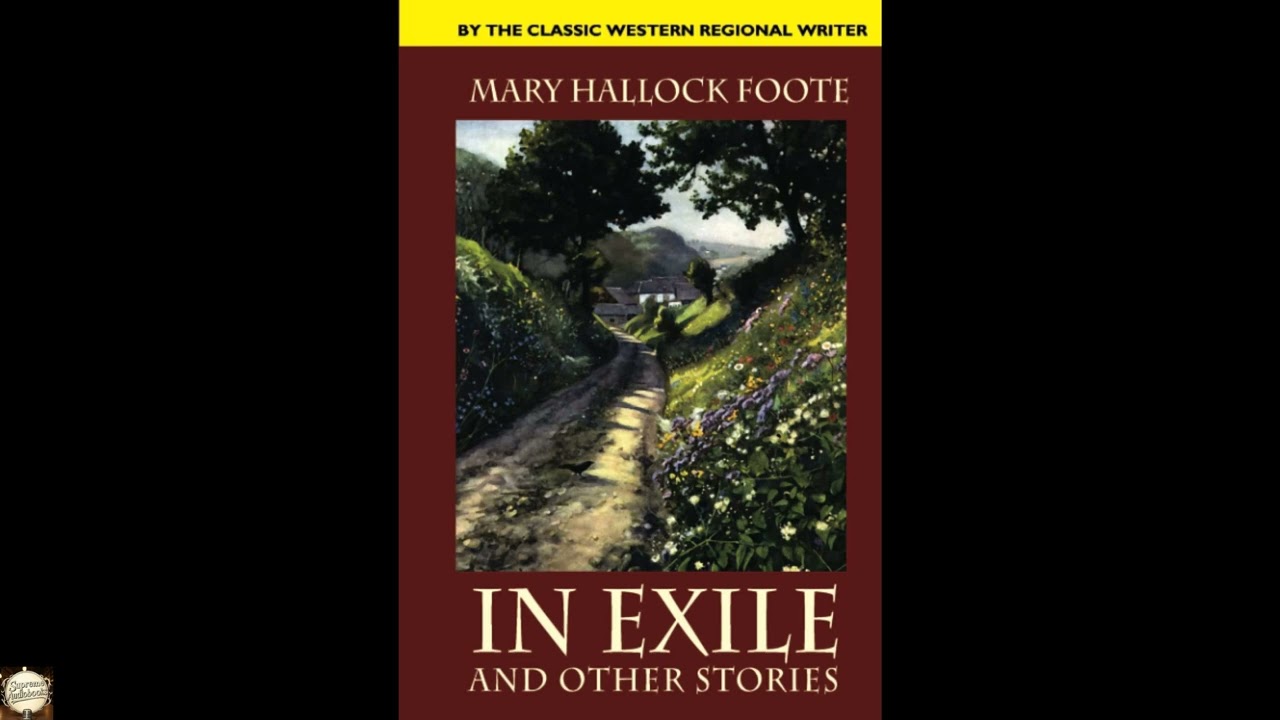
In Exile and Other Stories
In the shifting landscape of American literature, some voices offer not just stories, but genuine windows into a bygone era, providing perspectives often overlooked in the grand narratives of history. Mary Hallock Foote’s collection, In Exile and Other Stories, stands as a powerful example, presenting a series of narratives that transport the listener to the raw, untamed, and often unforgiving American West of the late nineteenth and early twentieth centuries. This is literature that speaks to the heart of what it means to seek a new life, to confront isolation, and to forge a home in places where civilization is still a fragile concept. For anyone seeking to understand the quiet heroism of ordinary people facing extraordinary circumstances, or to experience the stark beauty and harsh realities of a pivotal period in American expansion, these stories offer compelling insights that resonate deeply even today. The stories in this collection primarily unfold amidst the arid expanses and rugged mountains of the American West, frequently centered around the burgeoning industrial projects of the time: mining camps, irrigation efforts, and isolated engineering outposts. We meet characters from varied backgrounds, but often they are Easterners transplanted into this challenging environment—engineers and their cultured wives, settlers hoping for a new start, or individuals escaping past failures. The titular story, "In Exile," exemplifies this dynamic, introducing us to a woman who finds herself adrift and disoriented in a remote Western setting, far from the social structures and comforts of her previous life. Her struggle is not merely with the physical harshness of the land, but with an intense sense of psychological displacement and the constant effort required to maintain her identity and dignity. Throughout the collection, Foote masterfully sketches the central conflicts that define life on the frontier: the relentless battle against nature’s indifference, the often-fraught relationships between the newcomers and the established inhabitants, and the profound internal struggles of individuals grappling with loneliness, ambition, and adaptation. We witness the quiet determination of women creating homes in tents or rough cabins, the professional pressures faced by men building railroads or extracting resources, and the subtle yet potent social dynamics that arise in small, isolated communities. Each narrative, while distinct, contributes to a larger picture of human resilience and the often-unseen sacrifices made in the pursuit of progress and stability in a wild land. Mary Hallock Foote, born in Milton, New York, in 1847, lived a life that would become inextricably linked with the very landscapes she depicted in her writing and illustrations. A student at the Cooper Union School of Design for Women in New York City, she initially gained recognition as an accomplished illustrator. Her life took a decisive turn when she married Arthur De Wint Foote, a mining engineer, in 1876. This marriage became the catalyst for her relocation to various remote engineering and mining camps across the American West, including sites in California, Colorado, Idaho, and even Mexico. Her experiences living in these challenging, often desolate environments, far from the cultural centers of the East, profoundly shaped her artistic output. Her unique perspective—that of an educated woman observing the frontier not as a transient visitor, but as a long-term resident immersed in its daily realities—set her apart from many of her male contemporaries. She became a keen observer of the domestic sphere within these rugged settings, chronicling the emotional toll and practical ingenuity required of women establishing homes in such conditions. Her illustrations, often accompanying her own stories and those of other authors, helped define the visual aesthetic of the American West for many readers of popular magazines like Scribner's Monthly and The Century Magazine. Her later life saw her recognized as a significant voice, with authors like Wallace Stegner later drawing inspiration from her story for his Pulitzer Prize-winning novel, Angle of Repose, underscoring her lasting impact on American letters. She passed away in 1938, having left an indelible record of an era. The stories in In Exile and Other Stories reveal several enduring themes. One prominent thread is the theme of displacement and the search for belonging. Many characters are literally "in exile," having left their familiar worlds behind for the promise or necessity of the West. Foote vividly illustrates the emotional landscape of this displacement, showing, for instance, a cultured woman struggling to reconcile her refined sensibilities with the crude conditions of a mining camp, her initial alienation slowly giving way, perhaps, to a fragile form of adaptation. Another significant theme is the relentless power of nature and the human ambition to control it. Foote’s narratives often pit human ingenuity—manifested in grand engineering projects like dams and irrigation canals—against the formidable, often destructive forces of the natural world. She paints scenes of engineers battling flash floods, or settlers enduring droughts, highlighting the constant precariousness of their endeavors. Further, the collection consistently addresses the unique experiences and resilience of women on the American frontier. Foote’s female characters are not mere background figures; they are central to the narratives, grappling with loneliness, the absence of familiar social support, and the immense pressure to create a semblance of home and culture in stark surroundings. A woman might be seen meticulously tending a small garden in a dusty yard, a quiet act of defiance against the wilderness, or teaching her children amidst the chaos of a construction camp, upholding the values of education and civility. Lastly, the work provides a nuanced perspective on the costs and consequences of westward expansion. Beyond the romanticized notions of pioneering, Foote unflinchingly presents the economic hardships, the social stratification, and the environmental impact of development, showing the complex reality where progress often came hand-in-hand with sacrifice. This collection emerged during a period of intense transformation in American history, roughly from the late 1870s through the turn of the twentieth century. The American frontier, a defining feature of the nation for generations, was officially declared "closed" in 1890, signaling a new era of industrialization and consolidation. Foote's work captures this transitional moment, chronicling the latter stages of westward migration, not just by individual settlers, but by large-scale industries and the engineers who facilitated them. Culturally, there was a growing fascination with regionalism in literature, moving away from purely romantic ideals towards more realistic depictions of specific American locales and their inhabitants. Foote's writings fit squarely within this movement, offering an authentic, firsthand account of life in the challenging, yet beautiful, Western territories. Her focus on the domestic sphere and the psychological impacts of frontier life offered a vital counterpoint to the more action-oriented, often male-centric narratives of the Wild West that proliferated during the same period. Listening to In Exile and Other Stories as an audiobook offers a particularly immersive and intimate experience. With several hours of listening time, the collection is perfectly suited for commutes, for focused relaxation, or for accompanying quiet tasks around the home. The careful pacing of a skilled narrator can draw out the subtle emotional nuances in Foote’s prose, making the stark beauty of her descriptions and the internal monologues of her characters truly come alive. Listeners can savor the vivid imagery of remote canyons and bustling camps, feeling the isolation and the quiet determination inherent in the dialogue and atmospheric descriptions. The narrative voices bring forth the resilience and vulnerabilities of these individuals, allowing the listener to truly inhabit the settings and understand the profound human stories etched into the landscape of the American West at a critical juncture in history.
Enjoyed In Exile and Other Stories? A few ways to support us
Audible & Amazon links are affiliate; we may earn a small commission at no extra cost.
About this production
Human narration by a volunteer reader from LibriVox.org, the public-domain audiobook project. LibriVox volunteers record literary works whose copyright has expired in the United States, releasing the resulting recordings into the public domain.
In Exile and Other Stories by Mary Hallock Foote. The underlying text is in the U.S. public domain. We do not republish any modern copyrighted edition, translation, or commentary.
The 4K cinematic visuals accompanying this audiobook are generated by an AI image model from prompts derived from the source text. No copyrighted photos, paintings, or stock footage are used. AI generation is disclosed on every video on our YouTube channel as required by YouTube's altered/synthetic content policy.
English subtitles are transcribed from the LibriVox recording with OpenAI Whisper. Translations into the 11 other supported languages are produced by Meta's NLLB-200 neural translation model. No human translator's copyrighted translation is used.
Questions about sourcing or rights? See our DMCA & Sourcing policy or contact us.
Enjoyed this audiobook?
If you'd like to own a copy of In Exile and Other Stories or hear a professionally produced edition, the links below help support free audiobook production at no extra cost to you.
As an Amazon Associate we earn from qualifying purchases. Audible / print links are affiliate.