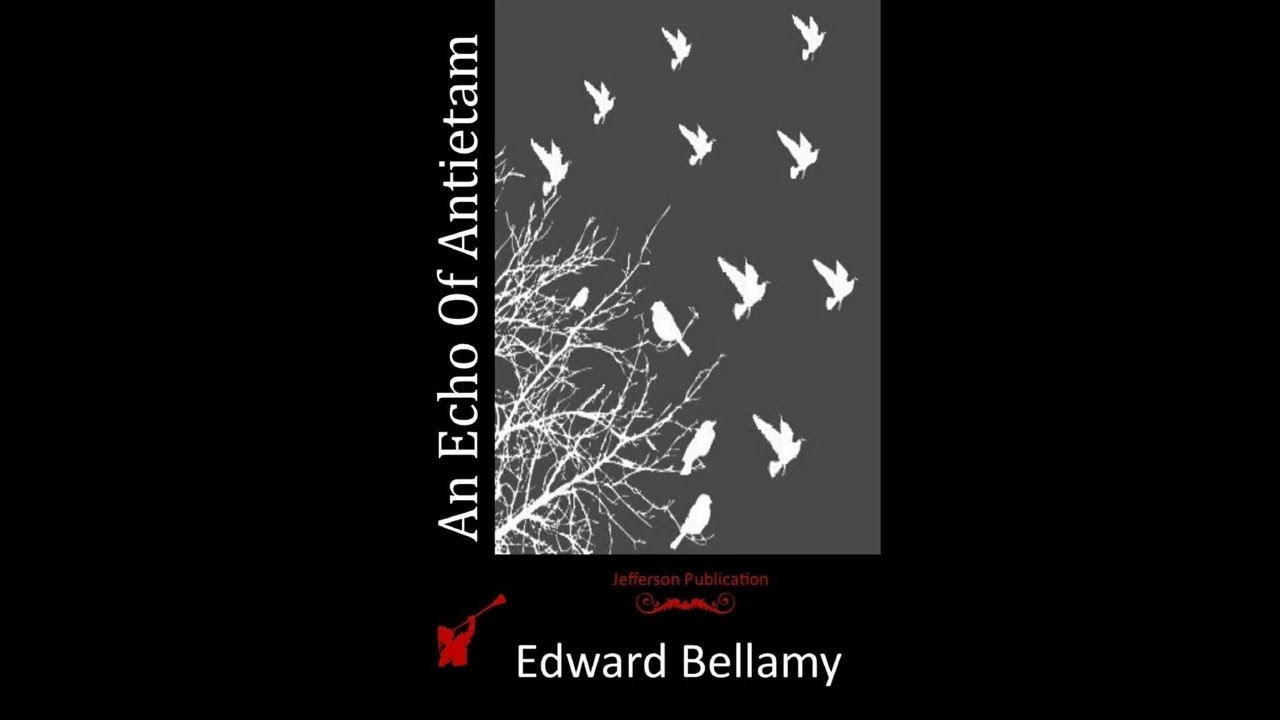
An Echo Of Antietam
In the hushed aftermath of the American Civil War, a nation struggled to reconcile its fractured identity, and the shadows of its bloodiest battles stretched long into the coming decades. Edward Bellamy’s "An Echo Of Antietam" reaches back into that solemn period, not to revisit the clash of armies directly, but to contend with the profound, lingering impact of monumental conflict on the individual psyche and the fabric of society. This work offers a powerful reflection on how historical trauma reverberates through generations, shaping personal narratives and collective memory long after the last shot is fired. It asks us to consider what it truly means for a society to heal, and whether some wounds are simply too deep to ever fully fade, making its central questions about memory, identity, and reconciliation as relevant today as they were in the late nineteenth century. Set in a quiet New England town years after the cessation of hostilities, "An Echo Of Antietam" introduces us to Julian, a young man of thoughtful disposition, keenly interested in understanding the true human cost of the war that shaped his childhood. He arrives in a community still outwardly recovering, but inwardly grappling with unspoken losses and unhealed wounds. Julian’s path soon crosses with Silas, an aged veteran who fought at the Battle of Antietam. Silas is a man etched with the invisible scars of combat, his mind a repository of fragmented recollections and profound silences. He is a living testament to the conflict’s lingering presence, a figure around whom the town’s collective trauma seems to coalesce. Julian, driven by a desire to comprehend the deeper truths behind the heroic narratives and political speeches, attempts to draw Silas out, to understand what it meant to stand on the sun-drenched fields of Maryland during that brutal single day. Their interactions form the core of the story, revealing the subtle and overt ways war continues to define lives and relationships. The narrative carefully unwinds, not through grand battlefield scenes, but through the quiet spaces of remembrance: an old photograph, a fleeting comment, a gesture of profound weariness. Julian gradually begins to piece together the specific, chilling details of Antietam as experienced by Silas, but more significantly, he witnesses the cost of bearing such memories alone, and the struggle to find meaning or solace in their aftermath. The story becomes less about the facts of the battle and more about the facts of its emotional and psychological legacy, an inheritance passed down through silence and subtle signs. Edward Bellamy (1850-1898) stands as a distinctive voice in American literature, primarily remembered for his utopian novel, Looking Backward: 2000-1887. Born in Chicopee Falls, Massachusetts, the son of a Baptist minister and a mother descended from Puritan settlers, Bellamy was imbued with a strong sense of moral purpose and social justice from an early age. His initial career as a journalist and editor for various newspapers sharpened his observational skills and his critical eye for the social inequalities of the Gilded Age. While trained in law, he never practiced, dedicating himself instead to writing fiction that often carried a powerful social message. Before the sweeping fame of Looking Backward, Bellamy authored several other novels, including The Duke of Stockbridge and Dr. Heidenhoff's Process, works that already hinted at his concern with psychological states and societal dilemmas. However, it was his 1888 vision of a future Boston, free from poverty, crime, and class struggle, that catapulted him into national prominence and sparked the formation of "Bellamy Clubs" across the country, dedicated to advancing his collectivist ideals. His writing cemented his place as a leading figure in the American utopian movement, a literary current that used speculative fiction as a vehicle for social critique and reform advocacy. Bellamy’s unique contribution lies in his ability to weave compelling narratives around complex philosophical and economic concepts, making his social commentary accessible and thought-provoking to a wide audience. "An Echo Of Antietam" profoundly engages with several significant themes, grounding them in the human experience of post-war America. One central idea is the enduring psychological trauma of war, long before modern clinical terms like PTSD existed. Through Silas, the novel illustrates how the horrors of combat do not simply vanish; they continue to haunt the survivor's mind, manifesting in silence, haunted eyes, and a profound alienation from those who did not bear witness. Julian’s struggle to understand Silas's reticence highlights the barrier between experience and empathy, showing how deeply personal and isolating such trauma can be. Another prominent theme is the elusiveness of historical truth and the subjective nature of memory. Official histories and public monuments often simplify or glorify conflict, but Bellamy demonstrates that individual memories are often fragmented, contradictory, and deeply colored by personal pain and perspective. Silas's story is not a linear account but a series of impressions and emotional flashes, illustrating how the past is not a fixed entity but a continually interpreted and re-experienced phenomenon. This struggle with memory also brings forth the theme of social healing and the challenges of national reconciliation. The town itself, with its shared but often unacknowledged burdens, acts as a microcosm of a nation attempting to mend itself. The novel asks whether true healing can occur without a full, albeit painful, confrontation with the past, not just in its public narratives but in its quiet, personal spaces. The period following the Civil War, when Bellamy was writing, was a time of immense social and economic upheaval in America. The Gilded Age saw rapid industrialization, burgeoning wealth for some, and widespread poverty and labor strife for many others. Culturally, the nation was wrestling with the legacy of the war: how to remember it, how to commemorate it, and how to integrate millions of formerly enslaved people into a new social order. Bellamy himself was a keen observer of these societal shifts, and his reformist tendencies were deeply rooted in a critique of the injustices he saw around him. "An Echo Of Antietam" emerges from this crucible, reflecting a broader literary movement towards realism, seeking to portray life, including the grim realities of war’s aftermath, with greater verisimilitude. It stands as a testament to the persistent need to grapple with the past, even as the nation looked towards a rapidly modernizing future, highlighting the personal cost of collective progress and the lingering scars beneath the surface of official triumphalism. Listening to "An Echo Of Antietam" as an audiobook offers a uniquely intimate and immersive experience. The narrator's voice becomes the conduit through which the historical landscape and the characters’ internal worlds are brought to life, allowing the listener to absorb the story's emotional weight and subtle observations. Over several hours, a skilled narrator can masterfully convey the quiet intensity of Julian's quest for understanding and the deep-seated weariness in Silas's voice, lending palpable atmosphere to the post-war setting. The pacing of the narration can underscore the reflective nature of Bellamy’s prose, allowing moments of profound realization to resonate. Listening permits an unfiltered connection to the dialogue, to the unspoken emotions hanging between characters, and to the somber, reflective mood that permeates this exploration of history's long shadow.
Enjoyed An Echo Of Antietam? A few ways to support us
Audible & Amazon links are affiliate; we may earn a small commission at no extra cost.
About this production
Human narration by a volunteer reader from LibriVox.org, the public-domain audiobook project. LibriVox volunteers record literary works whose copyright has expired in the United States, releasing the resulting recordings into the public domain.
An Echo Of Antietam by Edward Bellamy. The underlying text is in the U.S. public domain. We do not republish any modern copyrighted edition, translation, or commentary.
The 4K cinematic visuals accompanying this audiobook are generated by an AI image model from prompts derived from the source text. No copyrighted photos, paintings, or stock footage are used. AI generation is disclosed on every video on our YouTube channel as required by YouTube's altered/synthetic content policy.
English subtitles are transcribed from the LibriVox recording with OpenAI Whisper. Translations into the 11 other supported languages are produced by Meta's NLLB-200 neural translation model. No human translator's copyrighted translation is used.
Questions about sourcing or rights? See our DMCA & Sourcing policy or contact us.
Enjoyed this audiobook?
If you'd like to own a copy of An Echo Of Antietam or hear a professionally produced edition, the links below help support free audiobook production at no extra cost to you.
As an Amazon Associate we earn from qualifying purchases. Audible / print links are affiliate.