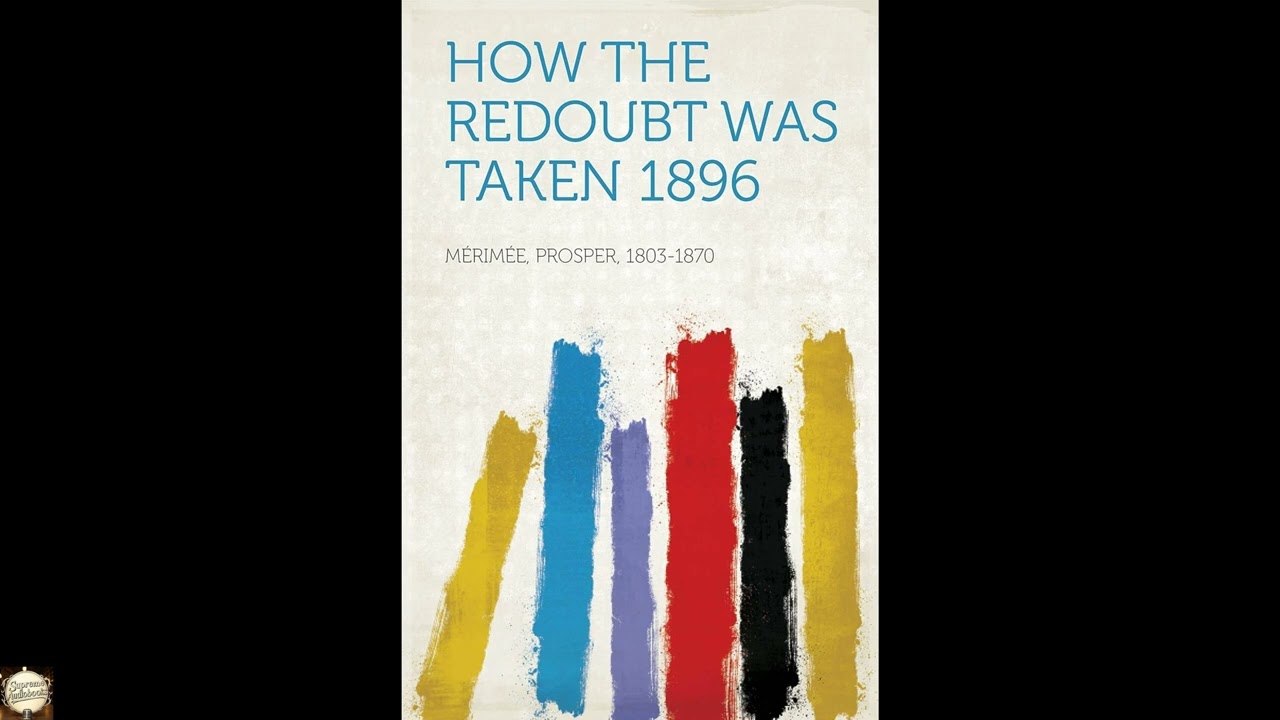
How The Redoubt Was Taken
War strips away pretense, revealing the raw essence of human courage, fear, and folly in stark relief. In Prosper Mérimée’s taut, unflinching novella, "How The Redoubt Was Taken," listeners are transported to a pivotal moment of military confrontation, a single, desperate clash that encapsulates the chaos and moral ambiguity of combat. This isn't a sweeping historical epic, but a concentrated psychological portrait, a precise incision into the heart of a soldier’s experience. What makes this story resonate across centuries is its piercing gaze at the human spirit under immense pressure – how decisions made in fractions of a second can define a lifetime, or end it, and how the pursuit of honor can lead to both glory and devastating consequence. It’s a story about the personal cost of history, as immediate and relevant today as it was in the shadow of Napoleon's campaigns. The story unfolds during the brutal Peninsular War, a particularly grim theater of the Napoleonic conflicts, where French forces faced fierce resistance from Spanish and Portuguese armies, often aided by British troops. Our narrator is a young, newly promoted French lieutenant, a man eager for glory and still somewhat naive to the true horrors of the battlefield. He recounts his assignment to a forward position, a hastily constructed redoubt on a strategic hill, meant to guard a crucial pass. The setting itself is a character – desolate, exposed, constantly under enemy fire, a place where life is cheap and heroism is a necessity for survival. The tension builds as the young lieutenant joins the seasoned, weary Captain Renard, the redoubt's grizzled commander, a veteran whose cynicism is matched only by his unflinching bravery. Their differing perspectives – the idealism of youth against the hard-won pragmatism of experience – immediately create friction and a palpable sense of unease. The central conflict soon becomes clear: the redoubt is under constant bombardment, and an imminent, decisive assault from the enemy is expected. The officers and their dwindling company of men must hold their ground against overwhelming odds, a desperate stand where every moment brings them closer to either a heroic defense or a bloody annihilation. The narrative follows the young officer through the harrowing hours leading up to the climax, detailing the psychological toll of waiting, the brutal reality of engagements, and the unexpected twists of fate that dictate life and death on the front lines. The story meticulously details the claustrophobia of the fortifications, the smell of gunpowder, and the chilling proximity of death, all building towards a final, fateful confrontation that will test the mettle of every man present. Prosper Mérimée, born in Paris in 1803, was a figure of immense literary and cultural significance in 19th-century France, though often seen as an outlier among his Romantic contemporaries. His early life was marked by a rigorous education and a fascination with foreign cultures, history, and archaeology. He became a polymath, proficient in several languages, and his intellectual curiosity led him to become a distinguished academic and an influential government official. Among his most notable appointments was that of Inspector-General of Historical Monuments, a role in which he spearheaded the preservation of countless French heritage sites, including the restoration of Notre-Dame Cathedral. This dedication to precision and history deeply influenced his literary output, which often blended meticulous detail with a keen sense of human drama. Mérimée's literary career truly began in the 1820s, a period where his friendships with literary giants like Stendhal undoubtedly shaped his worldview, though his writing style remained distinct. While the sweeping emotions and grand narratives of Romanticism dominated the era, Mérimée cultivated a style characterized by conciseness, psychological realism, and a certain detached objectivity. He was a master of the novella and short story, favoring tightly constructed plots and lean prose over expansive descriptions. His other celebrated works include Colomba, a Corsican vendetta tale; Matteo Falcone, another tragic story of honor; and perhaps his most famous, Carmen, the source material for Bizet's iconic opera. Mérimée's unique blend of exotic settings, historical accuracy, and stark human psychology solidified his place as a pioneer, paving the way for later generations of realist writers. He passed away in Cannes in 1870, leaving behind a body of work admired for its clarity and enduring power. At its core, "How The Redoubt Was Taken" grapples with the brutal realities of war and its dehumanizing effects. Mérimée does not glorify battle; instead, he shows the grinding attrition, the senseless destruction, and the constant threat of an indifferent death. One vivid scene portrays the casual disregard for fallen comrades amidst the ongoing bombardment, demonstrating how the constant exposure to violence can dull human empathy and transform soldiers into hardened instruments of war. The story also powerfully examines the concept of honor and duty in a combat setting. The young lieutenant's initial eagerness for glory slowly gives way to a more nuanced understanding of duty, not as a path to personal renown, but as a grim responsibility to survive and protect his men. The standoff with Captain Renard, while subtle, highlights the different ways men interpret and act upon their perceived obligations. Another prominent theme is the role of chance and fate in determining individual outcomes. Despite all strategic planning and personal bravery, events within the redoubt often turn on a single, unpredictable bullet or a random shift in the wind, demonstrating how profoundly human lives are subject to forces beyond their control. This sense of cosmic indifference heightens the tragedy and irony of the soldiers' struggles. Finally, the story implicitly deals with the psychological toll of violence, showing how fear, fatigue, and the constant presence of death wear down the human spirit. The narrator's internal monologue reveals a subtle but profound transformation, his initial bravado replaced by a deeper, more somber understanding of what it means to face mortality, creating a powerful portrait of a mind under siege. "How The Redoubt Was Taken" emerged from a France still reckoning with the tumultuous legacy of the Napoleonic Wars. Published in 1829, during the Bourbon Restoration, the story reflects a period where the recent past of imperial glory and immense bloodshed was being re-evaluated. While romanticized accounts of Napoleon's campaigns were popular, Mérimée offered a more sober, even critical, perspective. He stripped away the grandiosity to focus on the individual soldier’s experience, a move that foreshadowed the later rise of literary realism. Culturally, the story tapped into a growing appetite for historical narratives, but filtered through a lens of psychological scrutiny rather than purely epic scope. Mérimée's concise, objective style, even while depicting dramatic events, stood in contrast to the more effusive prose common at the time, marking him as a distinctive voice bridging different literary sensibilities. Listening to "How The Redoubt Was Taken" as an audiobook offers a particularly immersive experience of Mérimée’s masterful storytelling. The story’s relatively short length—several hours—makes it perfect for focused listening, perhaps during a commute or a quiet afternoon. A skilled narrator can amplify the intense atmosphere Mérimée creates, using subtle shifts in tone to convey the young lieutenant’s initial apprehension, the weariness of Captain Renard, and the pervasive tension of the battlefield. Listen for the precise, almost minimalist descriptions that give way to sudden bursts of action; a good narration will highlight this pacing, building suspense with measured delivery. The stark dialogue, often brief and to the point, gains added weight through vocal performance, allowing the listener to truly feel the urgency and the underlying emotions of men facing impossible odds. The auditory format brings a visceral immediacy to the sounds of combat and the internal thoughts of the protagonist, pulling you directly into the heart of this enduring classic of military fiction.
Enjoyed How The Redoubt Was Taken? A few ways to support us
Audible & Amazon links are affiliate; we may earn a small commission at no extra cost.
About this production
Human narration by a volunteer reader from LibriVox.org, the public-domain audiobook project. LibriVox volunteers record literary works whose copyright has expired in the United States, releasing the resulting recordings into the public domain.
How The Redoubt Was Taken by Prosper Mérimée. The underlying text is in the U.S. public domain. We do not republish any modern copyrighted edition, translation, or commentary.
The 4K cinematic visuals accompanying this audiobook are generated by an AI image model from prompts derived from the source text. No copyrighted photos, paintings, or stock footage are used. AI generation is disclosed on every video on our YouTube channel as required by YouTube's altered/synthetic content policy.
English subtitles are transcribed from the LibriVox recording with OpenAI Whisper. Translations into the 11 other supported languages are produced by Meta's NLLB-200 neural translation model. No human translator's copyrighted translation is used.
Questions about sourcing or rights? See our DMCA & Sourcing policy or contact us.
Enjoyed this audiobook?
If you'd like to own a copy of How The Redoubt Was Taken or hear a professionally produced edition, the links below help support free audiobook production at no extra cost to you.
As an Amazon Associate we earn from qualifying purchases. Audible / print links are affiliate.