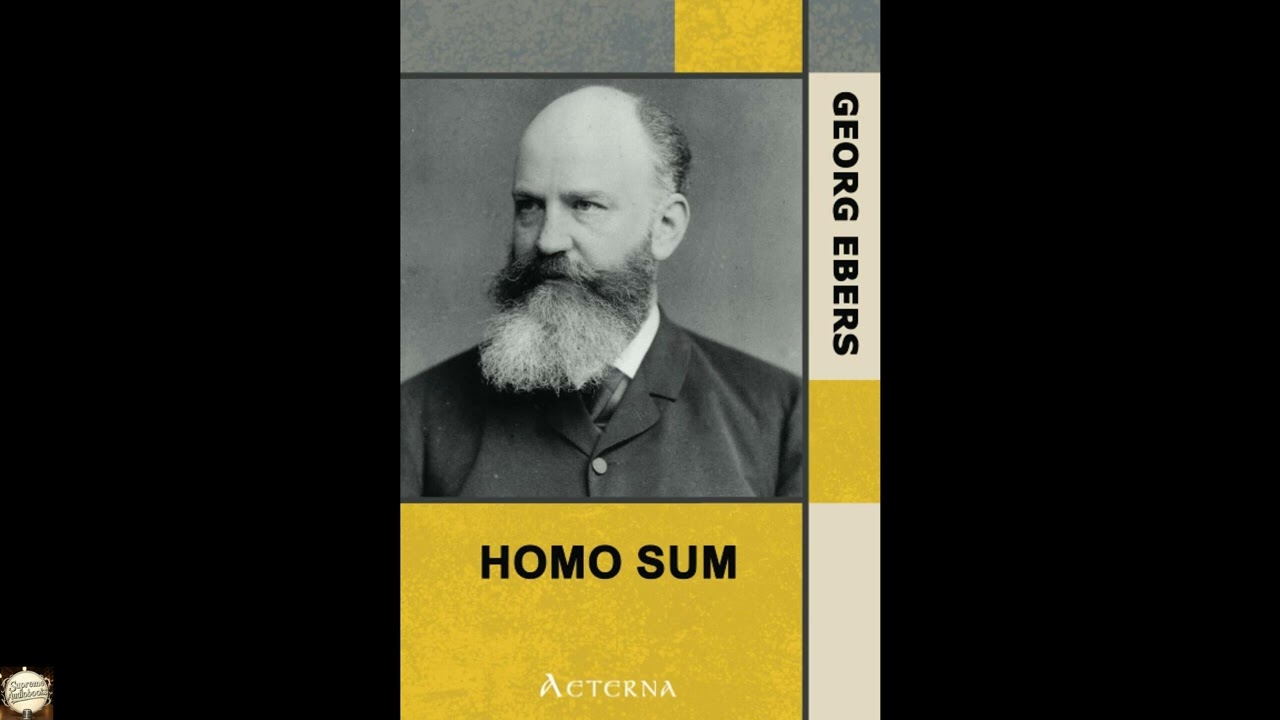
Homo Sum
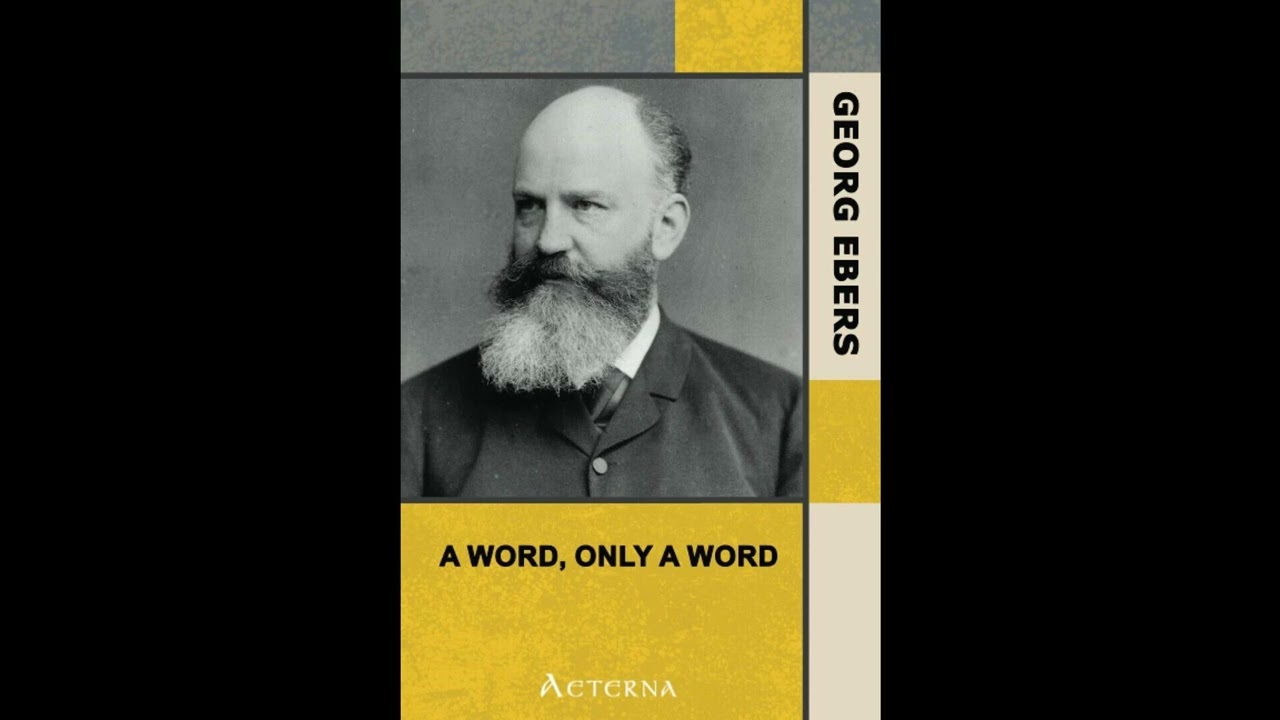
"Homo Sum," a title translating from the Latin as "I am human," immediately sets a profound stage for Georg Ebers's captivating historical novel. This work plunges listeners into the sun-drenched, dust-swept landscapes of ancient Egypt, far from the modern world, yet remarkably close to the enduring questions of identity, purpose, and what it truly means to exist. Ebers, a scholar deeply steeped in the history he portrays, offers not merely an escape into a bygone era, but a mirror reflecting our own struggles with self-definition, the weight of societal expectations, and the persistent quest for truth. It is a story that reminds us, through the grand narratives of antiquity, that the fundamental pulse of humanity beats unchanged across millennia. The story unfolds in a vividly rendered ancient Egypt, a period of intricate social structures and fervent belief systems. Our central character is Theodorus, a brilliant Greek scholar living within an Egyptian community, grappling with his heritage and his place in a world that often views outsiders with suspicion. Raised with an appreciation for both Hellenic philosophy and Egyptian traditions, Theodorus finds himself caught between these two powerful cultural currents. His intellect draws him to the pursuit of knowledge, but his heart is entangled in personal loyalties and a quiet, burgeoning love. The central conflict arises as Theodorus is forced to confront a deeply held secret from his past, a revelation that threatens to unravel his carefully constructed life and challenge his very understanding of who he is. As the narrative progresses, Theodorus is drawn into a series of events that test his resolve and force him to choose between allegiance to his intellectual pursuits, his personal desires, and the demands of an ancient society. He encounters a cast of compelling figures: wise priests, cynical merchants, devout temple servants, and the enigmatic individuals who hold clues to his obscured lineage. The arc of the story follows his internal and external quest, navigating political intrigue, religious ceremonies, and personal betrayals, all while striving to reconcile his dual identity and confront the truth about his origins. The tension builds steadily as Theodorus edges closer to a discovery that promises either liberation or ruin, forever altering the course of his life and those around him. Georg Ebers, born in Berlin in 1837, was a towering figure in the popularization of Egyptology. A polymath who initially studied law, he soon pivoted to oriental languages and archaeology, eventually becoming a professor of Egyptology at the University of Leipzig. Ebers's academic career was distinguished by significant archaeological findings, most notably his discovery of the Ebers Papyrus, a crucial ancient Egyptian medical text. Beyond the scholarly journals, however, Ebers possessed a unique talent for breathing life into the ancient world for a broader audience. He recognized the public's growing fascination with Egypt and began crafting historical novels that combined rigorous historical detail with compelling human drama. His prolific output of historical fiction, which includes beloved titles such as Eine ägyptische Königstochter (An Egyptian Princess), Uarda, The Sisters, and Serapis, established him as a pioneer in the genre. Ebers seamlessly wove his extensive knowledge of Egyptian history, customs, and daily life into narratives that were both educational and enthralling. He passed away in 1898, leaving behind a legacy that had cemented ancient Egypt in the popular imagination and had made academic discoveries accessible to countless readers. His place in the literary canon rests on his ability to blend rigorous scholarship with storytelling, effectively bridging the gap between the academy and the reading public, influencing subsequent generations of historical novelists and fostering a widespread appreciation for ancient cultures. "Homo Sum" powerfully enacts several profound themes that resonate far beyond its ancient setting. Foremost among these is the theme of identity and self-discovery. The protagonist, Theodorus, struggles with the complexities of his heritage, feeling the pull of both Greek intellectualism and Egyptian tradition. We see this manifested in a scene where he stands before a grand temple frieze, comparing the idealized forms of Greek sculpture with the symbolic, powerful imagery of Egyptian art, questioning where his true allegiance lies, not just culturally, but spiritually. Another potent theme is the often-fraught relationship between personal desire and societal duty. Theodorus finds himself torn between a love that defies social conventions and the expectations placed upon him by his community and his lineage, illustrating the eternal conflict between individual happiness and collective responsibility. A further significant theme is the pursuit of knowledge and truth, a topic close to Ebers's own scholarly heart. Theodorus's relentless quest to uncover the secrets of his past is not merely a personal vendetta but a profound search for understanding that mirrors the intellectual spirit of his era. This is evident in his painstaking examination of ancient scrolls and inscriptions, his careful questioning of elders, and his persistent questioning of established narratives, which underscores the belief that truth, however difficult, is worth uncovering. Finally, the novel touches on the enduring nature of humanity's struggles. Despite the vast historical distance, the dilemmas faced by Theodorus—loyalty, love, the search for belonging—are universal, demonstrating that the human heart beats with similar passions and anxieties across the ages. The emergence of "Homo Sum" and Ebers's other historical novels was deeply intertwined with the cultural and intellectual currents of the late nineteenth century. This was a period marked by significant advancements in archaeology and a burgeoning public fascination with ancient civilizations. Discoveries like the Rosetta Stone earlier in the century had unlocked the secrets of hieroglyphs, fueling an explosion of interest in Egypt. Expeditions were unearthing incredible artifacts, and the public eagerly consumed accounts of these finds. Authors like Ebers capitalized on this scientific progress and public curiosity, transforming dry historical facts into vivid, dramatic narratives. Furthermore, the late 19th century in Germany, where Ebers lived and worked, was a time of burgeoning nationalism and a general romanticized view of history. Historical novels were immensely popular, offering readers not only entertainment but also a sense of connection to a grand past. Ebers’s ability to combine meticulous historical accuracy—informed by his own professorship—with accessible storytelling positioned his works perfectly within this literary landscape, allowing him to educate and entertain simultaneously, firmly planting ancient Egypt into the consciousness of a wide European audience. Listening to "Homo Sum" as an audiobook provides an intimate and immersive experience, bringing the ancient world to life through the power of narration. With a run length of several hours, it offers a substantial yet manageable engagement, perfect for thoughtful contemplation during a commute, an afternoon walk, or a quiet evening. The narrator's voice becomes the conduit to Ebers's rich descriptive prose, allowing the listener to truly visualize the bustling markets, the silent temples, and the stark beauty of the desert. Pay attention to how the pacing allows Ebers's careful world-building to unfold, letting details accumulate and transport you. The subtle nuances in character voices during dialogue can illuminate the emotional weight of their interactions, making the struggles and triumphs of Theodorus and the supporting cast feel immediate and deeply personal, enveloping you in the unique atmosphere of a bygone era.
Enjoyed Homo Sum? A few ways to support us
Audible & Amazon links are affiliate; we may earn a small commission at no extra cost.
About this production
Human narration by a volunteer reader from LibriVox.org, the public-domain audiobook project. LibriVox volunteers record literary works whose copyright has expired in the United States, releasing the resulting recordings into the public domain.
Homo Sum by Georg Ebers. The underlying text is in the U.S. public domain. We do not republish any modern copyrighted edition, translation, or commentary.
The 4K cinematic visuals accompanying this audiobook are generated by an AI image model from prompts derived from the source text. No copyrighted photos, paintings, or stock footage are used. AI generation is disclosed on every video on our YouTube channel as required by YouTube's altered/synthetic content policy.
English subtitles are transcribed from the LibriVox recording with OpenAI Whisper. Translations into the 11 other supported languages are produced by Meta's NLLB-200 neural translation model. No human translator's copyrighted translation is used.
Questions about sourcing or rights? See our DMCA & Sourcing policy or contact us.
Enjoyed this audiobook?
If you'd like to own a copy of Homo Sum or hear a professionally produced edition, the links below help support free audiobook production at no extra cost to you.
As an Amazon Associate we earn from qualifying purchases. Audible / print links are affiliate.