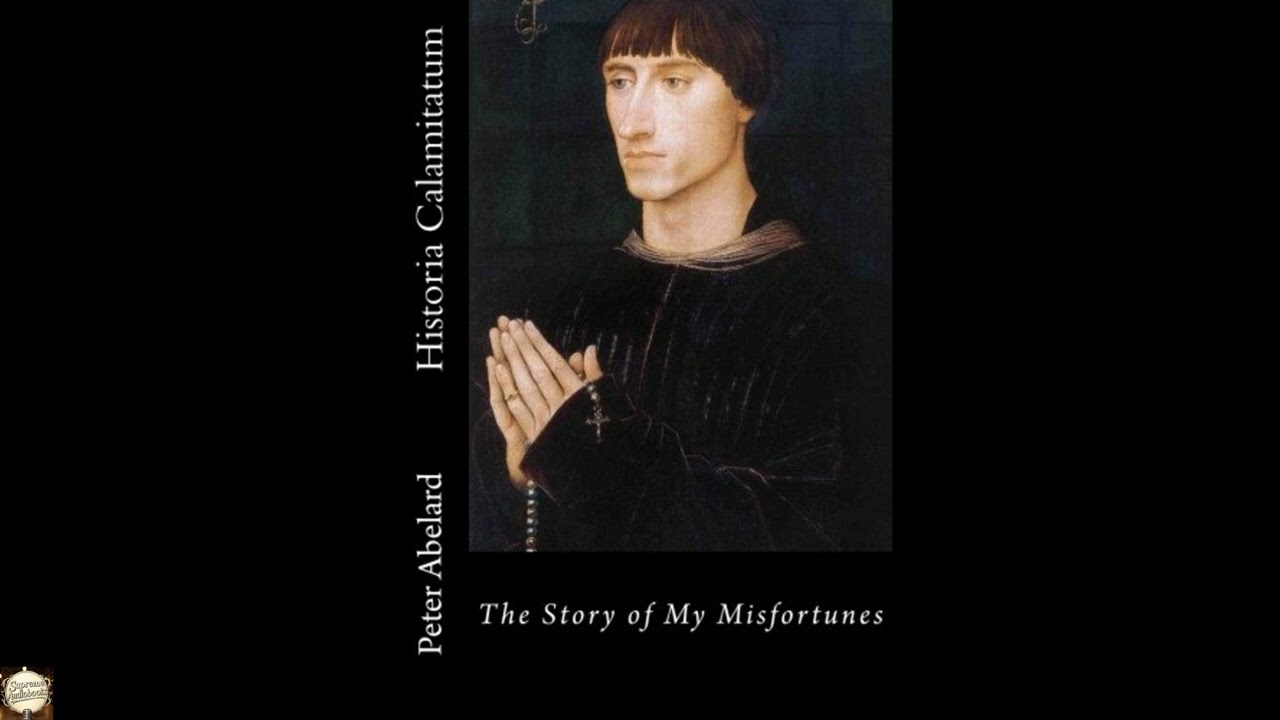
Historia Calamitatum: The Story of My Misfortunes
When we speak of autobiography, we often picture modern memoirs, intimate confessions, or the careful crafting of a life story for posterity. Yet, centuries before the novel as we know it, a man in the heart of the medieval world poured out his soul in a letter to a friend, detailing a life marked by unparalleled intellectual triumph and devastating personal calamity. This is Historia Calamitatum, or The Story of My Misfortunes, by Peter Abelard – a work that stands as one of the earliest and most brutally honest self-portraits in Western literature. It is an extraordinary testament to human ambition, the perils of intellectual arrogance, the consuming nature of illicit love, and the enduring struggle to reconcile faith with reason. To listen to Abelard’s account is to step into a mind fiercely intelligent and profoundly wounded, a voice that echoes with a startling modernity across nearly nine hundred years, demanding our attention to the universal drama of a life lived on the edge. The story unfolds in the burgeoning intellectual hub of early twelfth-century France, primarily Paris, a city on the cusp of becoming Europe's leading center of learning. Peter Abelard, a young man from Brittany, rejects the path of knighthood for scholarship, quickly distinguishing himself as a prodigy. He is brilliant, eloquent, and fiercely independent, challenging his own revered teachers, such as William of Champeaux, and attracting thousands of students from across Europe. His intellectual star ascends rapidly, positioning him at the zenith of academic renown. However, his self-confessed pride and unbridled ambition lead him to a fateful decision. He seeks to seduce Heloise, the exceptionally intelligent and beautiful niece of Canon Fulbert, a powerful figure in the Parisian Church. Abelard describes how he worms his way into Fulbert’s household as Heloise’s tutor, using his position and intellectual prowess to gain access to her and ultimately begin a passionate, clandestine affair. The narrative details their secret meetings, their intense intellectual and physical intimacy, and the dangerous game they play beneath the nose of the protective Fulbert. Heloise becomes pregnant, and Abelard, wracked by guilt and fear of discovery, spirits her away to Brittany to give birth to their son, Astrolabe. To mitigate Fulbert's wrath and protect Heloise's honor, Abelard proposes a secret marriage, hoping to maintain his ecclesiastical career. However, Fulbert, enraged by the deception and believing Abelard intends to abandon his niece, orchestrates a horrific act of vengeance against him. The story then shifts to Abelard's subsequent despair and his decision, along with Heloise, to take monastic vows, a path meant to offer solace but which for Abelard leads only to further torment and relentless controversy. Peter Abelard, born near Nantes around 1079, was a towering figure in medieval intellectual life whose name is synonymous with both philosophical brilliance and personal tragedy. From a noble family, he abandoned a military career to pursue philosophy, quickly becoming a celebrated, if controversial, master of dialectic. He studied under the leading thinkers of his day, often surpassing and publicly debating them. His career as a teacher in Paris was legendary; he drew students by the thousands to hear his lectures, pioneering a method of rigorous logical inquiry that would help lay the groundwork for scholasticism. This period of academic eminence was tragically interrupted by his affair with Heloise, a relationship that would forever define his personal narrative and cast a long shadow over his life. Following his brutal castration, Abelard took vows at the Abbey of Saint-Denis, while Heloise became a nun at Argenteuil. Yet, Abelard's life as a monk did not bring peace. He was a restless spirit, constantly embroiled in theological disputes, often at odds with the established authorities of the Church. He founded the Paraclete oratory, which later became a convent for Heloise and her nuns, and spent a period as abbot of the remote and unruly monastery of Saint-Gildas de Rhuys, where he faced constant threats to his life. His most famous theological work, Sic et Non (Yes and No), presented conflicting patristic authorities on various theological questions, encouraging students to use reason to reconcile them – a method that was seen as dangerously innovative by conservatives like Bernard of Clairvaux. Abelard died in 1142, having spent much of his later life defending his philosophical and theological positions against accusations of heresy. Historia Calamitatum vividly enacts several enduring themes. One prominent theme is the peril of intellectual pride and hubris. Abelard himself admits that his overwhelming success led to arrogance, a dangerous self-assurance that blinded him to the ethical implications of his actions. His systematic seduction of Heloise, described with chilling clarity, is presented as a direct consequence of this overconfidence, where his intellectual superiority became a tool for personal gratification rather than pure scholarly pursuit. Another compelling theme is the nature of devotion and suffering. While Abelard's account is self-serving, it undeniably reveals the profound, if tragic, love between him and Heloise, particularly her remarkable steadfastness. He recounts her philosophical arguments against marriage and her unwavering loyalty even in the face of public disgrace, underscoring a devotion that transcends the circumstances of their forbidden relationship. The work also explores the constant tension between intellectual freedom and institutional orthodoxy. Abelard's entire career was a battleground where his innovative dialectical method and sometimes unorthodox theological conclusions clashed with the conservative elements of the medieval Church. His relentless questioning, even when applied to sacred doctrines, repeatedly led to condemnations and public humiliation, illustrating the perilous tightrope walked by thinkers who dared to challenge established wisdom. Finally, the text serves as an extended meditation on the elusive quest for peace and redemption. Abelard’s monastic life, undertaken in the hope of finding solace, instead becomes a new arena for conflict and suffering, demonstrating how internal turmoil and external persecutions can follow a troubled soul even into sacred spaces. The early twelfth century was a period of immense intellectual and cultural ferment in Europe, often referred to as the High Middle Ages. It saw the rise of cathedral schools and the foundational stages of what would become the great universities. Learning, though largely under the purview of the Church, was expanding beyond the cloister. Latin was the language of scholarship and administration, and philosophical debates, particularly on logic and metaphysics, were vigorous. It was an era when figures like Abelard, with their brilliant minds and charisma, could attract enormous followings, creating a dynamic intellectual environment where old certainties were rigorously re-examined. Against this backdrop, Historia Calamitatum emerged as a singular work. While chronicles and hagiographies were common, a personal memoir written with such raw emotional honesty and detailed psychological introspection was almost unprecedented. Abelard wrote it during one of his periods of profound despondency and isolation, effectively as a letter of consolation to a friend, recounting his trials to show that his own misfortunes were greater than any other’s. It was not intended for wide publication in the modern sense, but its very existence speaks to a nascent impulse for individual expression and self-analysis within an intellectual culture that was increasingly recognizing the power of individual reason. To experience The Story of My Misfortunes as an audiobook is to receive it precisely as it was conceived – as an intensely personal utterance, a direct address from one individual to another. The spoken word amplifies the raw, confessional nature of Abelard’s narrative, making his account feel immediate and deeply personal, almost as if he is confiding in the listener alone. A skilled narrator can bring forth the distinct voice of Abelard – a complex mix of intellectual rigor, self-pity, defensiveness, and profound bitterness – allowing the listener to truly inhabit the turbulent landscape of his mind. The run length of several hours allows for a deep, immersive listening experience, giving ample time for the dramatic arc of his triumphs and calamities to unfold, allowing the listener to absorb the historical context and the emotional weight of his extraordinary life without interruption. Hear the intellectual fervor, the heart-wrenching regret, and the relentless struggle of a man whose legacy shaped the course of Western thought, all brought vividly to life through the power of narration.
Enjoyed Historia Calamitatum: The Story of My Misfortunes? A few ways to support us
Audible & Amazon links are affiliate; we may earn a small commission at no extra cost.
About this production
Human narration by a volunteer reader from LibriVox.org, the public-domain audiobook project. LibriVox volunteers record literary works whose copyright has expired in the United States, releasing the resulting recordings into the public domain.
Historia Calamitatum: The Story of My Misfortunes by Peter Abelard. The underlying text is in the U.S. public domain. We do not republish any modern copyrighted edition, translation, or commentary.
The 4K cinematic visuals accompanying this audiobook are generated by an AI image model from prompts derived from the source text. No copyrighted photos, paintings, or stock footage are used. AI generation is disclosed on every video on our YouTube channel as required by YouTube's altered/synthetic content policy.
English subtitles are transcribed from the LibriVox recording with OpenAI Whisper. Translations into the 11 other supported languages are produced by Meta's NLLB-200 neural translation model. No human translator's copyrighted translation is used.
Questions about sourcing or rights? See our DMCA & Sourcing policy or contact us.
Enjoyed this audiobook?
If you'd like to own a copy of Historia Calamitatum: The Story of My Misfortunes or hear a professionally produced edition, the links below help support free audiobook production at no extra cost to you.
As an Amazon Associate we earn from qualifying purchases. Audible / print links are affiliate.