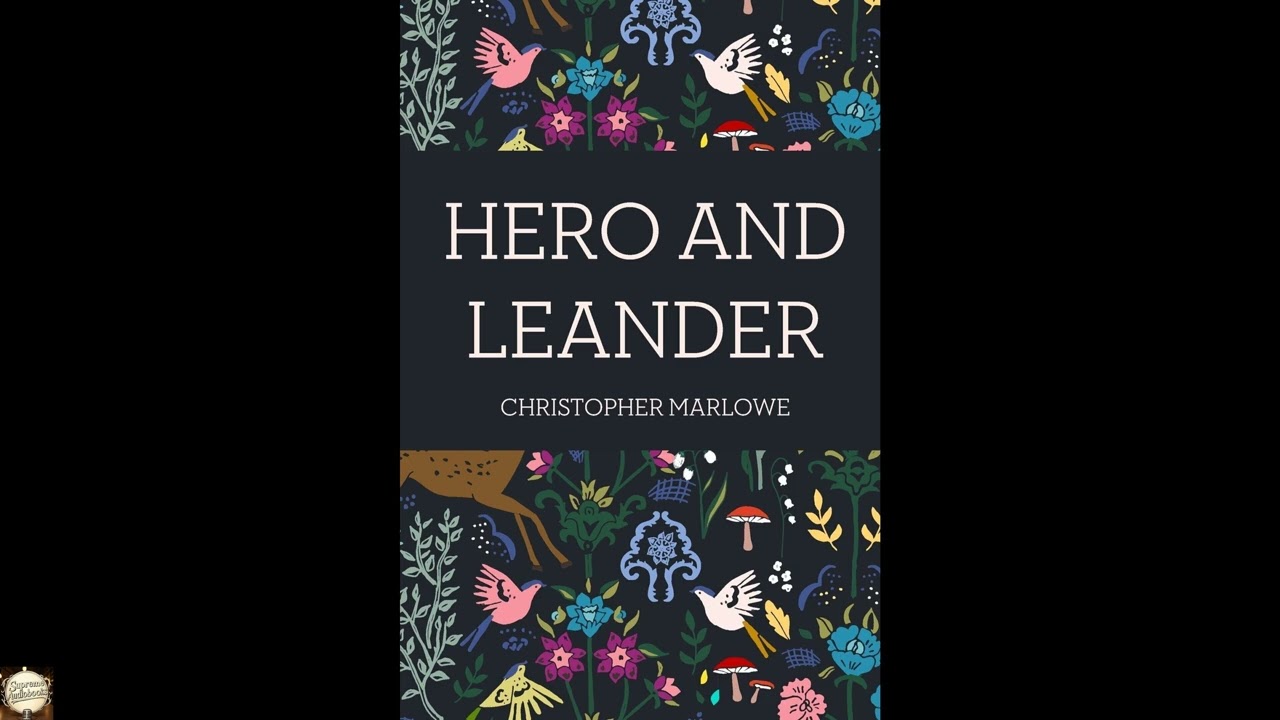
Hero and Leander
Across the Hellespont, a narrow strait connecting two worlds, flows a current of ancient myth and enduring human passion. Christopher Marlowe’s unfinished poetic narrative, Hero and Leander, transports us to this storied Greek landscape, immersing us in a tale of forbidden love that burns with a startling intensity even centuries after its creation. It is a story not just of two lovers separated by water, but of the intoxicating, dangerous allure of beauty, desire, and the lengths to which the heart will go for its object. Marlowe’s masterful verse, celebrated for its sensuality and dramatic power, resurrects a classic legend with a vitality that continues to resonate, asking us to consider the overwhelming force of love that defies all boundaries, whether physical or societal. The story unfolds in the ancient towns of Sestos and Abydos, facing each other across the Hellespont. In Sestos lives Hero, a beautiful young woman consecrated as a priestess of Venus. Her vows demand chastity and dedication, yet her beauty is such that it draws all eyes, inspiring awe and even adoration. One day, at a festival dedicated to Venus and Adonis, Hero encounters Leander, a youth from Abydos renowned for his own striking good looks. Their gazes meet, and in that instant, a spark ignites—an immediate, powerful attraction that sets their destinies on an irreversible course. Overwhelmed by love, Leander begins a perilous nightly ritual: swimming the treacherous Hellespont, guided only by a lamp Hero lights in her tower, to be with her. Marlowe meticulously details the risks Leander faces, the physical ordeal, and the powerful pull of his desire. When they finally meet, the poem becomes a magnificent exploration of seduction, rhetoric, and the unfolding of physical love. Leander uses eloquent persuasion, appealing to Hero’s sense of human desire over rigid religious dogma, to convince her to abandon her vows. Their union is portrayed with a frank sensuality that was revolutionary for its time, depicting a love that is both spiritual and profoundly carnal, challenging the sacred with the profane. Christopher Marlowe, born in 1564, was a towering figure of the Elizabethan age, a contemporary and significant precursor to William Shakespeare. His brief but incandescent life, cut short in 1593 at the age of twenty-nine, was as dramatic and enigmatic as his plays. Educated at Cambridge University, Marlowe was rumored to have worked as a government agent, adding to the intrigue surrounding his character. His death in a tavern brawl remains one of history’s enduring mysteries, fueling endless speculation about political conspiracy or personal vendetta. Despite his short lifespan, Marlowe left an indelible mark on English literature. He revolutionized blank verse, imbuing it with a power and fluidity that earned it the moniker "Marlowe's mighty line," which dramatically influenced subsequent dramatists. His major plays, including Tamburlaine the Great, Doctor Faustus, and The Jew of Malta, introduced ambitious, often morally ambiguous protagonists driven by insatiable desires for power, knowledge, or revenge. Hero and Leander, while a poem, shares the same intense focus on passion and transgression that characterizes his dramatic output, cementing his place as one of the most brilliant and innovative writers of his era. At its core, Hero and Leander examines the potent themes of love and desire, pitting them against duty and prohibition. Hero's role as a priestess of Venus places her in a sacred sphere, yet her human longing for Leander proves an irresistible force, demonstrating the sheer power of carnal love to challenge divine strictures. Marlowe depicts this with scenes of intense longing and eventual physical union, showing how human desire can override any societal or religious boundary. Another prominent theme is the transformative and often destructive nature of beauty. Both Hero and Leander are described in exquisite detail, their physical perfection presented as a catalyst for the events that unfold. Their beauty is so overwhelming it seems almost fated to inspire such a consuming, perilous attachment, suggesting that extraordinary beauty can be both a blessing and a curse. The poem also showcases the art of persuasion and rhetoric, particularly in Leander’s eloquent arguments to sway Hero. His reasoning, blending philosophy with passion, underscores how words can be wielded to break down resistance and rationalize forbidden acts. The Hellespont itself functions as a powerful symbol, representing both the obstacle separating the lovers and the dangerous medium through which their love must manifest, a testament to their unwavering commitment. This physical barrier highlights the lengths one will go for love, and foreshadows the potential peril inherent in their choices. The late Elizabethan period, when Marlowe was writing, was a time of immense cultural and intellectual ferment in England. It was an age of expansion, discovery, and a burgeoning interest in classical antiquity. Poets and playwrights alike turned to Greek and Roman myths, not merely to retell them, but to reinterpret them through a contemporary lens. The influence of Ovid, with his focus on metamorphosis, myth, and erotic narratives, was particularly strong. Marlowe’s Hero and Leander stands squarely within this tradition, but he injects it with a distinct sensuality and psychological depth that set it apart. This was a time when English verse was being stretched and refined, moving beyond earlier forms to achieve new heights of expressive power, and Marlowe was at the forefront of this poetic innovation, pushing the boundaries of what was considered acceptable subject matter for a narrative poem. Listening to Hero and Leander as an audiobook offers a unique opportunity to experience Marlowe’s unparalleled verse as it was meant to be appreciated: aloud. The poem's inherent musicality, its dramatic cadences, and its vivid imagery truly come alive through skilled narration. Listen for the careful pacing that builds tension during Leander's perilous swims, and the shifts in voice that capture the intense yearning and eventual triumph of the lovers' encounters. The richness of Marlowe's language, often described as "golden," unfolds with clarity, allowing the listener to fully absorb the poem's celebrated descriptions of beauty and desire. The narration provides a direct conduit to the sensuous atmosphere and underlying drama of this ancient, yet eternally relevant, tale of passionate, defiant love.
Enjoyed Hero and Leander? A few ways to support us
Audible & Amazon links are affiliate; we may earn a small commission at no extra cost.
About this production
Human narration by a volunteer reader from LibriVox.org, the public-domain audiobook project. LibriVox volunteers record literary works whose copyright has expired in the United States, releasing the resulting recordings into the public domain.
Hero and Leander by Christopher Marlowe. The underlying text is in the U.S. public domain. We do not republish any modern copyrighted edition, translation, or commentary.
The 4K cinematic visuals accompanying this audiobook are generated by an AI image model from prompts derived from the source text. No copyrighted photos, paintings, or stock footage are used. AI generation is disclosed on every video on our YouTube channel as required by YouTube's altered/synthetic content policy.
English subtitles are transcribed from the LibriVox recording with OpenAI Whisper. Translations into the 11 other supported languages are produced by Meta's NLLB-200 neural translation model. No human translator's copyrighted translation is used.
Questions about sourcing or rights? See our DMCA & Sourcing policy or contact us.
Enjoyed this audiobook?
If you'd like to own a copy of Hero and Leander or hear a professionally produced edition, the links below help support free audiobook production at no extra cost to you.
As an Amazon Associate we earn from qualifying purchases. Audible / print links are affiliate.