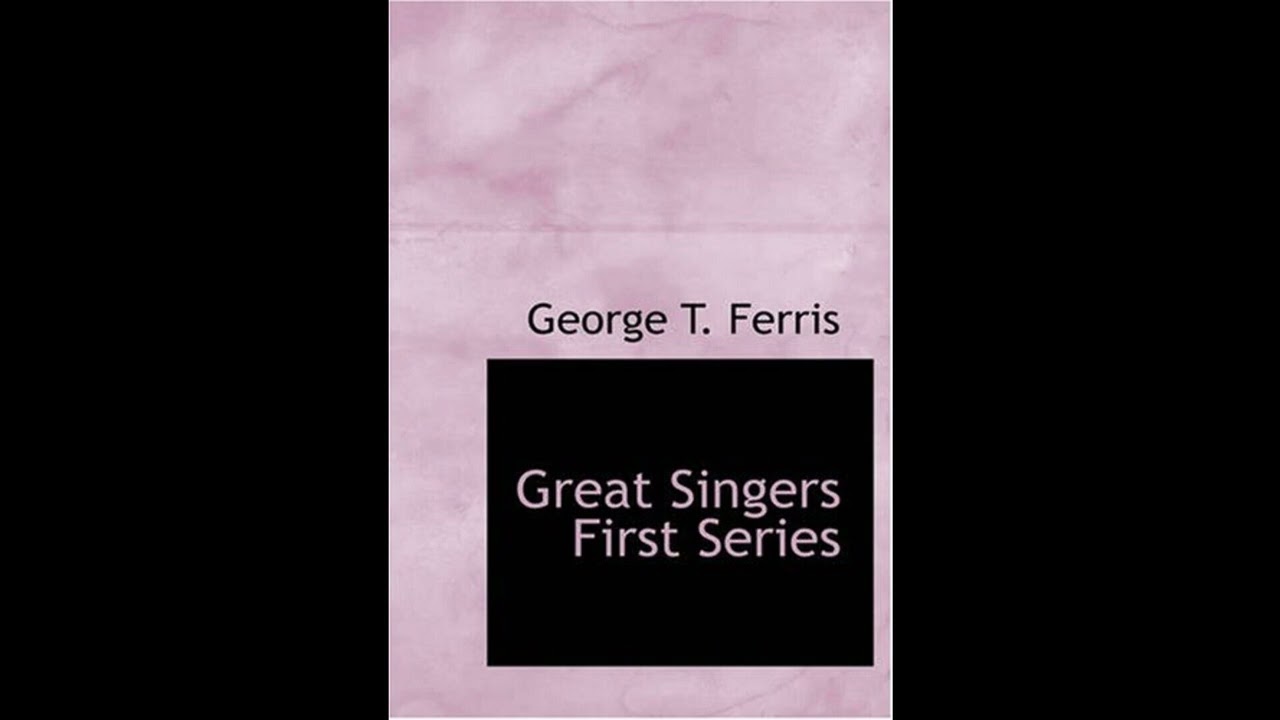
Great Singers First Series: Faustina Bordoni To Henrietta Sontag
Step back in time to an era when a single human voice could command an audience, dictate fashion, and stir the passions of an entire continent. George T. Ferris’s Great Singers First Series offers a vivid portal into the lives and careers of the most celebrated operatic prima donnas from the Baroque stage to the dawn of Romanticism. This isn't merely a catalog of names and dates; it is a vital, breathing history of artistry, ambition, and the sheer force of personality that defined the world of opera. For anyone fascinated by the evolution of performance, the stories behind legendary figures, or the demanding life of a public artist, this collection illuminates a forgotten age of vocal brilliance and the dramatic personal narratives that shaped musical history, revealing why these figures remain central to understanding the very essence of operatic performance. The narrative unfolds across several tumultuous decades, beginning with the fierce rivalry between the eighteenth-century luminaries Faustina Bordoni and Francesca Cuzzoni. Listeners are transported to the glittering, often cutthroat, stages of London, Venice, and Vienna, where these vocal titans vied for supremacy, their every trill and cadenza scrutinized by adoring crowds and unforgiving critics. Ferris meticulously sketches the personalities of these women, their extraordinary talents, and the often-scandalous lives they led both on and off the stage. From the era of grand Baroque spectacle, with its emphasis on vocal pyrotechnics and dramatic flair, the book progresses through the Classical period, introducing figures like Caterina Gabrielli, whose talent was matched only by her independent spirit, and the French singer Sophie Arnould, renowned for her wit and intelligence as much as her voice. The story arc traces the changing landscape of opera, the rise of new musical forms, and the shifting expectations placed upon its stars. As the nineteenth century emerges, the narrative intensifies with accounts of Angelica Catalani, a performer of immense power and technical prowess who toured Europe extensively, becoming one of the wealthiest singers of her time. Her successors, including the deeply expressive Giuditta Pasta, whose dramatic intensity defined the bel canto style, and the incandescent Maria Malibran, a singer whose short, brilliant life was a whirlwind of passion and tragic beauty, are brought to life with compelling detail. The collection culminates with Henriette Sontag, a singer whose elegance and refined artistry offered a counterpoint to Malibran’s fire, exemplifying a different facet of operatic excellence. Ferris’s account details not just their vocal abilities but their daily struggles, their triumphs, and the unique challenges faced by women at the pinnacle of public life in a world that often sought to control their artistry and their personal freedom. George T. Ferris, born in 1840 and passing in 1926, was a prolific American author, best known for his series of accessible, engaging biographies on prominent figures in classical music and art. He wrote extensively in the late nineteenth and early twentieth centuries, a period marked by a burgeoning middle class and a growing public appetite for cultural enrichment and historical knowledge. Ferris’s method involved compiling biographical sketches, drawing from various historical sources and critical reviews to present detailed yet digestible accounts for the general reader. Rather than producing academic tomes, he aimed to popularize the stories of these artistic giants, making their lives and achievements relatable and inspiring to a wider audience. His other notable works include Great German Composers, Great Italian and French Composers, and The Great Violinists and Pianists, all part of the "Appletons' New Handy-Volume Series" that brought concise, informative works to readers. Ferris’s contribution lies in his ability to synthesize complex historical information into coherent, flowing narratives, establishing him as an important popularizer of music history during a time when such works were highly valued. He carved a niche as a diligent chronicler of artistic lives, providing a window into the personalities and professional environments that shaped classical music, solidifying his place as a respected, albeit popular, voice in the literary landscape of his time. A central theme woven throughout Great Singers First Series is the immense personal cost of fame and artistic excellence. The fierce rivalry between Bordoni and Cuzzoni, for example, often escalated beyond mere professional competition, reportedly leading to physical altercations on stage and intense public debate among their respective factions of admirers. This dramatically illustrates the high stakes and emotional toll involved in being a public idol. Another compelling theme is the evolution of vocal artistry itself—from the highly ornamented, technically demanding Baroque style, exemplified by Bordoni’s agile coloratura, to the more dramatic and emotionally charged bel canto of Pasta and Malibran. Ferris effectively showcases how singers adapted their techniques and interpretations to suit the changing aesthetic tastes and musical innovations of their respective eras, demonstrating the dynamic nature of performance. The book also touches on the unique challenges and triumphs of women artists navigating a male-dominated world, highlighting their resilience and agency. Figures like Catalani and Sontag achieved not only international renown but also significant financial independence, often negotiating their own contracts and commanding exorbitant fees. Their careers reveal the power a gifted woman could wield on the stage, even as societal norms elsewhere restricted female autonomy. Finally, the tension between art and commerce is ever-present: the demands of impresarios, the financial pressures of extensive tours, and the constant balancing act between artistic integrity and audience expectations. The singers’ careers reveal how art often thrives, but also sometimes compromises, within a commercial system. Great Singers First Series emerged during a period of significant cultural and societal transformation in the late nineteenth century. Industrialization had fostered a growing urban middle class with more leisure time and disposable income, leading to a surge of interest in cultural pursuits like opera, concerts, and literary salons. Biography, particularly of great historical or artistic figures, was a popular literary genre, offering both entertainment and edification to readers eager to understand the lives of those who shaped human achievement. Culturally, there was a widespread desire to connect with the European past, to understand the roots of Western art and music, making Ferris’s detailed accounts of earlier operatic divas highly relevant. Politically, nations across Europe and America were undergoing shifts, but the appetite for cultural connection remained strong. This book fit perfectly into a landscape where popular histories and biographical sketches served to educate, inspire, and entertain a public keen on broadening their cultural horizons, presenting these celebrated artists as both icons and relatable figures whose struggles and successes resonated with a wider audience. Listening to Great Singers First Series as an audiobook offers a singular opportunity to truly immerse oneself in these biographical narratives. The spoken word allows the listener to absorb the detailed accounts of these vocal giants without the visual distractions of a printed page. A skilled narrator can bring a sense of gravity and drama to Ferris’s prose, making the rivalries, triumphs, and heartbreaks of figures like Malibran and Sontag resonate with particular clarity. With a run length of several hours, this collection is perfect for extended periods of focused listening—perhaps during long commutes, while working on a project, or simply relaxing at home. The pacing of the narration can underscore the gradual progression from one operatic era to the next, while the voice lends an atmospheric quality to descriptions of opulent theaters and bustling European capitals, making the stories of these trailblazing women singers truly come alive.
Enjoyed Great Singers First Series: Faustina Bordoni To Henrietta Sontag? A few ways to support us
Audible & Amazon links are affiliate; we may earn a small commission at no extra cost.
About this production
Human narration by a volunteer reader from LibriVox.org, the public-domain audiobook project. LibriVox volunteers record literary works whose copyright has expired in the United States, releasing the resulting recordings into the public domain.
Great Singers First Series: Faustina Bordoni To Henrietta Sontag by George T. Ferris. The underlying text is in the U.S. public domain. We do not republish any modern copyrighted edition, translation, or commentary.
The 4K cinematic visuals accompanying this audiobook are generated by an AI image model from prompts derived from the source text. No copyrighted photos, paintings, or stock footage are used. AI generation is disclosed on every video on our YouTube channel as required by YouTube's altered/synthetic content policy.
English subtitles are transcribed from the LibriVox recording with OpenAI Whisper. Translations into the 11 other supported languages are produced by Meta's NLLB-200 neural translation model. No human translator's copyrighted translation is used.
Questions about sourcing or rights? See our DMCA & Sourcing policy or contact us.
Enjoyed this audiobook?
If you'd like to own a copy of Great Singers First Series: Faustina Bordoni To Henrietta Sontag or hear a professionally produced edition, the links below help support free audiobook production at no extra cost to you.
As an Amazon Associate we earn from qualifying purchases. Audible / print links are affiliate.
![Children's Classics in Dramatic Form, Book Two. [1909] by Augusta Stevenson — free full audiobook](https://img.youtube.com/vi/h4bTKUeuO7U/maxresdefault.jpg)