Face to Face with Kaiserism
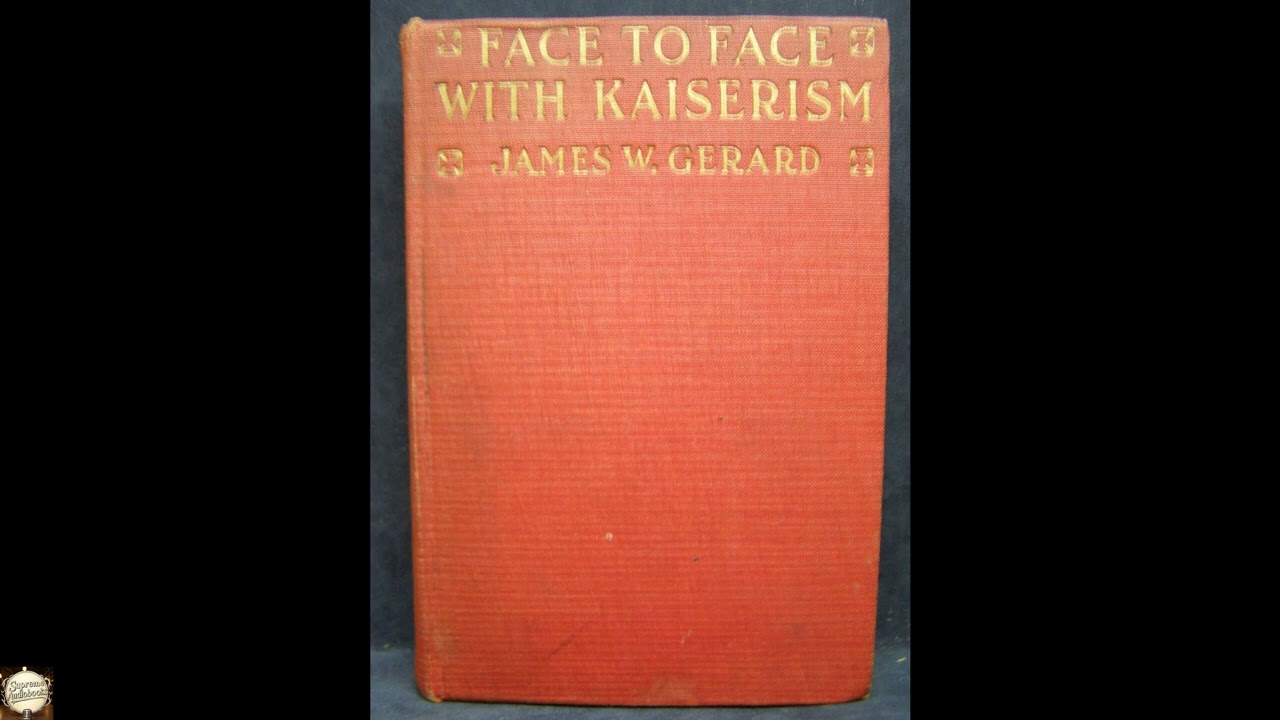
Face to Face with Kaiserism invites listeners into a crucial historical period through an American diplomat's eyes, stationed at the storm's heart. This firsthand account offers an unparalleled perspective on Imperial Germany as it hurtled toward and plunged into the Great War. From Kaiser Wilhelm II's rigid court to its militarized society, Ambassador James W. Gerard provides an intimate look at forces that reshaped the 20th century. His clear-eyed observations reveal motivations, mindsets, and propaganda, speaking to enduring challenges of international relations and the struggle against autocracy. Gerard's insights remain remarkably relevant, serving as a warning and a testament to vigilant diplomacy. The narrative begins with Gerard's arrival in Berlin as American Ambassador to Germany immediately preceding the First World War. He immerses himself in diplomatic circles and German formal society, painting a detailed picture of this powerful nation on the cusp of unprecedented conflict. We witness the Kaiser's elaborate court, meet influential figures, and sense the prevailing national mood—a blend of imperial pride, military preparedness, and destiny. Gerard's early chapters portray a society organized efficiently, yet infused with potent nationalism. As geopolitical situations rapidly deteriorate, Gerard's role shifts from observing to actively managing the escalating crisis. His central conflict becomes understanding and counteracting aggressive German leadership. He recounts intense diplomatic exchanges, shifting alliances, and the growing chasm between nations. With war's outbreak, his duties expand dramatically, protecting American citizens and overseeing other Allied nations' representation. Gerard finds himself caught between diplomatic protocols and total warfare's brutal realities, observing the unfolding tragedy and a nation's profound transformation under "Kaiserism." The story follows his unwavering commitment to his mission, even as American involvement looms, leading to his posting's inevitable conclusion. James Watson Gerard (1867-1951), born in New York, led a distinguished life of legal scholarship and public service. A Columbia University graduate, he had a successful law career before becoming a Justice of the New York Supreme Court from 1908 to 1913. His subsequent appointment by President Woodrow Wilson as Ambassador to Germany in 1913 cemented his place in history and formed the basis for this significant work. For four crucial years, Gerard was America's man on the ground in Berlin, witnessing firsthand the run-up to the Great War and its devastating initial years. His diplomatic career was marked by commitment to American ideals and duty, navigating treacherous political waters. Gerard's keen eye for detail and articulate prose were assets in his reports and formed his literary legacy. He also authored My Four Years in Germany, another compelling account of his time abroad, offering invaluable insights. Gerard's writings are primary sources for understanding American foreign policy and European dynamics during the early 20th century, contributing to classic literature blending historical reportage with personal memoir. His influence continued after returning from Germany, as he remained a voice on international affairs until his 1951 passing. One prominent theme woven through Gerard's account is the nature of autocratic power and militarism. He details the rigid hierarchy of the German Empire and the pervasive influence of the military class. Gerard recounts the Kaiser's theatrical pronouncements, omnipresent uniforms, and fervent popular support for expansionist policies, illustrating how these combined to create a formidable, dangerous national will. He describes conversations with high-ranking German officials who believed in their system's superiority and military action's necessity to secure Germany's "place in the sun"—a stark example of a nation driven by self-belief and a formidable war machine. Another key theme is the clash between diplomatic morality and realpolitik. Representing a nation committed to neutrality and international law, Gerard contended with German foreign policy prioritizing power over ethics. He recounts pressure to protect American citizens and uphold humanitarian principles amidst unrestricted submarine warfare and Belgium's harsh occupation. His narrative testifies to the moral dilemmas inherent in wartime diplomacy, where peace ideals collide with brutal conflict. The book's literary significance lies in its historical witness and contribution to diplomatic memoir, setting a standard for clear-eyed, ethically engaged reporting. It helps listeners understand the human element behind world-altering political decisions. Face to Face with Kaiserism emerged from a period of global upheaval. When Gerard took up his post in 1913, Europe was a volatile mix of competing empires, complex alliances, and fervent nationalisms, against a backdrop of rapid industrialization. Archduke Franz Ferdinand's assassination in 1914 ignited a conflagration that spiraled into a catastrophic global conflict. During this time, the United States maintained neutrality even as public opinion wrestled with European ties and growing American interests. Gerard's account, written after his diplomatic service, was part of a wave of contemporary literature designed to inform and persuade the American public about the war's realities and Germany's imperial ambitions. It appeared at a critical juncture when America transitioned to a more active world role, with President Wilson leading the nation into war. The book provided a vital, firsthand narrative to help Americans understand the conflict's "why" and the enemy's character. It represents impactful non-fiction that shaped public discourse and historical understanding during the late nineteen-tens. Listening to Face to Face with Kaiserism as an audiobook offers a unique opportunity to absorb Gerard's observations through an engaging auditory experience. A skilled narrator brings distinct depth to Gerard's clear, analytical prose, allowing the listener to appreciate the gravity of his diplomatic mission and Berlin's chilling atmosphere. The narration's thoughtful pacing can underscore the growing tension Gerard felt, highlighting nuances of his conversations and reports. The spoken word emphasizes the directness of Gerard's encounters, almost placing the listener alongside him in imperial courts and diplomatic salons. At several hours, it suits extended listening, providing a substantial companion for commutes or quiet reflection, fostering a deeper connection to this foundational account of 20th-century history.
Enjoyed Face to Face with Kaiserism? A few ways to support us
Audible & Amazon links are affiliate; we may earn a small commission at no extra cost.
About this production
Human narration by a volunteer reader from LibriVox.org, the public-domain audiobook project. LibriVox volunteers record literary works whose copyright has expired in the United States, releasing the resulting recordings into the public domain.
Face to Face with Kaiserism by James W. (James Watson Gerard). 1867-1951. Gerard. The underlying text is in the U.S. public domain. We do not republish any modern copyrighted edition, translation, or commentary.
The 4K cinematic visuals accompanying this audiobook are generated by an AI image model from prompts derived from the source text. No copyrighted photos, paintings, or stock footage are used. AI generation is disclosed on every video on our YouTube channel as required by YouTube's altered/synthetic content policy.
English subtitles are transcribed from the LibriVox recording with OpenAI Whisper. Translations into the 11 other supported languages are produced by Meta's NLLB-200 neural translation model. No human translator's copyrighted translation is used.
Questions about sourcing or rights? See our DMCA & Sourcing policy or contact us.
Enjoyed this audiobook?
If you'd like to own a copy of Face to Face with Kaiserism or hear a professionally produced edition, the links below help support free audiobook production at no extra cost to you.
As an Amazon Associate we earn from qualifying purchases. Audible / print links are affiliate.