English Villages
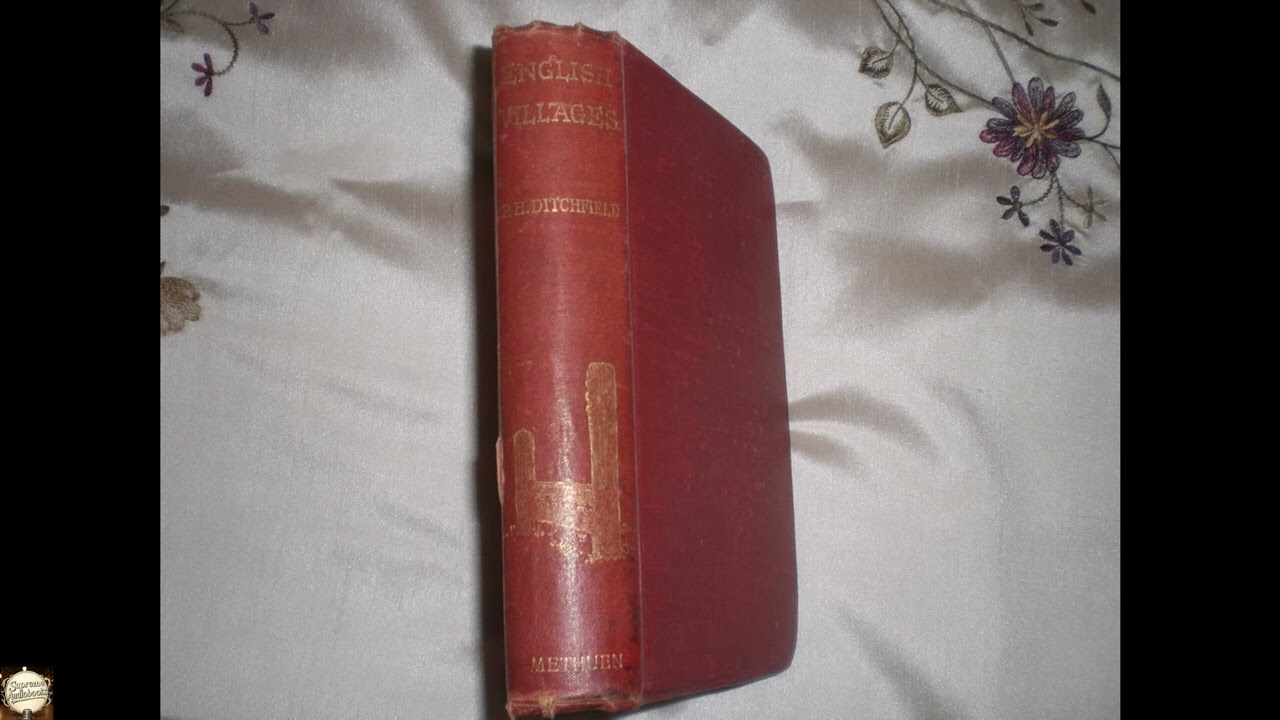
"English Villages" by P. H. Ditchfield stands as an act of devoted preservation, a lovingly compiled testament to a way of life already beginning its slow, inevitable retreat at the turn of the 20th century. Ditchfield invites us not merely to observe but to inhabit the unique spirit of rural England, offering a panoramic yet intimate view into the customs, architecture, and enduring character of the country's most fundamental communities. For a modern listener, this book offers a profound connection to the historical roots of the English landscape, a poignant reflection on how identity is forged in place, and a quiet moment to consider the legacy of tradition against the march of change. It serves as a precious window into a pastoral past, reminding us of the fine details and collective memory embedded within the very stones and lanes of ancient settlements. Ditchfield’s "English Villages" presents a meticulously cataloged and affectionately rendered portrait of the nation's rural heart, rather than a conventional narrative. The book casts its gaze across a diverse array of settlements, from sleepy hamlets to bustling market towns, each revealing a layer of England's past. He systematically guides the listener through defining features like winding lanes, the central green, the church, and the manor house, explaining how these elements reflect centuries of social order and agricultural practice. The focus shifts to the human element and shaping institutions. Ditchfield introduces the figures of village society: the squire, the parson, the schoolmaster, the innkeeper, and the laborers whose lives were tied to the land. He details routines and rituals, from annual fairs and harvest festivals to peculiar local customs and superstitions that formed communal identity. Through careful observation and historical anecdotes, the book paints a vivid picture of a self-contained world, where every person and building played a vital, centuries-old role. The book’s arc is a deepening understanding, a methodical unveiling of layers, demonstrating how history resides in the very fabric of everyday English life. Peter Hampson Ditchfield, born in 1854 and passing in 1930, was an Anglican priest whose profound love for English history and antiquities permeated his life. Educated at Oriel College, Oxford, Ditchfield served as Rector of Barkham in Berkshire, a rural parish that fueled his deep appreciation for his subjects. His wide scholarship established him as a respected authority on local history, folklore, and ecclesiastical matters. Ditchfield’s prolific writing career consistently chronicled and preserved English heritage he feared was fading. Works like "Old English Sports Pastimes and Customs," "The Story of the City Companies," and "The Parish Clerk" underscore his dedication to documenting traditional life. He belonged to a generation of antiquarians and historians who sought to capture a rapidly changing nation, understanding that industrialization and urbanization threatened to erase centuries-old patterns. Ditchfield championed the ordinary, finding profound meaning and historical weight in seemingly unremarkable village aspects, securing his place as a cherished chronicler of England's social and architectural past. One central theme "English Villages" articulates is continuity and tradition. Ditchfield consistently illustrates how the physical and social structures of these villages were the accumulated result of generations. He describes the ancient parish church, for instance, its stones bearing witness to Norman foundations and subsequent additions, telling a story of evolving faith and community. Similarly, he details agricultural practices passed down through centuries, showing how crop rotation or shared grazing lands represented an unbroken chain of human ingenuity. Another significant theme is local identity and its formation. Ditchfield posits that a true "Englishness" is distilled in the particularities of each locality. He achieves this through vivid descriptions of specific regional dialects, unique village festivals, or distinct architectural styles—perhaps the timber-framed cottages of the Weald versus the stone dwellings of the Cotswolds. These details demonstrate how collective memory and unique character shape a place and its inhabitants, creating an identity that resists homogenization. The book argues for the enduring value of particularity. "English Villages" emerged at a fascinating juncture in British history, published in 1901, coinciding with the end of the Victorian era and the dawn of the Edwardian. This period, nestled between the Industrial Revolution's achievements and the shadows of future World Wars, saw Britain at its imperial zenith, yet internally experiencing profound social and economic shifts. Mechanization of agriculture, expanded railway networks, and the allure of burgeoning cities drew populations from rural areas, threatening traditional village life. Ditchfield’s work, therefore, directly responds to this perceived erosion of an older, agrarian England. It aligns with a wider cultural movement, like the Arts and Crafts revival, which sought to reconnect with a purer English past. A growing awareness of indigenous crafts, folk traditions, and historic architecture, seen as threatened by mass production and urban sprawl, fueled such efforts. "English Villages" thus serves as both a historical record and a quiet elegy, capturing a moment of nostalgic reflection as modernity churned. To experience "English Villages" as an audiobook enhances appreciation for its descriptive power and reflective tone. Its leisurely pacing and wealth of anecdotal detail are perfectly suited to the spoken word, allowing listeners to absorb Ditchfield’s observations at a contemplative rhythm. A skilled narrator brings to life meticulous descriptions of ancient stones, village greens, and forgotten customs, creating an atmospheric soundscape. Ditchfield’s natural prose, with its historical digressions and local tales, provides an ideal companion for quiet moments—on a country walk, a long drive, or relaxing at home. The several hours of listening offer ample time to sink into the mood, allowing vivid imagery and gentle wisdom to unfold gradually and resonate deeply.
Enjoyed English Villages? A few ways to support us
Audible & Amazon links are affiliate; we may earn a small commission at no extra cost.
About this production
Human narration by a volunteer reader from LibriVox.org, the public-domain audiobook project. LibriVox volunteers record literary works whose copyright has expired in the United States, releasing the resulting recordings into the public domain.
English Villages by P. H. DITCHFIELD. The underlying text is in the U.S. public domain. We do not republish any modern copyrighted edition, translation, or commentary.
The 4K cinematic visuals accompanying this audiobook are generated by an AI image model from prompts derived from the source text. No copyrighted photos, paintings, or stock footage are used. AI generation is disclosed on every video on our YouTube channel as required by YouTube's altered/synthetic content policy.
English subtitles are transcribed from the LibriVox recording with OpenAI Whisper. Translations into the 11 other supported languages are produced by Meta's NLLB-200 neural translation model. No human translator's copyrighted translation is used.
Questions about sourcing or rights? See our DMCA & Sourcing policy or contact us.
Enjoyed this audiobook?
If you'd like to own a copy of English Villages or hear a professionally produced edition, the links below help support free audiobook production at no extra cost to you.
As an Amazon Associate we earn from qualifying purchases. Audible / print links are affiliate.