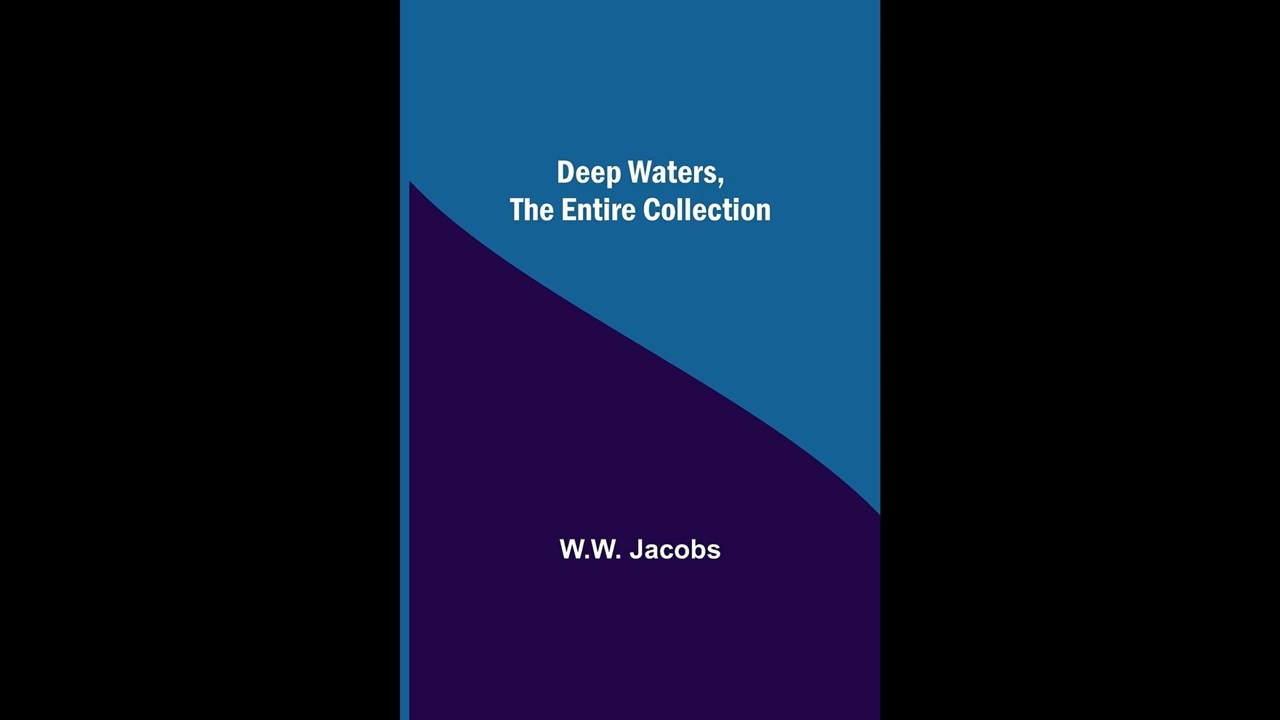
Deep Waters, the Entire Collection
Step into a world where the sea’s rhythms dictate fate, where the foggy London docks hide more than just ships, and where the most ordinary people find themselves in extraordinary, often comical, sometimes chilling predicaments. W W Jacobs’ "Deep Waters, the Entire Collection" gathers the complete output of a writer who found enduring fascination in the lives of sailors, dockworkers, and the quiet English folk who inhabit the coastal villages and riverbanks. This is storytelling at its finest, a rare blend of dry humor, keen observation, and a touch of the uncanny that continues to resonate with anyone who appreciates wit, human folly, and the enduring mystery of the waters. This extensive collection plunges listeners into the often-overlooked corners of late Victorian and Edwardian England, particularly those shaped by the ebb and flow of tides and commerce. We meet a parade of unforgettable characters: the sly, resourceful bargemen forever trying to outwit one another or their land-bound counterparts; the perpetually flustered but ultimately good-hearted ship captains; and the watchful, superstitious denizens of isolated lighthouses and fog-shrouded wharves. Most stories unfurl with a deceptively simple premise, perhaps a misunderstanding among friends over a pint in a pub, or a scheme hatched to avoid an unwanted marriage, or even a chance encounter with something profoundly unsettling on a dark night. The central conflict frequently arises from human nature itself—greed, fear, jealousy, or simple vanity—often exacerbated by the claustrophobic confines of a small vessel or a close-knit community. From the subtle art of telling a tall tale to the desperate measures taken to escape a nagging spouse, Jacobs’ narratives often present a clear initial situation that swiftly spirals into a delightful muddle of mistaken identities, comically botched plans, or an unnerving brush with the supernatural. The overarching arc across these tales is a celebration of the everyday absurdities and minor triumphs that punctuate the lives of working people, often concluding not with grand epiphanies but with a knowing nod or a wry, understated observation. William Wymark Jacobs, born in 1863 in London, was intimately familiar with the world he so vividly portrayed. His father managed a wharf on the River Thames at Wapping, providing young Jacobs with a childhood steeped in the sights, sounds, and distinctive argot of the docks and the bustling river trade. This early exposure to the maritime life, its colorful characters, and its unique culture was the wellspring for much of his literary output. After an education at Birkbeck Literary and Scientific Institution, he followed a sensible path, becoming a clerk in the Post Office Savings Bank. However, his true calling lay in writing. Jacobs began publishing his short stories in the 1890s, quickly earning a following for his distinctive voice. He eventually left his civil service post to become a full-time writer. While "The Monkey's Paw" remains his most widely recognized and influential story, a chilling piece of horror that has permeated popular culture, he also authored popular novels like A Master of Craft and several other collections of short stories, including Many Cargoes and Sea Urchins. Jacobs carved a unique niche for himself in British literature, blending humor and the macabre with an unparalleled ear for dialogue and dialect, establishing himself as a master of the short story form within the Edwardian literary landscape. He passed away in 1943, leaving behind a body of work that continues to charm and unsettle readers in equal measure. Jacobs’ stories enact several specific themes with remarkable consistency and understated skill. One prominent theme is the folly of human wishes and desires, most famously illustrated in "The Monkey's Paw," where a family's seemingly innocent wishes lead to increasingly horrific consequences, a stark reminder of the dangers of tampering with fate. This theme reappears in subtler forms throughout his humorous tales, where characters’ desires for wealth, revenge, or even just a quiet life often backfire spectacularly due to their own short-sightedness or arrogance. Another recurring thread is the unpredictability of the natural world and the supernatural, particularly the sea, which acts not just as a setting but as an almost sentient force. Its fogs, storms, and vastness provide perfect backdrops for strange occurrences and sudden, life-altering events, underscoring humanity’s smallness in the face of larger forces. Additionally, Jacobs often touches upon social class and aspiration, particularly among the working classes, and the often humorous clash between their earthy pragmatism and occasional attempts at upward mobility or genteel affectation. His characters navigate their world with a mixture of cunning, superstition, and a resilient, often cynical, good humor. His narratives also frequently highlight the power of community and gossip, where reputations are made and broken over a whispered word in a pub or a shared secret on a lonely watch. The moral complexities and simple joys of these close-knit societies provide much of the tension and comedic relief. Jacobs’ emergence as a writer occurred during a fascinating period in British history, spanning the late Victorian era into the early twentieth century. This was a time of immense social change, with the expansion of the British Empire reaching its zenith, rapid industrialization transforming urban landscapes, and technological advancements like steamships and railways redefining travel and trade. Yet, alongside this progress, there was a lingering appreciation for traditional ways of life and a fascination with the mystical and the unknown, fueled in part by the Spiritualism movement. Jacobs’ stories found their audience in popular magazines and literary journals that catered to a growing middle class eager for engaging, well-crafted narratives. His ability to evoke the specific atmosphere of the docks and the sea, combining realism with flashes of the fantastic, spoke to both the period's grounded observations of daily life and its enduring romanticism and appetite for suspense. Listening to "Deep Waters, the Entire Collection" as an audiobook offers a unique gateway into Jacobs’ world. The spoken word truly brings to life the distinct dialects and the subtle comedic timing that are so central to his writing. A skilled narrator can make the sly wit of a bargeman, the bluster of a captain, or the trembling fear of someone encountering the uncanny leap off the page and into the listener's imagination. The extended run length makes this collection ideal for sustained listening, allowing you to settle in and absorb the full breadth of Jacobs’ genius. Pay close attention to the pacing, which can shift from a leisurely, observational tone to one of mounting suspense, and how the narration’s voice captures the dry irony inherent in the dialogue, enhancing the atmosphere and drawing you deeper into the quiet, often unsettling, humor of these classic tales.
Enjoyed Deep Waters, the Entire Collection? A few ways to support us
Audible & Amazon links are affiliate; we may earn a small commission at no extra cost.
About this production
Human narration by a volunteer reader from LibriVox.org, the public-domain audiobook project. LibriVox volunteers record literary works whose copyright has expired in the United States, releasing the resulting recordings into the public domain.
Deep Waters, the Entire Collection by W W Jacobs. The underlying text is in the U.S. public domain. We do not republish any modern copyrighted edition, translation, or commentary.
The 4K cinematic visuals accompanying this audiobook are generated by an AI image model from prompts derived from the source text. No copyrighted photos, paintings, or stock footage are used. AI generation is disclosed on every video on our YouTube channel as required by YouTube's altered/synthetic content policy.
English subtitles are transcribed from the LibriVox recording with OpenAI Whisper. Translations into the 11 other supported languages are produced by Meta's NLLB-200 neural translation model. No human translator's copyrighted translation is used.
Questions about sourcing or rights? See our DMCA & Sourcing policy or contact us.
Enjoyed this audiobook?
If you'd like to own a copy of Deep Waters, the Entire Collection or hear a professionally produced edition, the links below help support free audiobook production at no extra cost to you.
As an Amazon Associate we earn from qualifying purchases. Audible / print links are affiliate.