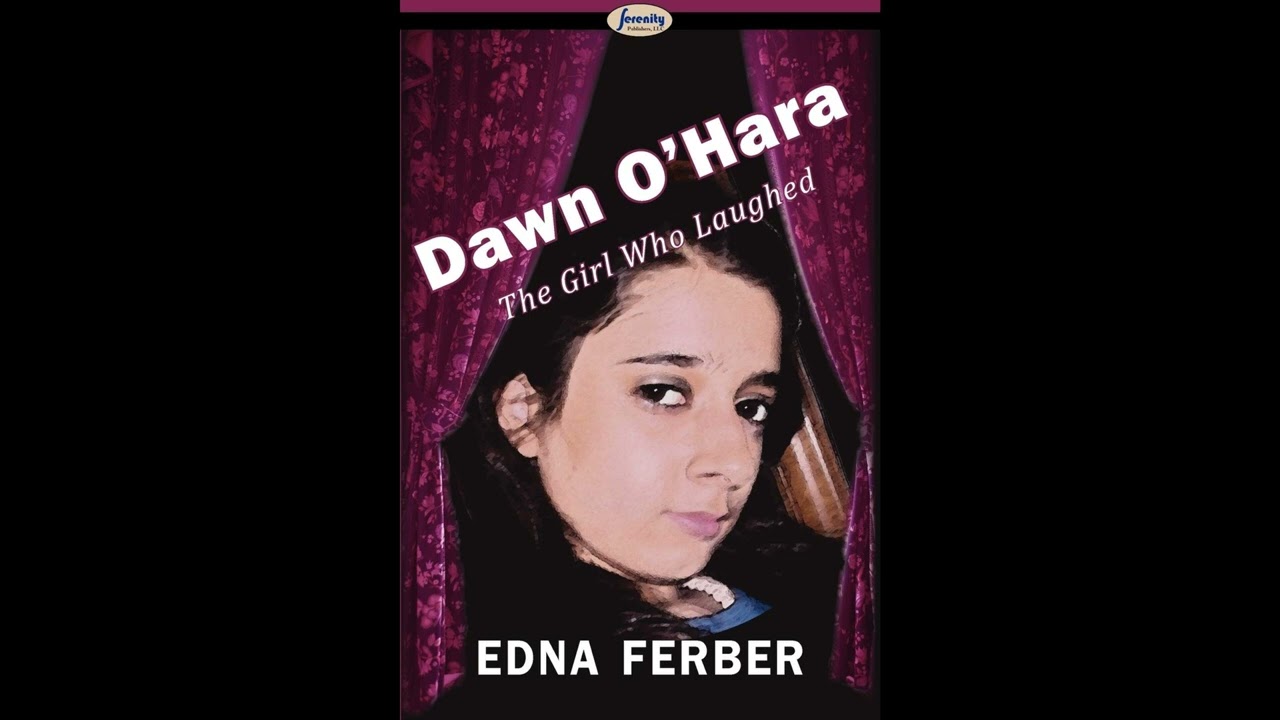
Dawn O'Hara, the Girl Who Laughed
Step into the bustling world of early 20th-century America with Edna Ferber's debut novel, Dawn O'Hara, the Girl Who Laughed. This is a story that introduces us to one of American literature's most enduring and perceptive voices, offering a spirited portrayal of a young woman carving out her own path in a rapidly changing society. Even today, over a century since its initial appearance, Dawn's challenges and triumphs resonate with anyone who has sought to define themselves beyond expectations, found strength in humor during hardship, or simply strived to make a mark in the professional world. It is a story of resilience, ambition, and the quiet revolution of self-discovery, delivered with Ferber's characteristic wit and a clear-eyed view of human nature. The narrative introduces us to Dawn O'Hara, a young woman whose effervescent spirit belies a recent personal tragedy. Having lost both her parents, Dawn finds herself at a crossroads, choosing a bold, independent course rather than succumbing to grief or conventional domesticity. She moves to Milwaukee, Wisconsin, a city then teeming with industry and social change, to pursue a career in journalism—a field still largely dominated by men. There, she immerses herself in the world of newsrooms, deadlines, and the often-harsh realities of reporting. She quickly befriends a close-knit group of fellow boarders and colleagues, forming what they affectionately call "the laughing club," whose shared camaraderie and boisterous humor become a vital lifeline amidst life's disappointments and the grind of daily work. Dawn's professional life sees her tackling assignments that range from the mundane to the surprisingly profound, giving her a unique lens through which to view the city and its inhabitants. Her personal life is equally dynamic, marked by budding friendships, tentative romances, and the ever-present question of her own identity and future. As she navigates professional hurdles and emotional entanglements, Dawn learns valuable lessons about sacrifice, loyalty, and the sometimes-painful process of maturation. Her journey eventually takes her from the familiar streets of Milwaukee to the sprawling, competitive landscape of New York City, where she seeks even greater opportunities and a deeper understanding of her own capabilities, all while retaining her signature, hopeful laughter that defines her very being. Edna Ferber, the literary force behind Dawn O'Hara, was born in Kalamazoo, Michigan, in 1885. Her early life saw her family move frequently before settling in Appleton, Wisconsin, where she worked as a reporter for the Appleton Daily Crescent at the age of seventeen. This firsthand experience in journalism directly informed her debut novel, imbuing it with a palpable authenticity. Ferber's early career as a newspaperwoman, often the only woman in the newsroom, gave her a sharp perspective on social dynamics and the challenges faced by ambitious women. Her move to New York City in 1912 marked a significant turning point, allowing her to fully dedicate herself to fiction writing and connect with the burgeoning literary scene of the era. Ferber's career blossomed, culminating in the Pulitzer Prize for Fiction in 1925 for her novel So Big, a moving story of a strong-willed woman farmer in the Midwest. She became renowned for her sweeping, panoramic novels that often spanned generations and chronicled significant periods of American history and societal transformation. Works like Show Boat (1926), Cimarron (1930), and Giant (1952) cemented her place in the literary canon, making her a celebrated author whose books were frequently adapted into popular stage plays and blockbuster films. Throughout her life, Ferber remained an independent spirit, never marrying, and she continued to write and publish until her death in 1968, leaving behind a legacy of compelling narratives that spoke to the heart of American experience. One of the central themes in Dawn O'Hara is the burgeoning independence and ambition of women in the early 20th century. Dawn's decision to pursue a career in journalism, rather than marry or rely on others, stands as a testament to her agency and a quiet defiance of traditional gender roles. We see this enacted as she pushes past skepticism in the newsroom to secure assignments, proving her capability through sheer effort and talent. Another prominent theme is the enduring power of resilience and optimism in the face of adversity. The very title, "The Girl Who Laughed," highlights Dawn's capacity to find humor and maintain a cheerful outlook, even when grappling with professional setbacks, romantic disappointments, or the lingering sorrow of personal loss. Her "laughing club" friends embody this spirit, offering a community of shared levity that uplifts rather than diminishes. The novel also illuminates the pursuit of a calling and the process of self-discovery. Dawn's initial foray into journalism is driven by necessity, but it quickly evolves into a genuine passion, allowing her to find purpose and meaning in her work. The narrative shows her not just surviving, but actively seeking out challenges that will shape her identity, moving beyond the expectations of her past into a future she actively creates. Through her interactions with various characters and her experiences in both Milwaukee and New York, Dawn begins to understand her own strengths, weaknesses, and what truly makes her feel alive, illustrating how a career can become intrinsically linked to personal growth and fulfillment. When Dawn O'Hara, the Girl Who Laughed was published in 1911, America was in the throes of the Progressive Era. This period was characterized by widespread social activism and political reform, particularly concerning issues like women's suffrage, industrialization's impact, and the changing roles of women in society. Women were increasingly entering the workforce, pushing boundaries in fields like education, medicine, and, notably, journalism. Ferber's novel emerged at a time when the "New Woman" archetype was gaining cultural prominence—a figure who was educated, independent, and actively engaged in public life, often eschewing traditional domesticity. The book reflected and, in its own way, contributed to this cultural shift, offering a relatable and aspirational portrayal of a young woman navigating these new opportunities and challenges. It was an early voice in a growing chorus of literature that examined modern American life through a distinctly female lens. Listening to Dawn O'Hara, the Girl Who Laughed as an audiobook offers a unique way to immerse yourself in Ferber's foundational work. The narration provides an immediate connection to Dawn's vibrant personality, allowing listeners to fully appreciate her quick wit and indomitable spirit through the cadence and delivery of her dialogue and internal thoughts. The several hours of listening provide ample time to settle into the rhythms of early 20th-century life, from the clatter of the newsroom to the intimate conversations of the "laughing club." Pay attention to the subtle shifts in the narrator's voice that underscore Dawn's emotional arc—her moments of vulnerability, her bursts of determination, and her characteristic laughter. The audio format truly brings to life the bustling atmosphere of Milwaukee and the burgeoning energy of New York, allowing the story's setting and the distinct voices of its characters to fully envelop you.
Enjoyed Dawn O'Hara, the Girl Who Laughed? A few ways to support us
Audible & Amazon links are affiliate; we may earn a small commission at no extra cost.
About this production
Human narration by a volunteer reader from LibriVox.org, the public-domain audiobook project. LibriVox volunteers record literary works whose copyright has expired in the United States, releasing the resulting recordings into the public domain.
Dawn O'Hara, the Girl Who Laughed by Edna Ferber. The underlying text is in the U.S. public domain. We do not republish any modern copyrighted edition, translation, or commentary.
The 4K cinematic visuals accompanying this audiobook are generated by an AI image model from prompts derived from the source text. No copyrighted photos, paintings, or stock footage are used. AI generation is disclosed on every video on our YouTube channel as required by YouTube's altered/synthetic content policy.
English subtitles are transcribed from the LibriVox recording with OpenAI Whisper. Translations into the 11 other supported languages are produced by Meta's NLLB-200 neural translation model. No human translator's copyrighted translation is used.
Questions about sourcing or rights? See our DMCA & Sourcing policy or contact us.
Enjoyed this audiobook?
If you'd like to own a copy of Dawn O'Hara, the Girl Who Laughed or hear a professionally produced edition, the links below help support free audiobook production at no extra cost to you.
As an Amazon Associate we earn from qualifying purchases. Audible / print links are affiliate.