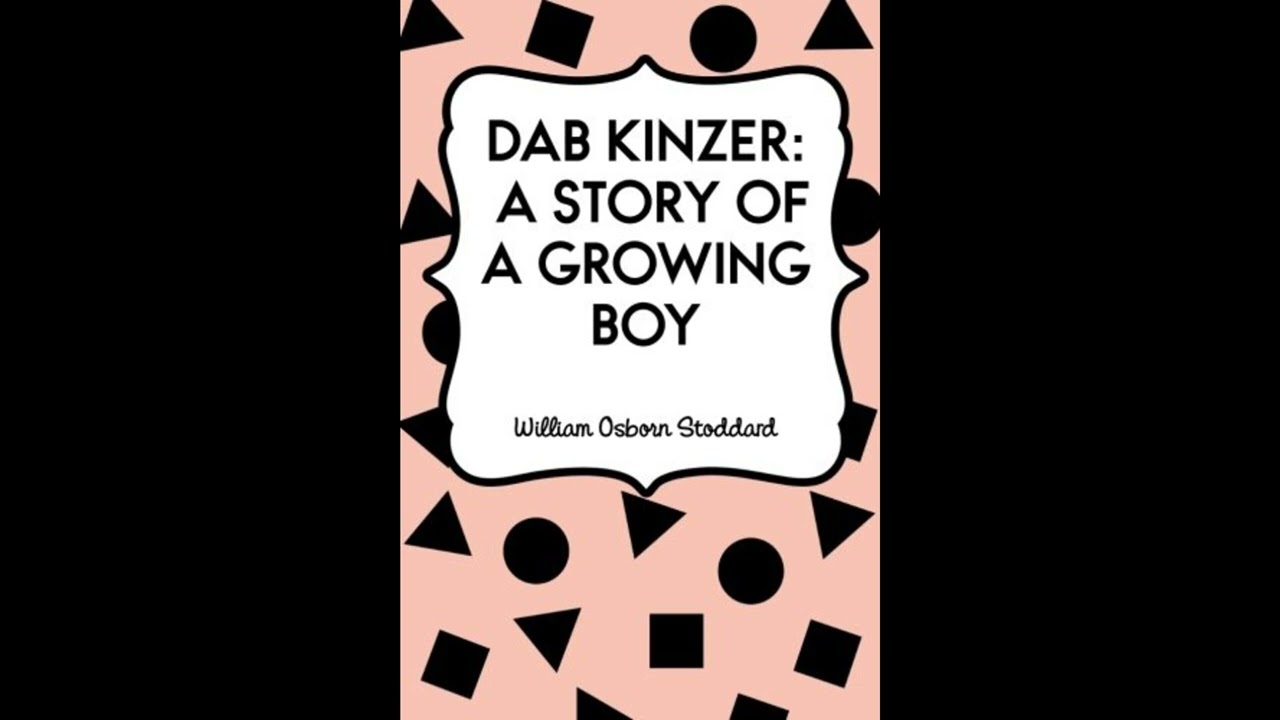
Dab Kinzer: A Story of a Growing Boy
Step into a particular corner of American literary history with William Osborn Stoddard’s Dab Kinzer: A Story of a Growing Boy, a novel that offers more than just a glimpse into the everyday adventures of youth. This is a foundational narrative in the genre of juvenile fiction, a work that captures the spirit of self-discovery, moral quandary, and the essential trials of friendship and responsibility. For today's listener, Dab Kinzer provides a delightful escape into a bygone era, yet its core themes of character development, overcoming obstacles, and understanding one's place in the world resonate with a surprising immediacy. It’s an opportunity to experience an authentic voice from the nineteenth century, reminding us of the enduring nature of growing up and the lessons learned along the way. The story centers on Dab Kinzer, a spirited and imaginative boy navigating the world of his small American town in what appears to be the latter half of the nineteenth century. With his friends, particularly the loyal and often mischievous Skip and the more cautious but equally adventurous Dick, Dab fills his days with the classic pursuits of boyhood: fishing in local creeks, building rafts for grand expeditions, and orchestrating harmless pranks that occasionally lead to unexpected consequences. Their home is a haven of familial warmth and the occasional lecture, presided over by kind but firm parents who try to guide Dab through his youthful exuberance. The narrative skillfully establishes a sense of place, painting vivid pictures of dusty roads, shaded swimming holes, and the close-knit community where everyone knows everyone else’s business—and often their secrets. As the seasons turn, Dab finds himself increasingly confronted with situations that challenge his understanding of right and wrong. Whether it’s a difficult decision about taking responsibility for a broken window, a conflict of loyalty among his friends, or an encounter with a local eccentric figure who sparks his curiosity, each incident serves as a stepping stone in his development. These aren’t grand, world-shaking events, but rather the smaller, more personal dilemmas that shape a young person’s conscience. Stoddard excels at portraying the internal struggles of a boy who is learning to differentiate between childish whims and the weight of adult expectations, all while preserving the innocent charm of youth. The plot progresses through a series of these interconnected episodes, gradually illustrating Dab’s growth from a carefree child into a more thoughtful, considerate young man, prepared to face the world with a developing sense of his own character. William Osborn Stoddard, the author of this charming tale, lived a life almost as adventurous and varied as some of his characters. Born in New York in 1835, Stoddard demonstrated a remarkable versatility throughout his eighty-nine years, passing away in 1925. He began his career as a journalist, a profession that sharpened his observational skills and narrative voice. A pivotal chapter in his life was his service as Assistant Private Secretary to President Abraham Lincoln during the early years of the Civil War, from 1861 to 1864. This unique experience in the heart of American politics undoubtedly offered him profound insights into human nature, leadership, and the momentous events shaping the nation. After his time in Washington, Stoddard returned to journalism and eventually turned his prolific pen to writing for a burgeoning audience of young readers. He became one of the most respected and widely read authors of juvenile fiction in America during the late nineteenth and early twentieth centuries. His works often combined historical accuracy with spirited adventure, aiming to entertain while subtly instilling moral values and a sense of patriotism. Beyond Dab Kinzer, his impressive bibliography includes over a hundred books, among them notable titles such as The Boy Lincoln, a biographical novel that introduced countless young readers to the life of the sixteenth president, and adventure stories like Talking Leaves and With the Black Prince. Stoddard’s place in the literary canon is that of a skilled storyteller who helped define the expectations for American boys' literature, offering tales of ingenuity, courage, and upright character during a period of significant national change. At its heart, Dab Kinzer enacts several significant themes central to the human experience, particularly for the young. One primary theme is that of coming-of-age and the gradual shedding of innocence. We observe this, for instance, in a scene where Dab and his friends accidentally damage a neighbor’s property during a boisterous game. Instead of simply running away, Dab grapples with the guilt and the difficult decision of whether to confess, experiencing for the first time the heavy mantle of personal accountability beyond simple parental admonishment. Another powerful theme is the formation of character through adversity. Whether it is the challenge of mastering a new skill like carving a canoe, enduring a difficult school task, or confronting a bully, Dab learns through persistence and resilience that effort and moral courage are their own rewards. The story also beautifully illustrates the enduring theme of friendship and loyalty. Dab’s interactions with Skip and Dick showcase the highs and lows of boyhood companionship—the shared secrets, the unspoken understandings, and the inevitable squabbles that test their bonds. A particularly poignant moment might involve Dab standing up for one of his friends against an injustice, demonstrating that true loyalty often demands personal sacrifice. Furthermore, the importance of community and family plays a quiet but constant role. The adults in Dab’s life—his parents, teachers, and even the local shopkeepers—all contribute to his moral education, providing a framework of guidance and expectation that shapes his world view and reinforces the values he must learn to uphold. This kind of story, focused on the wholesome development of youth, found a particularly eager audience in the late nineteenth century. The period following the American Civil War was a time of rapid industrialization, westward expansion, and profound social change. There was a prevailing cultural sentiment that young boys needed strong moral guidance and positive role models to navigate an increasingly complex world. Books like Dab Kinzer served as a moral compass, emphasizing virtues such as honesty, diligence, self-reliance, and patriotism, all presented through engaging narratives. It was an era when "boys' books" flourished, with authors like Stoddard, Horatio Alger Jr., and others contributing to a popular genre designed to both entertain and educate, reflecting a societal preoccupation with character building and the shaping of future citizens in a rapidly evolving nation. Listening to Dab Kinzer: A Story of a Growing Boy as an audiobook offers a unique connection to its historical context and narrative charm. The vocal performance can bring to life the distinct personalities of Dab, Skip, and Dick, allowing their youthful energy and innocence to truly shine through. A skilled narrator can capture the subtle humor, the moments of introspection, and the underlying warmth of Stoddard's prose, transporting you directly into Dab’s world. The run length of several hours makes this an ideal companion for long commutes, quiet evenings, or a leisurely afternoon. As you listen, pay attention to the gentle pacing of the story, the vivid descriptive language that paints pictures of small-town life, and the nuances in the dialogue that reveal the characters' inner thoughts. It’s an auditory experience that honors the simplicity and profound lessons embedded in this classic story of boyhood.
Enjoyed Dab Kinzer: A Story of a Growing Boy? A few ways to support us
Audible & Amazon links are affiliate; we may earn a small commission at no extra cost.
About this production
Human narration by a volunteer reader from LibriVox.org, the public-domain audiobook project. LibriVox volunteers record literary works whose copyright has expired in the United States, releasing the resulting recordings into the public domain.
Dab Kinzer: A Story of a Growing Boy by William Osborn Stoddard. The underlying text is in the U.S. public domain. We do not republish any modern copyrighted edition, translation, or commentary.
The 4K cinematic visuals accompanying this audiobook are generated by an AI image model from prompts derived from the source text. No copyrighted photos, paintings, or stock footage are used. AI generation is disclosed on every video on our YouTube channel as required by YouTube's altered/synthetic content policy.
English subtitles are transcribed from the LibriVox recording with OpenAI Whisper. Translations into the 11 other supported languages are produced by Meta's NLLB-200 neural translation model. No human translator's copyrighted translation is used.
Questions about sourcing or rights? See our DMCA & Sourcing policy or contact us.
Enjoyed this audiobook?
If you'd like to own a copy of Dab Kinzer: A Story of a Growing Boy or hear a professionally produced edition, the links below help support free audiobook production at no extra cost to you.
As an Amazon Associate we earn from qualifying purchases. Audible / print links are affiliate.