Cobbett's Advice to Young Men: And (Incidentally) to Young Women in the Middle
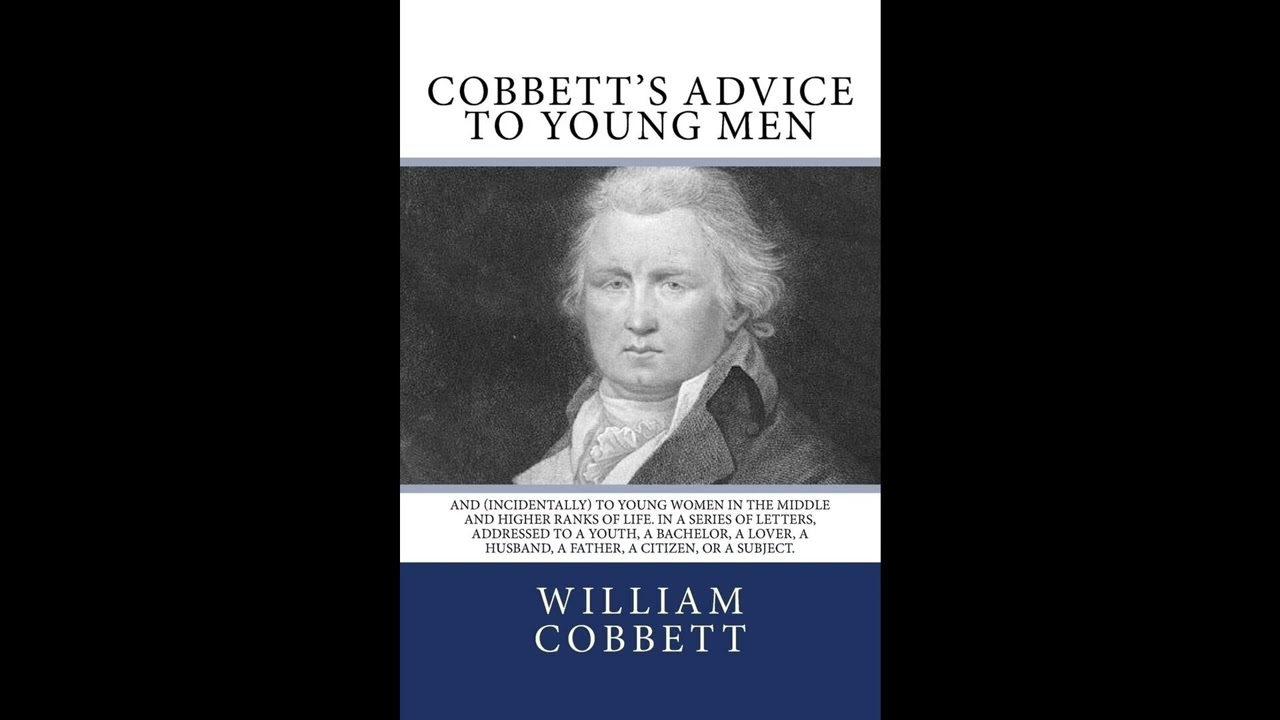
Step into the parlor of an opinionated, supremely practical sage from the early nineteenth century, and prepare for a direct, sometimes bracing, conversation about how to conduct your life. Cobbett's Advice to Young Men: And (Incidentally) to Young Women in the Middle is precisely what its title suggests: a comprehensive, no-nonsense guide to personal conduct, moral rectitude, and the pursuit of a fulfilling, independent life. Far from being a dusty relic, William Cobbett’s counsel reverberates with a startling relevance even two centuries later, offering insights into human nature, the pitfalls of rash decisions, and the enduring principles that underpin a well-ordered existence. It is a work brimming with character, wit, and the unmistakable voice of a man who believed in the power of common sense and diligent effort to shape one’s destiny. This singular work unfolds as a series of letters or essays, each addressing a distinct aspect of a young person’s life, primarily aimed at young men but with significant implications and direct admonitions for young women. Cobbett begins by laying down the fundamental principles of character: industry, sobriety, and honesty. He guides his reader through the crucial formative years, emphasizing the importance of establishing good habits and avoiding temptations that might derail future prospects. The narrative, if one can call it such, follows the logical progression of life’s major decisions, from the early choices about work and self-improvement to the profound decision of marriage. Cobbett offers detailed and often quite specific counsel on how to choose a spouse, a section that consumes a considerable portion of the book and reveals much about the societal expectations of the time. He provides a blueprint for identifying a suitable partner, listing qualities to seek out and, perhaps more memorably, vices to strenuously avoid. Beyond matrimony, he addresses the responsibilities of a husband and father, the management of a household, and the principles of raising children. Throughout, the underlying “conflict” is the universal human struggle against idleness, extravagance, and poor judgment, with Cobbett acting as the unflinching guide steering his readers toward a virtuous and prosperous path. The author, William Cobbett (1763-1835), was an extraordinary and often controversial figure in British history. Born to humble farming stock in Surrey, England, he largely educated himself, rising through the ranks of the army before becoming one of the most prolific and influential journalists and political commentators of his era. He spent a period living in America, where he continued his journalistic pursuits, returning to England to become an even more vocal advocate for agrarian values and political reform. Cobbett’s literary output was immense and varied, perhaps most famously including Rural Rides, a series of observations on the English countryside and its people, which remains a classic of travel writing and social commentary. He also penned Cobbett's English Grammar, a remarkably accessible and popular guide to the English language that further cemented his reputation as a didactic yet engaging writer. His prose style was famously clear, direct, and vigorous, often polemical, but always accessible to a broad audience, reflecting his commitment to empowering the common man through knowledge and reasoned argument. He stood as a powerful voice for the working classes and an ardent defender of traditional English rural life against the encroaching forces of industrialization. At the heart of Cobbett's Advice lie several foundational themes, most notably industry and frugality. Cobbett consistently argues that a man's success and independence are direct results of his diligence and careful management of resources. He provides concrete examples: condemning the idleness that leads to debt and dependence, contrasting it with the steady accumulation of modest wealth through hard work and prudent saving. He details the importance of self-sufficiency, suggesting that wasteful habits in youth invariably lead to poverty and regret in old age, painting vivid pictures of the consequences of squandered opportunities. Another central theme is the judicious choice of a spouse and the establishment of domestic virtue. Cobbett dedicates extensive passages to this, seeing a good marriage as the bedrock of a stable society. He advises young men to look beyond superficial beauty, instead prioritizing a woman's character, her industriousness, her cleanliness, and her ability to manage a household. For young women, he implies that their virtue and practical skills are their most valuable assets, urging them to cultivate habits that will make them desirable partners and capable homemakers, ensuring their own security and the moral health of the family. The mutual responsibility and respect within a marriage, built on these virtues, are paramount. This work emerged from a specific and turbulent period in British history. Published in 1829, it arrived on the cusp of significant social and political change. The Industrial Revolution was rapidly transforming Britain from an agrarian society into an industrial powerhouse, leading to mass migration to cities, new forms of labor, and a burgeoning middle class. Alongside these economic shifts came social dislocations, moral anxieties, and a widespread demand for education and self-improvement. Cobbett’s advice reflects a conservative desire to preserve what he saw as essential virtues and a moral compass in a world undergoing rapid, disorienting change. His emphasis on self-reliance, hard work, and responsible family life can be understood as an attempt to provide stability and guidance in an era where traditional social structures were being challenged. The book also taps into the broader trend of didactic literature and self-help manuals that gained popularity in the early nineteenth century, as a newly literate public sought practical guidance for navigating the complexities of modern life. Cobbett’s particular contribution stood out due to his plainspoken style and his unwavering, often contrarian, personal convictions. Listening to Cobbett's Advice to Young Men as an audiobook offers a singular opportunity to connect directly with this powerful historical voice. Over several hours, a skilled narrator brings Cobbett's words to life, allowing the listener to truly appreciate the rhythmic cadence of his arguments, the surprising turns of phrase, and the occasional burst of humor or fiery indignation. This is not merely an antiquated text; it is a sustained, intimate conversation with a compelling mind from the past, made immediate through the spoken word. The deliberate pacing allows Cobbett's practical wisdom, his sharp critiques of societal follies, and his enduring insights into human nature to sink in, making it an ideal companion for reflective moments or for simply gaining a deeper understanding of a foundational voice in English literature and social commentary.
Enjoyed Cobbett's Advice to Young Men: And (Incidentally) to Young Women in the Middle? A few ways to support us
Audible & Amazon links are affiliate; we may earn a small commission at no extra cost.
About this production
Human narration by a volunteer reader from LibriVox.org, the public-domain audiobook project. LibriVox volunteers record literary works whose copyright has expired in the United States, releasing the resulting recordings into the public domain.
Cobbett's Advice to Young Men: And (Incidentally) to Young Women in the Middle by William Cobbett. The underlying text is in the U.S. public domain. We do not republish any modern copyrighted edition, translation, or commentary.
The 4K cinematic visuals accompanying this audiobook are generated by an AI image model from prompts derived from the source text. No copyrighted photos, paintings, or stock footage are used. AI generation is disclosed on every video on our YouTube channel as required by YouTube's altered/synthetic content policy.
English subtitles are transcribed from the LibriVox recording with OpenAI Whisper. Translations into the 11 other supported languages are produced by Meta's NLLB-200 neural translation model. No human translator's copyrighted translation is used.
Questions about sourcing or rights? See our DMCA & Sourcing policy or contact us.
Enjoyed this audiobook?
If you'd like to own a copy of Cobbett's Advice to Young Men: And (Incidentally) to Young Women in the Middle or hear a professionally produced edition, the links below help support free audiobook production at no extra cost to you.
As an Amazon Associate we earn from qualifying purchases. Audible / print links are affiliate.