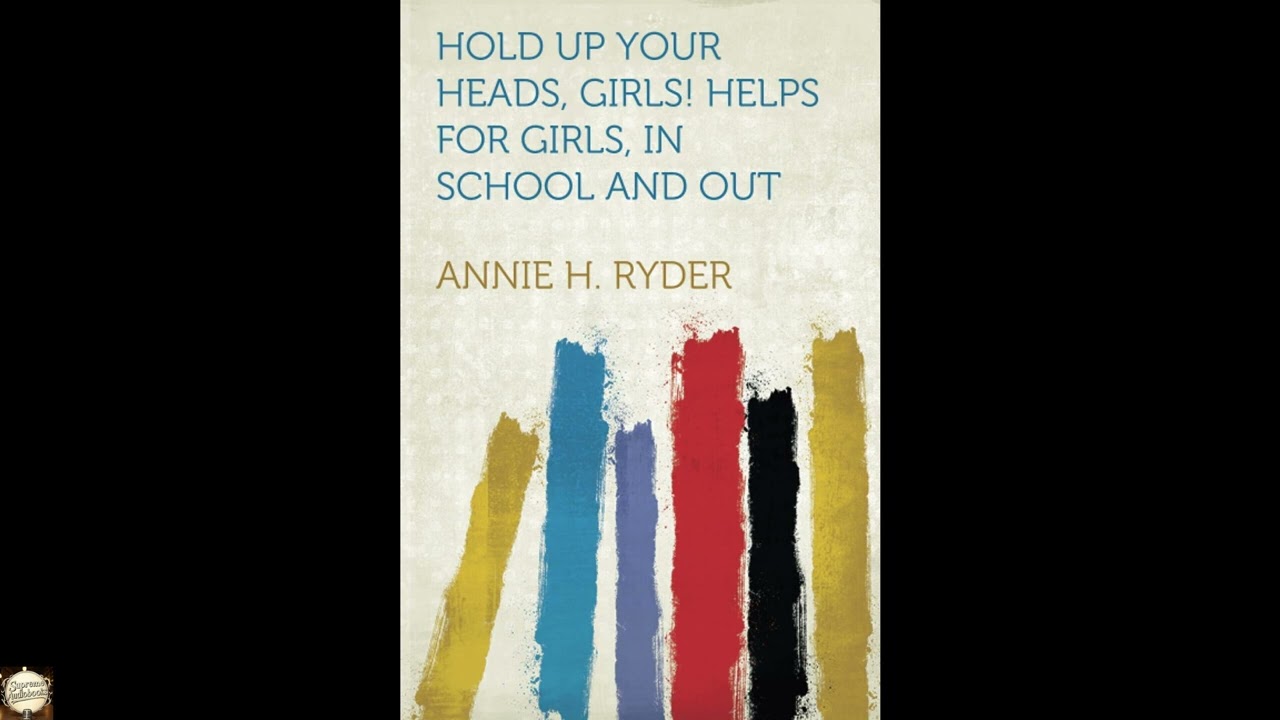
Hold Up Your Heads, Girls! Helps for Girls, in School and out
Step into a parlor from a bygone era, where wisdom is dispensed with gentle authority and self-respect is the highest virtue. Annie H. Ryder’s Hold Up Your Heads, Girls! Helps for Girls, in School and out offers a truly unique window into the aspirations and expectations placed upon young women at the turn of the twentieth century. Far from being a mere historical curiosity, this collection of practical and moral guidance speaks to enduring human concerns: how to cultivate inner strength, navigate social complexities, pursue knowledge, and live a life of purpose. It reminds us that while the outward forms of society may change, the fundamental quest for self-improvement and dignified living remains a constant, making Ryder’s counsel surprisingly relevant for anyone seeking grounding principles in an often bewildering world. This remarkable volume functions less as a narrative with a conventional "plot" and more as a carefully structured manual for life, guiding its young readers – and now, listeners – through the various stages and challenges of girlhood and nascent womanhood. Ryder begins by addressing the fundamentals of self-care and deportment, establishing a foundation of physical grace and mental composure. She discusses the importance of appearance, not for vanity, but as an expression of self-respect and consideration for others, offering advice on dress, posture, and the art of maintaining a pleasant countenance. From these foundational principles, the book moves into the hallowed halls of education. Here, Ryder champions intellectual diligence and a genuine love of learning, urging girls to see their schooling not as a burden, but as an opportunity to sharpen their minds and broaden their understanding of the world. She encourages focused study, critical thinking, and the development of good study habits, preparing them not just for examinations, but for a lifetime of mental engagement. As the book progresses, its scope expands to encompass the intricacies of social interaction and moral conduct. Ryder dedicates significant portions to fostering amiable relationships, the nuances of conversation, and the responsibilities of friendship. She offers specific counsel on etiquette in various settings—from the schoolroom to the drawing-room—emphasizing kindness, sincerity, and thoughtfulness towards others. The overarching aim is to equip girls with the social skills necessary to move through society with confidence and grace, earning respect and contributing positively to their communities. She then addresses the development of moral character, emphasizing virtues such as honesty, courage, perseverance, and a strong sense of duty. This segment of the book lays out a compelling vision for a young woman's personal growth, guiding her towards becoming an individual of integrity, capable of making sound decisions and upholding high ethical standards in all aspects of her existence. Ryder concludes with an inspiring vision of responsible womanhood, preparing girls for their future roles in society with a quiet but firm emphasis on contribution and personal fulfillment. Annie H. Ryder herself was a voice of moral instruction and domestic guidance during a period of significant social transformation in America. While specific dates of her birth and passing are not widely known or often cited, her literary output firmly places her within the late nineteenth and early twentieth centuries, an era ripe with advice literature for young women. She authored several books aimed at cultivating character and providing practical guidance, often through gentle narratives or direct, encouraging counsel. Her works, such as Little Women in Blue and Childhood's Happy Days, echoed the prevailing cultural values of the time, yet frequently instilled a sense of agency and personal responsibility within the confines of established social norms. Ryder belonged to a cadre of women writers who dedicated their talents to shaping the moral landscape of younger generations, often drawing upon Christian ethics and the ideals of republican motherhood. These authors were not literary firebrands but rather steady influences, quietly building a canon of didactic literature that sought to prepare girls for their roles in home and society. Ryder’s contribution lies in her ability to synthesize complex moral tenets into accessible, actionable advice. She was part of a broader cultural movement that believed in the power of education and moral upbringing to create virtuous citizens, particularly women, who were seen as the bedrock of the family and, by extension, the nation. Her place in the literary tradition is as a thoughtful and earnest guide, her books serving as cultural artifacts that reflect a sincere desire to empower young women with the tools for a well-lived and respectable life, often within the specific societal expectations of her generation. At its core, Hold Up Your Heads, Girls! champions several profound themes that resonate beyond its historical setting. A central theme is the cultivation of self-respect and dignity. Ryder consistently encourages girls to value themselves not for outward beauty or superficial accomplishments, but for their inner character and intellectual capacity. For instance, she might advise a girl to stand tall and speak clearly, not out of arrogance, but as an outward manifestation of self-possession and inner worth, emphasizing that true dignity comes from integrity, not from seeking approval. Another potent theme is the pursuit of genuine intellectual curiosity and continuous learning. Ryder moves beyond mere rote memorization, urging girls to truly engage with their studies. She might illustrate this by discussing the joy of understanding a complex scientific principle or the pleasure derived from independent reading, thereby showing that education is a lifelong endeavor that enriches the individual mind rather than merely preparing one for a role. Furthermore, the book emphasizes the art of social grace and thoughtful consideration for others. Ryder details how small acts of kindness and attentiveness can build strong relationships and harmonious communities. She might describe a scene where a girl refrains from gossiping, or thoughtfully prepares for a visitor, demonstrating that true social acumen lies in empathy and respect for the feelings of others. Finally, a strong undercurrent is the importance of moral fortitude and character. Ryder encourages young women to develop unwavering honesty and courage in the face of temptation or difficulty. Imagine a girl presented with an opportunity to gain an advantage through deceit; Ryder's counsel would firmly guide her towards upholding truth, even if it means personal sacrifice, cementing the idea that ethical behavior is its own reward and the foundation of a good life. Ryder’s work emerged during a fascinating period in American history—the cusp of the Progressive Era, bridging the conservative ideals of the Victorian age with burgeoning calls for social reform and women’s suffrage. The late nineteenth and early twentieth centuries saw an expansion of educational opportunities for women, even as societal expectations largely confined them to the domestic sphere. There was a prevailing cultural anxiety about the moral direction of the nation, particularly concerning youth, which fueled a boom in didactic literature aimed at guiding young people towards virtuous living. Women like Annie H. Ryder wrote into this space, providing a framework for girls to navigate an increasingly complex world where traditional roles were being questioned but not yet fully dismantled. The book reflects a delicate balance: reinforcing the decorum and moral rectitude expected of young ladies, while also subtly empowering them with tools for intellectual growth and self-reliance, preparing them to be influential within their prescribed social domains. It speaks to a time when character building was considered paramount, and personal conduct was intimately linked to community well-being. Listening to Hold Up Your Heads, Girls! as an audiobook offers a unique intimacy with its counsel. The spoken word allows Ryder’s advice to unfold with an unhurried, reflective pace, much like a trusted mentor sharing wisdom over a cup of tea. A skilled narrator brings a calm, measured voice to the text, making the guidance feel personal and directly applicable. Listen for the deliberate pacing that invites contemplation, allowing each piece of advice to settle and resonate. The clarity of the narrator’s voice lends authority and warmth, transforming what might otherwise be perceived as dated directives into enduring lessons on integrity and self-possession. The absence of visual distractions on this several-hours-long audio experience allows for a focused immersion into the atmosphere of principled guidance, enabling listeners to truly absorb the spirit of Ryder’s encouragement and connect with the timeless human desire for a well-ordered and purposeful life.
Enjoyed Hold Up Your Heads, Girls! Helps for Girls, in School and out? A few ways to support us
Audible & Amazon links are affiliate; we may earn a small commission at no extra cost.
About this production
Human narration by a volunteer reader from LibriVox.org, the public-domain audiobook project. LibriVox volunteers record literary works whose copyright has expired in the United States, releasing the resulting recordings into the public domain.
Hold Up Your Heads, Girls! Helps for Girls, in School and out by Annie H. Ryder. The underlying text is in the U.S. public domain. We do not republish any modern copyrighted edition, translation, or commentary.
The 4K cinematic visuals accompanying this audiobook are generated by an AI image model from prompts derived from the source text. No copyrighted photos, paintings, or stock footage are used. AI generation is disclosed on every video on our YouTube channel as required by YouTube's altered/synthetic content policy.
English subtitles are transcribed from the LibriVox recording with OpenAI Whisper. Translations into the 11 other supported languages are produced by Meta's NLLB-200 neural translation model. No human translator's copyrighted translation is used.
Questions about sourcing or rights? See our DMCA & Sourcing policy or contact us.
Enjoyed this audiobook?
If you'd like to own a copy of Hold Up Your Heads, Girls! Helps for Girls, in School and out or hear a professionally produced edition, the links below help support free audiobook production at no extra cost to you.
As an Amazon Associate we earn from qualifying purchases. Audible / print links are affiliate.