Children's Hour With Red Riding Hood and Other Stories
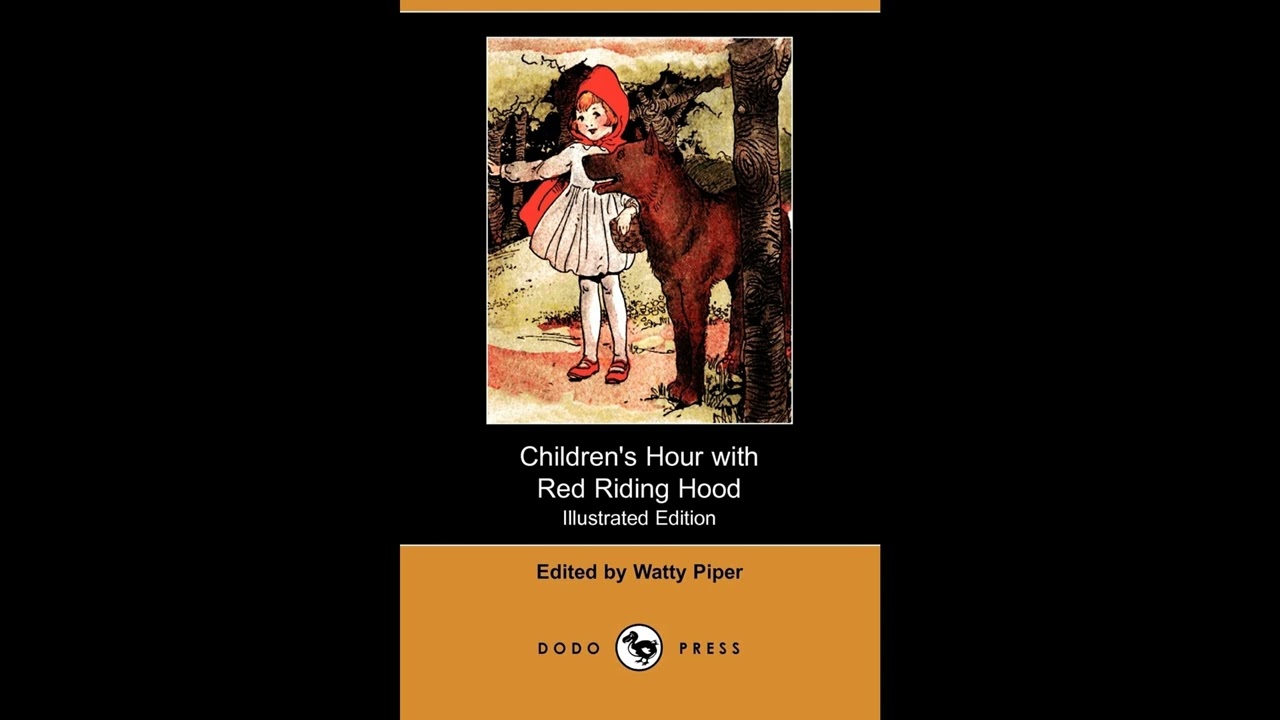
Step into a world where whispers of warning carry great weight, where talking animals offer both peril and wisdom, and where simple acts of kindness or defiance shape destinies. "Children's Hour With Red Riding Hood and Other Stories," curated by the beloved name of Watty Piper, brings listeners back to the foundational narratives that have shaped generations, offering not just entertainment but profound, if subtle, lessons for young minds and nostalgic comfort for adults. These are the fables and tales that instill a sense of wonder, present clear moral choices, and introduce listeners to the enduring power of story itself – a power that remains vital in our hurried modern world, inviting reflection and connection across ages. The collection centers around the enduring tale of Red Riding Hood, a story that begins with a young girl's simple mission: to carry a basket of goodies through the woods to her ailing grandmother. The setting is idyllic, a sun-dappled forest path that promises tranquility, yet holds an unspoken undercurrent of danger. Red Riding Hood, characterized by her youthful innocence and the distinctive red cloak gifted by her grandmother, sets out, receiving a clear instruction from her mother: do not stray from the path, do not speak to strangers. These early moments establish a world where seemingly innocent choices can have profound consequences, and where the natural world, while beautiful, is also unpredictable. As the story unfolds, the unsuspecting girl encounters a cunning wolf, an embodiment of deceptive charm and hidden menace. The wolf, observing her naivete, engages her in conversation, subtly diverting her attention and encouraging her to wander off the prescribed route to gather flowers. This interaction marks a critical turning point, highlighting the classic conflict between appearance and reality, and the perilous nature of disregarding parental advice. The wolf's predatory plan, involving a race to the grandmother's cottage and a disguise designed to trick the trusting child, sets the stage for a dramatic confrontation that tests Red Riding Hood's discernment and places her in grave peril. Alongside this central narrative, the "Other Stories" within the collection typically present a similar landscape of moral choices and archetypal characters – a world where industry is rewarded, vanity is punished, and courage, even in its smallest forms, can lead to triumph. "Watty Piper" stands as one of the most intriguing and enduring names in children's literature, not as a single biographical author but as a beloved pseudonym associated with the Platt & Munk publishing house. Emerging in the early twentieth century, this pen name became synonymous with expertly compiled and retold children's classics, making traditional folklore accessible and appealing to new generations of readers. Rather than a singular individual with birth and death dates, Watty Piper represents a collaborative effort to preserve and present the narratives that form the bedrock of Western childhood. The name's primary fame stems from its association with the enduring classic, "The Little Engine That Could," a tale of perseverance and optimism that has inspired millions. The role of a compiler like Watty Piper was crucial during a period when classic folk tales, often passed down orally or found in less child-friendly formats, needed careful adaptation. The works attributed to this name often involved simplifying language, clarifying moral messages, and creating visually appealing editions for young audiences. Piper, therefore, represents a tradition of literary stewardship, ensuring that narratives like "Red Riding Hood," "The Three Little Pigs," or "Goldilocks and the Three Bears" (examples of tales often included in such compilations) retained their core magic while becoming appropriate for the sensibilities and comprehension levels of very young children. This approach solidified the "Watty Piper" brand as a trusted source for wholesome, engaging, and educational stories that would resonate across cultural divides. Within these tales, several core themes consistently emerge, offering listeners insights into fundamental human experiences. One prominent theme is the importance of caution and obedience, vividly illustrated in Red Riding Hood's deviation from her mother's explicit instructions. The immediate danger she faces upon speaking to the wolf and leaving the path serves as a concrete example of the consequences that can arise from ignoring wise counsel, a lesson that resonates with children learning about boundaries and safety. Another significant theme is the stark contrast between innocence and deception. Red Riding Hood's trusting nature makes her vulnerable to the wolf's cunning lies, highlighting how outward appearances can belie treacherous intentions. The story demonstrates how the world can be a place where not everyone has good intentions, nudging young listeners toward developing a healthy skepticism while still cherishing good. A third theme frequently present in such collections is the concept of justice and retribution. While the exact ending of Red Riding Hood varies across its many iterations – sometimes involving a woodsman's timely intervention, other times a more dire fate – the narrative consistently moves towards a resolution where the villainous wolf faces consequences for his actions. This provides a sense of moral order and reinforces the idea that good ultimately prevails, or that wrongdoings will eventually be addressed. Furthermore, these stories often subtly promote resourcefulness and resilience. Even when characters find themselves in perilous situations, their ability to think quickly, or the timely assistance of others, often leads to their survival or escape, teaching that challenges can be overcome through cleverness or communal support. The period in which collections like "Children's Hour With Red Riding Hood" gained prominence, particularly the early to mid-twentieth century, marked a significant era for children's literature. This was a time of increased literacy, widespread public education, and a growing understanding of childhood as a distinct developmental stage deserving of its own specialized literature. Publishers like Platt & Munk, under names like Watty Piper, responded to a cultural need for standardized, accessible versions of traditional folklore. Prior to this, many of these tales existed in more adult-oriented or academic forms, often with darker or more complex themes. The drive was to sanitize and simplify these narratives, making them suitable for young children, imbuing them with clear moral messages, and presenting them in attractive, illustrated books. This effort was part of a broader movement to use literature as a tool for moral instruction and character development in children, reflecting the societal values of the time. These compilations provided a curated literary experience, ensuring that children were exposed to a common cultural heritage of stories that taught lessons about kindness, diligence, and the dangers of the world in an understandable and digestible format. To experience "Children's Hour With Red Riding Hood and Other Stories" as an audiobook is to return to the primal magic of oral storytelling. The narrator's voice becomes the conduit, transforming simple words on a page into living characters and palpable atmospheres. A skilled narrator breathes life into Red Riding Hood's youthful naivete, the wolf's deceptive purr, and the comforting presence of a wise mother or grandmother. Listeners will find themselves transported to the quiet rustle of the forest, the warmth of a cottage, or the tense moments of a confrontation, all conveyed through the nuanced pacing, intonation, and vocal characterizations. The generous run length of this collection makes it ideal for shared listening during quiet evenings, long car rides, or as a soothing backdrop for imaginative play, inviting families to connect with these foundational narratives in a deeply engaging and memorable way.
Enjoyed Children's Hour With Red Riding Hood and Other Stories? A few ways to support us
Audible & Amazon links are affiliate; we may earn a small commission at no extra cost.
About this production
Human narration by a volunteer reader from LibriVox.org, the public-domain audiobook project. LibriVox volunteers record literary works whose copyright has expired in the United States, releasing the resulting recordings into the public domain.
Children's Hour With Red Riding Hood and Other Stories by Watty Piper. The underlying text is in the U.S. public domain. We do not republish any modern copyrighted edition, translation, or commentary.
The 4K cinematic visuals accompanying this audiobook are generated by an AI image model from prompts derived from the source text. No copyrighted photos, paintings, or stock footage are used. AI generation is disclosed on every video on our YouTube channel as required by YouTube's altered/synthetic content policy.
English subtitles are transcribed from the LibriVox recording with OpenAI Whisper. Translations into the 11 other supported languages are produced by Meta's NLLB-200 neural translation model. No human translator's copyrighted translation is used.
Questions about sourcing or rights? See our DMCA & Sourcing policy or contact us.
Enjoyed this audiobook?
If you'd like to own a copy of Children's Hour With Red Riding Hood and Other Stories or hear a professionally produced edition, the links below help support free audiobook production at no extra cost to you.
As an Amazon Associate we earn from qualifying purchases. Audible / print links are affiliate.
![Children's Classics in Dramatic Form, Book Two. [1909] by Augusta Stevenson — free full audiobook](https://img.youtube.com/vi/h4bTKUeuO7U/maxresdefault.jpg)