Charles Lamb (A Memoir)
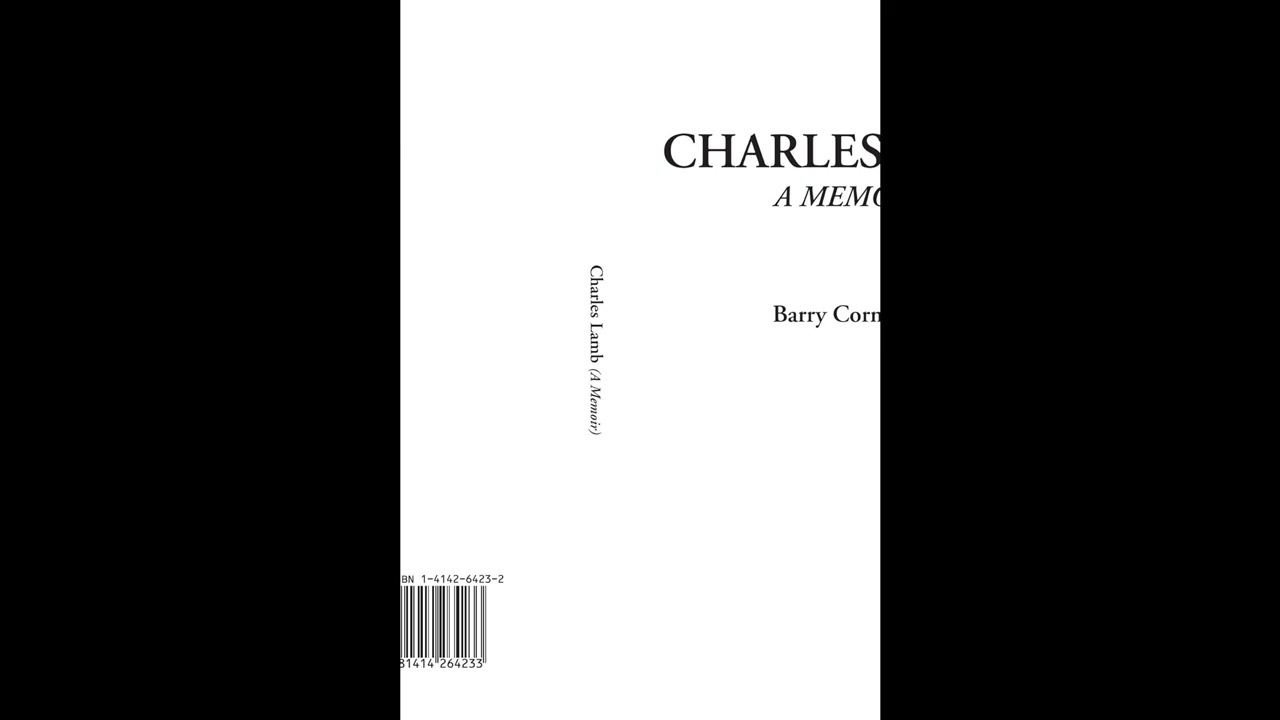
Step into the singular world of Charles Lamb, a figure whose wit, pathos, and profound humanity continue to resonate centuries after his passing. Barry Cornwall’s intimate memoir offers more than just a chronological account; it presents a vivid portrait of a man who navigated immense personal sorrow with an unparalleled spirit of resilience, finding solace and joy in literature, friendship, and the bustling streets of London. For anyone seeking to understand the heart of the Romantic era not through its grand pronouncements but through the quiet, contemplative life of one of its most beloved essayists, this personal remembrance brings Lamb’s enduring charm and intellect into sharp focus, revealing why he remains a cherished voice in English letters. The story Cornwall recounts begins with Lamb’s humble origins, tracing his path from a student at Christ’s Hospital, where he forged a lifelong friendship with Samuel Taylor Coleridge, to his long, arduous career as a clerk at the East India House. This seemingly mundane professional life stands in stark contrast to the richness of his inner world and the profound domestic challenges he faced. The memoir sensitively portrays the deep bond between Charles and his sister, Mary Lamb, and the shadow cast by her mental illness—a constant presence that shaped the contours of their lives. Cornwall does not shy away from the pain, yet he emphasizes the extraordinary devotion and companionship that characterized their existence, making their shared life in Islington and later Inner Temple a beacon of steadfast affection amidst adversity. As the narrative unfolds, we witness Lamb's gradual blossoming as a writer, initially with poetry, then with the dramatic and critical pieces, and ultimately with the essays of Elia, his famous pseudonym. Cornwall describes the lively literary gatherings in Lamb’s rooms, where luminaries like William Wordsworth, William Hazlitt, and Leigh Hunt congregated, engaging in spirited conversation and intellectual camaraderie. The memoir captures Lamb’s distinctive conversational style, his spontaneous humor, and his profound insights into human nature. It sketches a life lived largely in quiet service and contemplation, yet punctuated by bursts of brilliant creativity and deep, abiding friendships, painting a picture of a man who found his voice and purpose not in grand gestures but in the meticulous observation of everyday life and the cultivation of genuine human connection. The author of this affectionate memoir, Bryan Waller Procter (better known by his pen name Barry Cornwall), was a poet and barrister born in 1787. He emerged onto the literary scene a generation after Lamb, Coleridge, and Wordsworth, bridging the late Romantic period with the early Victorian era. Procter was educated at Harrow and subsequently pursued a legal career, being called to the bar in 1817. His true passion, however, lay in literature, and he quickly made a name for himself as a lyric poet and a writer of dramatic scenes, publishing popular collections such as "Dramatic Scenes, and Other Poems" in 1819 and the successful verse tragedy "Mirandola" in 1821. Procter enjoyed a prominent social standing within London's literary circles, counting among his acquaintances not only Charles Lamb but also figures like Lord Byron, Percy Bysshe Shelley, and Robert Browning. His personal relationship with Lamb was one of genuine warmth and mutual respect, allowing him a unique perspective on the essayist's character and habits. This close friendship lends a profound authenticity to "Charles Lamb (A Memoir)," setting it apart from more detached biographical accounts. Procter's legacy, while not as towering as some of his contemporaries, rests significantly on his charming lyrics and, perhaps most importantly, on his devoted efforts to preserve the memory and spirit of his literary friends through insightful biographical writings such as this. Among the central themes resonating throughout Cornwall’s account is the profound power of friendship and familial devotion. The book offers numerous instances of Lamb's unwavering loyalty, most notably his lifelong commitment to Mary, sacrificing personal happiness and career ambition to provide her care and companionship. His correspondence and interactions with Coleridge, Hazlitt, and others reveal the deep intellectual and emotional sustenance he drew from these bonds, framing friendship not merely as social interaction but as a cornerstone of identity and resilience against life’s hardships. Cornwall recounts specific anecdotes, like Lamb’s quiet visits to Coleridge, or the communal joy found at their weekly soirées, illustrating how these connections formed the very fabric of his existence. Another compelling theme is the interplay between sorrow and humor, a duality that defined Lamb’s personality and permeated his writing. Despite the significant personal trials—the madness in his family, his own bouts of melancholy, the demands of his clerical work—Lamb consistently found ways to infuse his life with a gentle, often self-deprecating wit. Cornwall frequently points to Lamb’s ability to find the comic in the mundane, or to leaven serious discussions with an unexpected turn of phrase, suggesting that humor was not a denial of suffering but rather a sophisticated coping mechanism and an expression of his deeply empathetic nature. This balance between light and shadow is eloquently presented, showing how Lamb’s essays often mirror this very blend. When this memoir emerged, it did so in the wake of Lamb’s passing in 1834, during a period of significant cultural transition in Britain. The early 19th century had been dominated by the Romantic movement, a literary current that emphasized emotion, individualism, and the sublime, often finding expression in poetry and grand narratives. However, as the century progressed, there was a growing public appetite for more intimate, reflective prose—biographies, memoirs, and essays—that offered insights into the lives of notable figures. This era also saw the consolidation of London as the undisputed center of literary life, where authors and intellectuals formed tight-knit communities. Cornwall’s memoir, published by a close friend, spoke directly to a public eager to honor the memory of a beloved literary personality and to preserve the anecdotes and characterizations of a bygone era of literary giants. Listening to "Charles Lamb (A Memoir)" as an audiobook provides an immediate, engaging portal into Lamb’s world. The narrator's voice becomes crucial in conveying the quiet warmth, the understated wit, and the subtle melancholy that characterize both Lamb's life and Cornwall's portrayal of it. As the narrative unfolds over several hours, one has ample opportunity to settle into the rhythms of Regency London, to visualize the bustling streets and the hushed libraries, and to imagine the intimate conversations among literary friends. Listen for the nuanced pacing that allows Lamb’s moments of insight or humor to land with impact, and for the way the voice captures the enduring affection and admiration that Barry Cornwall held for his subject. It’s an auditory encounter that allows Lamb’s unique spirit to truly breathe.
Enjoyed Charles Lamb (A Memoir)? A few ways to support us
Audible & Amazon links are affiliate; we may earn a small commission at no extra cost.
About this production
Human narration by a volunteer reader from LibriVox.org, the public-domain audiobook project. LibriVox volunteers record literary works whose copyright has expired in the United States, releasing the resulting recordings into the public domain.
Charles Lamb (A Memoir) by Barry Cornwall. The underlying text is in the U.S. public domain. We do not republish any modern copyrighted edition, translation, or commentary.
The 4K cinematic visuals accompanying this audiobook are generated by an AI image model from prompts derived from the source text. No copyrighted photos, paintings, or stock footage are used. AI generation is disclosed on every video on our YouTube channel as required by YouTube's altered/synthetic content policy.
English subtitles are transcribed from the LibriVox recording with OpenAI Whisper. Translations into the 11 other supported languages are produced by Meta's NLLB-200 neural translation model. No human translator's copyrighted translation is used.
Questions about sourcing or rights? See our DMCA & Sourcing policy or contact us.
Enjoyed this audiobook?
If you'd like to own a copy of Charles Lamb (A Memoir) or hear a professionally produced edition, the links below help support free audiobook production at no extra cost to you.
As an Amazon Associate we earn from qualifying purchases. Audible / print links are affiliate.