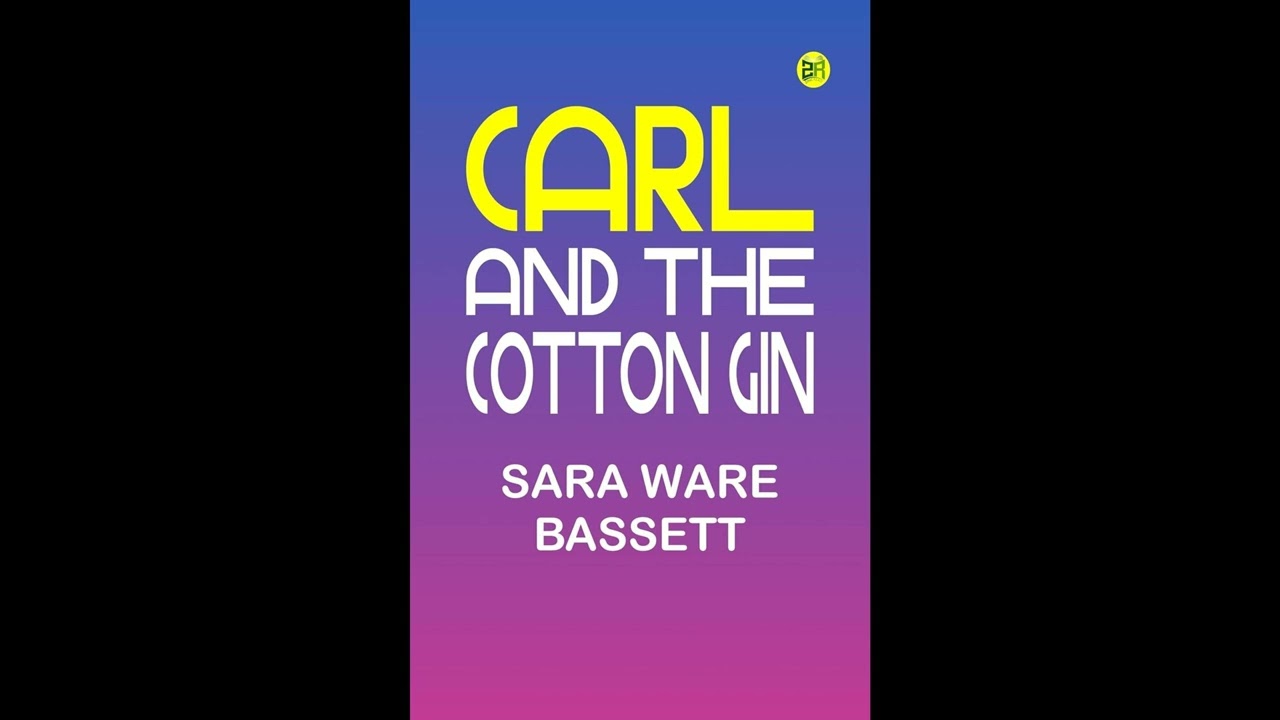
Carl and the Cotton Gin
"Carl and the Cotton Gin" is more than a mere historical fiction; it is an examination of ingenuity, perseverance, and the profound impact of technology on human lives and communities. This classic tale from Sara Ware Bassett offers listeners a unique window into a pivotal era, capturing the spirit of innovation that reshaped industries and livelihoods. As Carl grapples with his groundbreaking invention, listeners today will find echoes of contemporary struggles with change, progress, and the enduring human desire to improve one's circumstances. It is a story that speaks to the heart of invention, reminding us that every machine, no matter how simple or complex, carries with it a human story – a story of hopes, fears, and the relentless drive to build something new. The narrative transports us to a rural landscape grappling with the slow, laborious process of cotton production. We meet Carl, a young man of quiet determination and sharp intellect, whose mind is constantly churning with ideas. The existing methods for separating cotton fiber from its seeds are inefficient, demanding immense manual labor and limiting the potential of the region’s most vital crop. Carl observes the endless toil, the calloused hands, and the lost potential, sparking within him a vision for a faster, more effective solution. His idea, revolutionary for its time, takes the form of a mechanical device: the cotton gin. The story follows Carl through the arduous process of its creation, from initial sketches and countless failed prototypes to the painstaking assembly of gears and brushes. This is not just a tale of invention, but of the inventor’s isolation and dedication. Carl pours his meager resources and every waking hour into his workshop, often facing skepticism and outright resistance from those who fear change or view his efforts as foolish. His struggle is deeply personal, driven by a conviction that his machine can alleviate hardship and bring prosperity. As the cotton gin begins to take shape, and eventually demonstrates its incredible efficiency, the story’s scope widens to encompass the wider community. Suddenly, Carl is not just an inventor; he becomes a catalyst for monumental shifts. The prospect of such rapid processing brings both exhilaration and apprehension. Farmers envision greater yields and higher profits, while laborers fear the displacement of their traditional work. The narrative carefully balances the promise of progress with the anxieties of disruption, setting the stage for a compelling conflict as Carl’s invention prepares to reshape an entire way of life. Sara Ware Bassett (1872-1968) was a prolific American novelist, celebrated for her charming, character-driven stories that often found their setting in the picturesque landscapes of New England. Born in Newton, Massachusetts, and later spending much of her life on Cape Cod, Bassett developed a keen sense of place that became a hallmark of her literary style. Her upbringing in a time of considerable social evolution, coupled with a deep appreciation for community bonds, informed the gentle wit and astute observations that populate her many novels. She was an author who understood the nuances of small-town life, the quiet dramas that unfold behind picket fences, and the enduring strength of human connections. While Bassett is perhaps best known for her beloved "Cape Cod Series"—stories like "Adele Doring of the Sunnyside" and "The Story of the White-Rock Cove," which depict the lives and romances of its quaint inhabitants—her literary output was remarkably varied. Her novels consistently presented protagonists who, through quiet resilience and moral fortitude, navigate personal challenges and contribute to their communities. She possessed a distinctive voice, one that blended gentle humor with heartfelt sentiment, earning her a loyal readership throughout the mid-20th century. Her place in the literary canon often situates her among regionalist writers who captured the fading charm of a bygone era, yet her underlying themes of adaptability and human spirit remain perennially relevant. "Carl and the Cotton Gin," while perhaps representing a unique thematic departure from her more commonly known coastal romances, nonetheless carries the unmistakable stamp of Bassett’s compassionate character writing and her eye for the social dynamics of a community in flux. Even when addressing a subject as seemingly industrial as a new machine, her focus invariably remains on the people whose lives are transformed by its presence. This work offers an intriguing glimpse into Bassett's capacity to engage with broader societal shifts through the lens of individual experience, showing that her storytelling reach extended beyond the seaside villages for which she was primarily lauded. At its core, "Carl and the Cotton Gin" powerfully enacts the theme of innovation versus tradition. Carl's ingenious machine stands in stark contrast to generations of manual labor, threatening to render obsolete skills that have defined livelihoods for centuries. We see this tension play out vividly when the local cotton pickers first encounter the gin; their awe at its speed is quickly shadowed by fear for their jobs, a scene where the whirring of the machine symbolizes the unstoppable march of progress. Another prominent theme is the human cost of progress. While the cotton gin promises efficiency and wealth, the story does not shy away from depicting the anxieties of those whose lives are upended. A particularly poignant scene might involve an older laborer, skilled in hand-picking, gazing at the gin with a mix of wonder and despair, his wrinkled hands a testament to a way of life now imperiled. Furthermore, the book beautifully illustrates the theme of community and conflict. Carl's invention does not exist in a vacuum; it ripples through every layer of society, from the landowners dreaming of increased profits to the small farmers hoping for relief from backbreaking work, and the laborers fearing for their future. The novel builds its dramatic tension not just through Carl's engineering challenges, but through the debates and disagreements within the community as they grapple with the implications of such a disruptive technology. This leads naturally to a theme of resilience and adaptation. Characters are forced to confront uncomfortable truths and consider new ways of living, highlighting humanity's inherent capacity to adjust, even when faced with overwhelming change. "Carl and the Cotton Gin" emerges from a period in American history marked by significant technological advancement and profound economic reorientation. While the cotton gin itself had been invented much earlier, its widespread adoption and the resulting industrialization of agriculture continued to shape the American South well into the late 19th and early 20th centuries – the very era in which Sara Ware Bassett was writing. This was a time when the agrarian society was rapidly confronting the forces of modernity. Electrification, new manufacturing processes, and mechanization were transforming daily life across the nation, and agricultural regions, particularly those reliant on staple crops like cotton, were feeling these changes acutely. The novel offers a fictionalized yet resonant reflection of these real-world shifts. It captures the spirit of an age caught between the established rhythms of rural existence and the relentless drive for efficiency and profit that characterized the Second Industrial Revolution. Culturally, there was a fascination with invention and the promise of a better future, alongside a wistful longing for simpler times. "Carl and the Cotton Gin" likely resonated with readers witnessing similar transformations in their own backyards, whether it was the arrival of the automobile, new factory methods, or indeed, improved farm machinery. Bassett, though often writing about New England, demonstrates in this particular work an acute awareness of broader national narratives concerning progress and its often complicated consequences. Listening to "Carl and the Cotton Gin" as an audiobook brings the nuanced drama of Carl’s ambition and the community’s response to vivid life. The several hours of narration allow for a deep immersion into the story’s evolving atmosphere, from the quiet solitude of Carl’s workshop to the bustling, often tense, community gatherings. A skilled narrator can imbue Carl’s dialogue with his characteristic quiet intensity and convey the varied emotions of the townsfolk—their initial skepticism, growing excitement, and eventual apprehension—making the shifts in mood palpable. Pay attention to how the narrator renders the mechanical details of the gin, transforming descriptions of cogs and brushes into compelling elements of the plot, and how they differentiate the voices of the diverse characters, each offering a unique perspective on the revolutionary machine. The pacing will likely mirror the story’s arc, starting with a deliberate build-up as Carl toils, then quickening as the gin gains momentum, creating a truly engaging and thought-provoking listening experience.
Enjoyed Carl and the Cotton Gin? A few ways to support us
Audible & Amazon links are affiliate; we may earn a small commission at no extra cost.
About this production
Human narration by a volunteer reader from LibriVox.org, the public-domain audiobook project. LibriVox volunteers record literary works whose copyright has expired in the United States, releasing the resulting recordings into the public domain.
Carl and the Cotton Gin by Sara Ware Bassett. The underlying text is in the U.S. public domain. We do not republish any modern copyrighted edition, translation, or commentary.
The 4K cinematic visuals accompanying this audiobook are generated by an AI image model from prompts derived from the source text. No copyrighted photos, paintings, or stock footage are used. AI generation is disclosed on every video on our YouTube channel as required by YouTube's altered/synthetic content policy.
English subtitles are transcribed from the LibriVox recording with OpenAI Whisper. Translations into the 11 other supported languages are produced by Meta's NLLB-200 neural translation model. No human translator's copyrighted translation is used.
Questions about sourcing or rights? See our DMCA & Sourcing policy or contact us.
Enjoyed this audiobook?
If you'd like to own a copy of Carl and the Cotton Gin or hear a professionally produced edition, the links below help support free audiobook production at no extra cost to you.
As an Amazon Associate we earn from qualifying purchases. Audible / print links are affiliate.