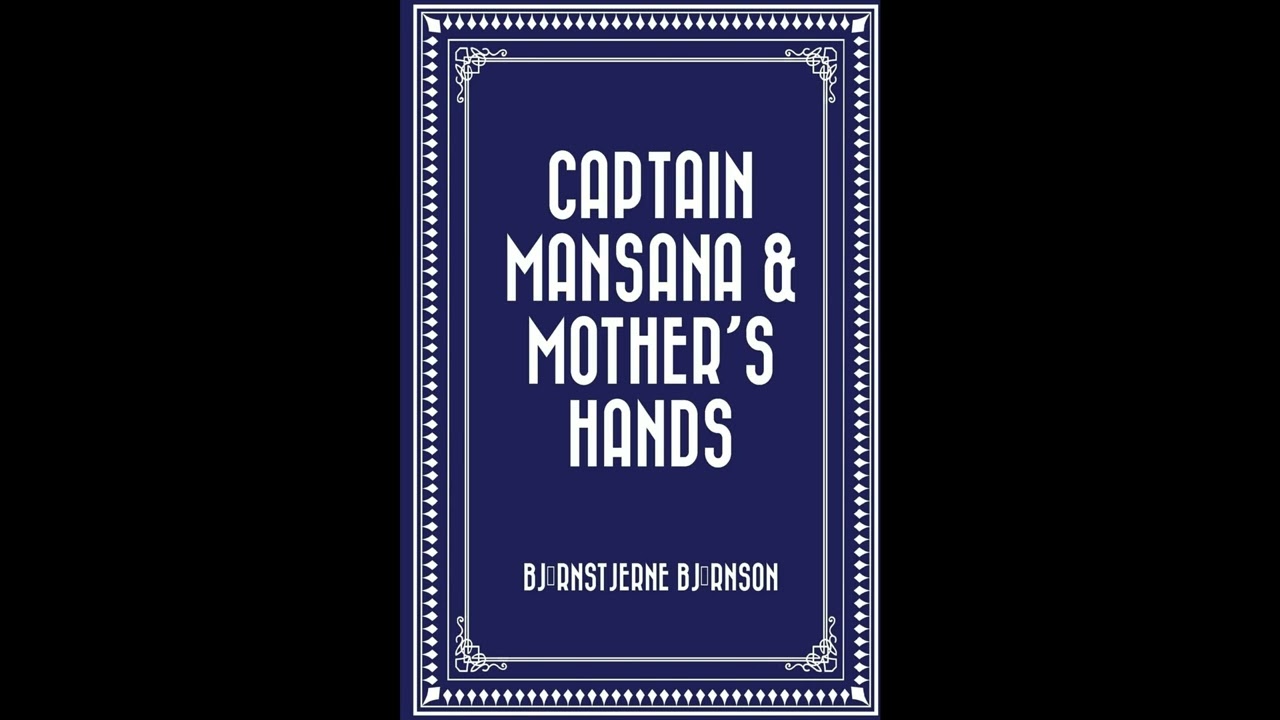
Captain Mansana & Mother's Hands
Bjørnstjerne Bjørnson’s Captain Mansana & Mother's Hands offers a compelling pair of novellas that dive into the profound depths of human emotion and moral quandary. These stories, though distinct in their settings and scope, together form a powerful commentary on the forces that shape individual lives: love, duty, sacrifice, and the enduring legacy of personal choice. Listeners today will find themselves drawn into narratives that dissect universal struggles—the tension between fiery passion and societal expectation, the quiet strength of maternal devotion—all rendered with a psychological acuity that transcends the era in which they were written. These are not merely historical curiosities; they are resonant explorations of the human spirit, prompting reflection on our own lives and relationships. The first story, "Captain Mansana," plunges us into the sun-drenched, politically charged landscape of post-Risorgimento Italy. Here we meet Captain Mansana, a man of intense passion and volatile spirit, whose military prowess is matched only by his tempestuous personal life. His world is upended by an ardent, almost obsessive, love for a woman who stands at the precipice of another commitment. Bjørnson masterfully builds the tension around Mansana's all-consuming desire, pitting it against the rigid codes of honor and social decorum prevalent in his society. The narrative follows Mansana as his emotions escalate, leading him down a path where pride, jealousy, and a profound sense of possession threaten to unravel not only his own life but also the lives of those he holds most dear. The story's arc traces the escalating consequences of a single, powerful infatuation, painting a vivid portrait of a man caught between the dictates of his heart and the crushing weight of public scrutiny. In stark contrast, "Mother's Hands" shifts our focus to a more intimate, domestic sphere, likely set within the quiet, often stoic, Norwegian landscape Bjørnson knew so well. This novella centers on the profound, often unacknowledged, sacrifices made by a mother for her family. We encounter a central family unit, facing various challenges and moral crossroads, where the silent strength and unwavering support of the mother become the quiet anchor. Her hands, symbolic of her labor, her comfort, and her boundless love, are the guiding force in a household that might otherwise drift. The narrative patiently reveals the intricate bonds within the family, showing how a mother's often unsung efforts shape the character and destiny of her children, even when those efforts are misunderstood or taken for granted. This story, while less dramatic than Mansana's, carries an immense emotional weight, slowly revealing the depth of a mother's enduring spirit and the quiet heroism found in everyday devotion. Bjørnstjerne Bjørnson, born in 1832 in Kvikne, Norway, emerged as a towering figure in European literature and culture. A farmer's son who rose to become a Nobel laureate in Literature in 1903, he was one of "The Four Greats" of Norwegian literature, alongside Henrik Ibsen, Jonas Lie, and Alexander Kielland. Bjørnson's early career saw him deeply involved in the burgeoning Norwegian nationalist movement, using his powerful pen to shape the country's identity. He wrote plays, novels, and poems, often drawing inspiration from Norwegian peasant life, depicting it with both romantic idealization and later, with a more critical, realistic eye. His commitment extended beyond the literary; he served as a theater director, a newspaper editor, and a fervent political activist, advocating for Norwegian independence from Sweden and for broader social reforms. He passed away in Paris in 1910, celebrated across Europe for his contributions to literature and his tireless work for peace and human rights. Among his most influential works are his early "peasant novels" such as Synnøve Solbakken, Arne, and A Happy Boy, which helped establish a distinct Norwegian literary voice. Later, his dramas, like En Fallit (A Bankruptcy), delved into contemporary social issues, marking his transition towards literary realism. Bjørnson's trajectory mirrored the broader European literary shift from Romanticism to Realism and Naturalism. He was not merely a chronicler of his times but an active participant in shaping the cultural and political landscape of Norway, championing the use of the Norwegian language and fostering a national consciousness through his art and activism. His standing as a literary giant is undeniable, his works providing insight into both the particularities of Norwegian life and the universal human condition. "Captain Mansana" enacts several profound themes, notably the destructive power of unchecked passion and the rigid constraints of social honor. Mansana's love, rather than uplifting, becomes a consuming fire, as seen when his jealousy leads him to rash actions that jeopardize his standing and reputation. His internal struggle between intense personal feeling and the expectations of military decorum and societal morality drives much of the narrative tension, illustrating how emotional extremity can lead to isolation and ruin. Furthermore, the story probes the nature of free will versus fate, as Mansana appears almost destined by his own character flaws to follow a tragic course, despite moments where he seems to grapple with alternative choices. "Mother's Hands," by contrast, quietly illuminates the themes of unconditional love and sacrificial devotion. The mother's actions throughout the story—whether through tireless labor, quiet forgiveness, or unwavering belief in her children—show how love can be a steadfast, though often unseen, force. A poignant example might involve her reaction to a child's significant mistake, where her initial hurt gives way not to judgment, but to a deeper commitment to support and mend. The novella also touches on the unspoken bonds within families and the often-unrecognized emotional labor that sustains them, posing questions about gratitude, understanding, and the true cost of selfless giving. Both novellas, in their contrasting ways, lay bare the psychological intricacies of their characters, compelling readers to consider the moral dimensions of their choices. The late nineteenth century, when Bjørnson was most active and when these novellas were likely conceived, was a period of significant cultural and political upheaval across Europe. In Norway, it was a time of burgeoning nationalism, with a strong movement for independence from Sweden gaining momentum—a cause Bjørnson passionately championed. This era also saw the rise of industrialization, urbanization, and new scientific theories, all of which challenged traditional social structures and moral certainties. In the literary world, there was a noticeable shift away from the grand narratives and idealized heroes of Romanticism towards a more detailed, psychologically nuanced realism. Writers began to scrutinize everyday life, social problems, and the internal struggles of ordinary people. Bjørnson's works, especially his later ones like these novellas, reflect this transition, moving beyond simple nationalist romanticism to grapple with complex individual psychologies and the moral ambiguities of modern life, offering a mirror to a society in flux and questioning its foundational values. Listening to Captain Mansana & Mother's Hands as an audiobook offers a uniquely immersive way to experience Bjørnson's narrative artistry. The several hours of content allow for a measured pace, giving the listener ample opportunity to absorb the distinct atmospheres and emotional cadences of each story. A skilled narrator can bring out the fiery intensity of Mansana's character, giving voice to his passionate declarations and inner turmoil, making his psychological drama particularly vivid. In "Mother's Hands," the nuance of a narrator's tone can highlight the quiet strength and profound tenderness of the mother, revealing the depth of her unspoken thoughts and feelings. Listen for how the pacing shifts between the dramatic confrontations in Italy and the more reflective, intimate moments within the Norwegian home, allowing the listener to fully appreciate the contrasting yet complementary emotional landscapes that Bjørnson so expertly renders through dialogue and descriptive passages.
Enjoyed Captain Mansana & Mother's Hands? A few ways to support us
Audible & Amazon links are affiliate; we may earn a small commission at no extra cost.
About this production
Human narration by a volunteer reader from LibriVox.org, the public-domain audiobook project. LibriVox volunteers record literary works whose copyright has expired in the United States, releasing the resulting recordings into the public domain.
Captain Mansana & Mother's Hands by Bjørnstjerne Bjørnson. The underlying text is in the U.S. public domain. We do not republish any modern copyrighted edition, translation, or commentary.
The 4K cinematic visuals accompanying this audiobook are generated by an AI image model from prompts derived from the source text. No copyrighted photos, paintings, or stock footage are used. AI generation is disclosed on every video on our YouTube channel as required by YouTube's altered/synthetic content policy.
English subtitles are transcribed from the LibriVox recording with OpenAI Whisper. Translations into the 11 other supported languages are produced by Meta's NLLB-200 neural translation model. No human translator's copyrighted translation is used.
Questions about sourcing or rights? See our DMCA & Sourcing policy or contact us.
Enjoyed this audiobook?
If you'd like to own a copy of Captain Mansana & Mother's Hands or hear a professionally produced edition, the links below help support free audiobook production at no extra cost to you.
As an Amazon Associate we earn from qualifying purchases. Audible / print links are affiliate.