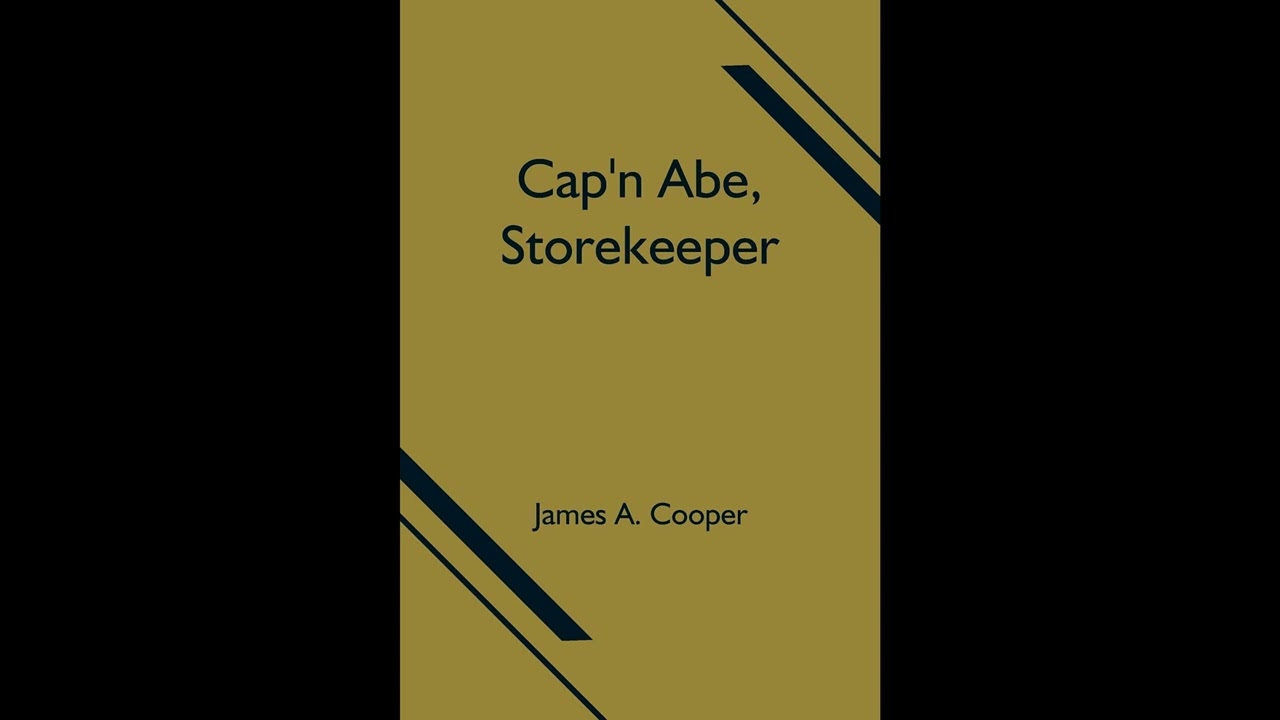
Cap'n Abe, Storekeeper
"Cap'n Abe, Storekeeper" invites listeners into a world both distant and intimately familiar, a quiet corner of America shaped by local commerce, changing seasons, and enduring personalities. This classic narrative by James A Cooper brings to life not just a man and his store, but a fading way of living that still resonates today. It addresses concerns relevant to any era: the value of local enterprise, human connection, and the quiet dignity of a well-lived life. This book offers a gentle yet profound meditation on community and its pillars, reminding us that true wealth often lies not in accumulated goods, but in character and shared stories. The story unfolds in the quaint village of Oakhaven, nestled near a winding river where echoes of a bygone era linger in its narrow streets and weathered storefronts. At the heart of Oakhaven stands Cap'n Abe's general store, more than just a place to procure staples; it is the undisputed hub of the town, a meeting point for gossip, advice, and daily predictability. Cap'n Abe himself, a figure of quiet authority and deep affection, is a former sea captain whose seafaring days are now replaced by the meticulous care of his shelves and ledgers. His past, hinted at through occasional anecdotes, lends him an air of wisdom, making him the unofficial confidant and mediator for Oakhaven's diverse residents, from the struggling farmer to the town's most respectable matriarch. The central conflict arises not from dramatic external forces, but from subtle shifts threatening Oakhaven's harmonious existence. New ideas and the creeping influence of the wider world begin to challenge the traditions Cap'n Abe and his store represent. Younger generations, perhaps lured by city opportunities, start to question old ways, while modern businesses with new approaches hint at competition. Cap'n Abe finds himself caught between preserving established values and the undeniable tide of progress. The narrative traces his efforts to adapt, understand, and gently guide his neighbors, often with a quiet wit and an unwavering sense of duty. Listeners witness a community struggling to retain its identity amidst the quiet pressures of change, with Cap'n Abe as its steadfast anchor. James A Cooper, the author of "Cap'n Abe, Storekeeper," represents an American literary sensibility that flourished around the turn of the last century. While specific biographical details may be scarce today, his writing style and thematic concerns firmly place him among those chroniclers of small-town America who sought to capture a nation in transition. Cooper likely grew up in, or had intimate knowledge of, the rural communities he depicts, drawing from firsthand observations of local characters and the unique challenges faced by towns on modernity's cusp. His prose suggests a writer deeply attuned to the rhythms of daily life, regional dialect, and the quiet heroism found in ordinary people. Authors like Cooper often operated within or alongside the "local color" movement, a literary trend that emphasized regional characteristics, unique customs, and dialect. These writers, including figures such as Sarah Orne Jewett and Mary E. Wilkins Freeman, aimed to preserve a sense of place and a way of life that many felt was disappearing under the pressures of industrialization. Cooper's commitment to portraying the specifics of Oakhaven—its people, its conversations, and its challenges—aligns him with this tradition. He was not merely documenting; he subtly advocated for the values of community, integrity, and resilience embodied in figures like Cap'n Abe, cementing his place as a voice for the often-overlooked yet profoundly significant fabric of American small-town life. "Cap'n Abe, Storekeeper" enacts several enduring themes with gentle precision. Foremost among these is community and belonging. The general store functions as the physical and metaphorical nexus of Oakhaven. After a particularly harsh winter storm leaves several families isolated, Cap'n Abe not only extends credit but personally organizes neighbors to clear roads and share resources, transforming his store into an emergency relief center. This scene vividly illustrates how individual kindness, fostered by a central figure, strengthens the collective spirit and underscores the deep interdependence of the town's residents. Another prominent theme is the tension between tradition and progress. The arrival of a traveling salesman with flashy, mass-produced goods and persuasive rhetoric directly challenges Cap'n Abe's long-standing principles of quality and personal service. Instead of dismissal, Abe thoughtfully adapts his own offerings to preserve his values while meeting new needs. A third significant theme is the quiet wisdom of experience. Cap'n Abe, with his seafaring past and years of observation from behind the counter, possesses a deep understanding of human nature and the ways of the world. When young Martha comes to him distressed about a romantic misunderstanding, he tells a seemingly unrelated anecdote from his days at sea about reading the shifting currents—a story that, by its end, provides Martha with the perspective and courage she needs to navigate her own emotional waters. This moment showcases his sagacity, showing how past experiences, distilled through a thoughtful mind, can illuminate present dilemmas. Finally, the book subtly highlights resilience in the face of adversity. Whether it's the economic downturns that threaten livelihoods or personal setbacks suffered by individual townsfolk, Cap'n Abe consistently demonstrates and encourages a spirit of perseverance. His calm demeanor and steady commitment to his store and his neighbors serve as a beacon, illustrating that true strength often lies not in grand gestures, but in consistent, principled action and an unwavering belief in the good of humanity. "Cap'n Abe, Storekeeper" emerged during a period of profound transformation in America, likely spanning the late nineteenth into the early twentieth century. This era witnessed the rapid acceleration of industrialization, the expansion of railroads, and the burgeoning of national markets, all of which began to profoundly reshape once-isolated communities like Oakhaven. Small, local economies built on personal relationships and homegrown enterprise faced increasing pressure from larger, more efficient, often impersonal, external forces. The rise of mail-order catalogs, chain stores, and improved transportation systems meant that the traditional general store, once the unchallenged center of commerce and social life, was entering a new, more competitive landscape. In the literary world, this period saw a shift from the more romanticized narratives of earlier decades towards a greater emphasis on realism and naturalism, often accompanied by a regional focus. Authors were keenly observing and recording the changes they saw around them, often with a sense of nostalgia for a simpler, perhaps more communal, past, even while acknowledging the inevitable march of progress. This work serves as a poignant reflection on community's challenges and enduring values in an age of accelerating change, providing a window into a specific slice of American life and commenting on modernization's human cost and benefits. Listening to "Cap'n Abe, Storekeeper" as an audiobook offers a singular immersion into Oakhaven's gentle rhythms. The several hours of narration allow for a slow, unhurried unfolding of events, perfectly matching the pace of life described within the story. A skilled narrator's voice becomes crucial here, allowing listeners to distinguish the subtle nuances of Cap'n Abe's thoughtful responses, the bustling chatter of customers, and the distinct personalities of the townsfolk. The dialogue, often filled with regional charm and practical wisdom, truly comes alive when spoken, painting vivid pictures of the store's interior—the smell of spices, the creak of floorboards, the warmth of the pot-bellied stove. This auditory experience invites a deeper connection to the material, making the listener feel less like an observer and more like a welcome visitor to a community that still has much to teach us.
Enjoyed Cap'n Abe, Storekeeper? A few ways to support us
Audible & Amazon links are affiliate; we may earn a small commission at no extra cost.
About this production
Human narration by a volunteer reader from LibriVox.org, the public-domain audiobook project. LibriVox volunteers record literary works whose copyright has expired in the United States, releasing the resulting recordings into the public domain.
Cap'n Abe, Storekeeper by James A Cooper. The underlying text is in the U.S. public domain. We do not republish any modern copyrighted edition, translation, or commentary.
The 4K cinematic visuals accompanying this audiobook are generated by an AI image model from prompts derived from the source text. No copyrighted photos, paintings, or stock footage are used. AI generation is disclosed on every video on our YouTube channel as required by YouTube's altered/synthetic content policy.
English subtitles are transcribed from the LibriVox recording with OpenAI Whisper. Translations into the 11 other supported languages are produced by Meta's NLLB-200 neural translation model. No human translator's copyrighted translation is used.
Questions about sourcing or rights? See our DMCA & Sourcing policy or contact us.
Enjoyed this audiobook?
If you'd like to own a copy of Cap'n Abe, Storekeeper or hear a professionally produced edition, the links below help support free audiobook production at no extra cost to you.
As an Amazon Associate we earn from qualifying purchases. Audible / print links are affiliate.