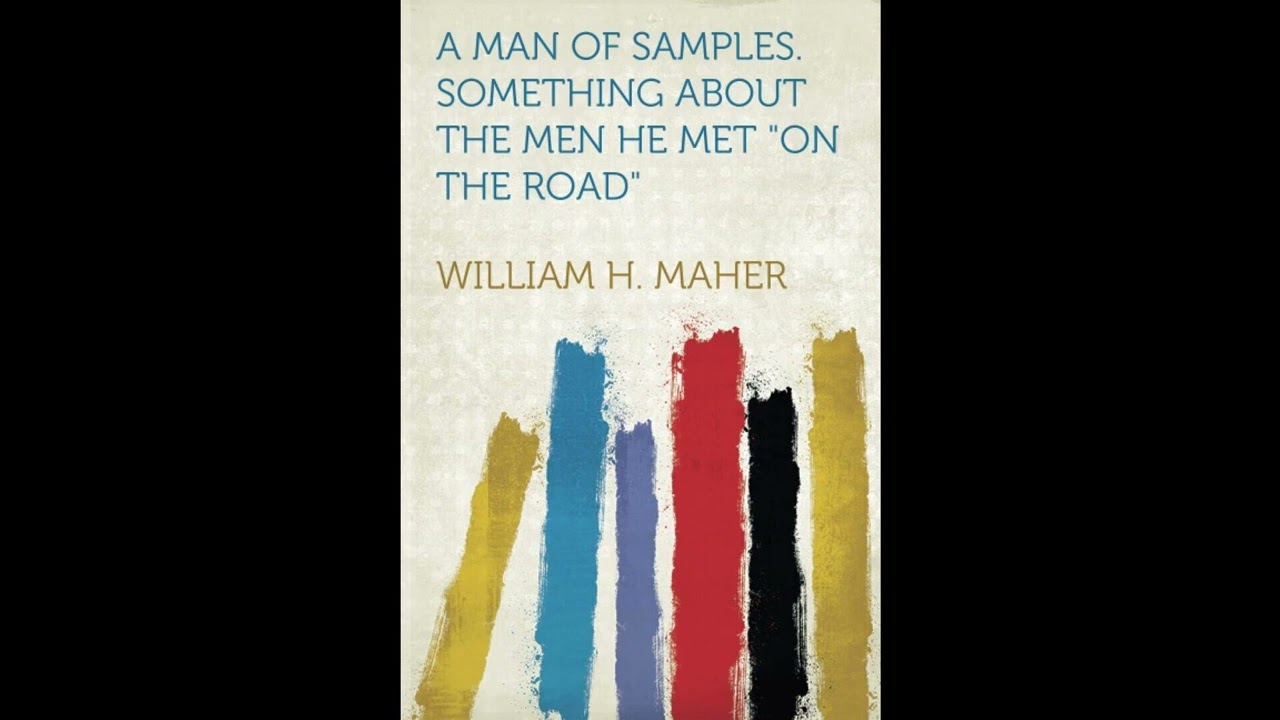
A Man of Samples. Something About the Men He Met "On the Road"
Step into a bygone era, a time when the rails stretched across a burgeoning nation and commerce was a handshake and a sample case. A Man of Samples. Something About the Men He Met "On the Road" offers an unparalleled window into the heart of America as seen through the eyes of one of its most ubiquitous, yet often overlooked, figures: the traveling salesman. This isn’t a grand adventure or a sweeping romance; it is something far more profound — a meticulously observed collection of human encounters. It’s a document of daily life, of the small dramas and quiet triumphs, the deceptions and solidarities that unfold when people meet “on the road.” For today’s listener, it provides not only a fascinating historical record but also a timeless commentary on human nature, revealing the common threads that bind us, regardless of the technological advancements that change how we connect. It stands as a testament to the enduring curiosity about our fellow man and the stories we carry. The narrative introduces us to an unnamed salesman, whose profession requires him to traverse the length and breadth of the American landscape, from the burgeoning industrial centers to the quiet, dusty towns slowly being connected by rail. His office is the hotel lobby, his colleagues are fellow travelers, and his classroom is the varied faces he encounters in every town. The setting is loosely defined as the late nineteenth or very early twentieth century, a period of immense expansion and societal change following the American Civil War, where new industries were taking root and the need to distribute goods far and wide was paramount. Our protagonist carries his samples, but more importantly, he carries an observant eye and a remarkably retentive memory for character. The story itself isn't driven by a single overarching plot but rather by a series of vignettes and character sketches. Each chapter, or sometimes even a paragraph, presents a new face and a new story. We meet the shrewd country store owner, adept at bargaining; the lonely hotel clerk who dreams of a bigger life; the boisterous, self-important fellow salesman; the struggling farmer trying to make ends meet; the sophisticated city merchant with his complex dealings; and the unassuming individual harboring a surprising secret. These aren't just snapshots; they are often mini-dramas, complete with introduction, a glimpse into their lives, and sometimes a twist of fate or a reveal of hidden motive. The central narrative arc is the cumulative effect of these encounters – building a comprehensive, deeply human mosaic of an entire society in motion, all filtered through the unique perspective of a man whose livelihood depended on understanding people. The specific origins of A Man of Samples remain somewhat shrouded in the mists of time, its author listed simply as "Unknown." This anonymity, however, lends the work a distinctive quality, positioning it not as the singular vision of one celebrated author, but rather as a collective observation, perhaps even a compilation of experiences common to many who plied the commercial highways of the era. Works of this nature, often published without a prominent authorial name, were not uncommon during the late 19th and early 20th centuries. They frequently appeared in periodicals, popular pamphlets, or as collections that aimed to capture the essence of everyday life and occupations. This lack of a specific named author can be seen to enhance the universality of the narrator's perspective, making the "Man of Samples" feel less like a specific individual and more like an archetype, a representative observer for an entire class of professionals. The work stands as a valuable contribution to the tradition of American realists who sought to document the changing social fabric without the overt literary aspirations of more formal novelists, prioritizing authenticity and direct observation over crafted narrative. Several core themes emerge with remarkable clarity from these episodic accounts. One prominent theme is the diversity of human nature and the often-surprising motivations that lie beneath the surface. The salesman frequently observes individuals who defy easy categorization. For instance, he might describe a seemingly gruff and penny-pinching merchant who, through a later observation, is revealed to possess a quiet generosity, perhaps funding a local charity or helping a struggling neighbor. Another theme is the changing American landscape and the forces of commerce. The constant movement, the train journeys, the descriptions of goods being bought and sold, and the varying success of local businesses all paint a picture of a nation rapidly industrializing and connecting through trade. The samples themselves – fabric, notions, hardware – are silent witnesses to this economic transformation. Finally, the theme of observation and empathy underpins the entire collection. While the salesman's job is commercial, his true talent lies in his ability to watch, listen, and interpret the subtle cues of human behavior. He seldom judges harshly, instead offering a nuanced understanding of people's struggles and aspirations, as when he reflects on the quiet desperation of a young man trying to escape a small town's confines, or the quiet pride of an older woman running a boarding house. The period in which A Man of Samples likely originated was a dynamic and transformative time in American history. Following the Civil War, the nation experienced unprecedented industrial growth, leading to vast increases in production and the need for new methods of distribution. This created the professional class of the "drummer" or traveling salesman – a vital link between manufacturers and scattered retailers. These men were often seen as pioneers of modern commerce, bringing goods, news, and connections to remote communities. This era also saw significant technological advancements, particularly in railroad networks, which made extensive travel possible and created a unique culture of "on the road" living, characterized by hotels, dining cars, and the constant flux of transient encounters. Culturally, the period was marked by an increasing interest in realism in literature, where authors sought to portray life as it truly was, focusing on ordinary people and everyday situations. A Man of Samples fits squarely into this trend, offering an unvarnished, authentic portrayal of the individuals who shaped the burgeoning American marketplace and the communities they connected. Listening to A Man of Samples as an audiobook offers a particularly immersive and intimate experience. The unhurried pace of the narration, mirroring the rhythm of late-nineteenth-century travel, allows the listener to settle into the various settings and soak in the details. A skilled narrator brings a distinct voice to the "Man of Samples," conveying his quiet perceptiveness, his dry wit, and his underlying humanity. The different characters he encounters, each with their own unique speech patterns and cadences, truly come alive through vocal performance, transforming what might otherwise be a simple observation into a vivid, memorable interaction. The several hours of listening provide ample time to form a deep connection with the narrator and his world, making it ideal for extended listening sessions, perhaps during long commutes or quiet evenings at home. It’s an opportunity to truly hear the voices of a forgotten era, brought back to life through the power of sound.
Enjoyed A Man of Samples. Something About the Men He Met "On the Road"? A few ways to support us
Audible & Amazon links are affiliate; we may earn a small commission at no extra cost.
About this production
Human narration by a volunteer reader from LibriVox.org, the public-domain audiobook project. LibriVox volunteers record literary works whose copyright has expired in the United States, releasing the resulting recordings into the public domain.
A Man of Samples. Something About the Men He Met "On the Road" by William Henry Harrison Murray. The underlying text is in the U.S. public domain. We do not republish any modern copyrighted edition, translation, or commentary.
The 4K cinematic visuals accompanying this audiobook are generated by an AI image model from prompts derived from the source text. No copyrighted photos, paintings, or stock footage are used. AI generation is disclosed on every video on our YouTube channel as required by YouTube's altered/synthetic content policy.
English subtitles are transcribed from the LibriVox recording with OpenAI Whisper. Translations into the 11 other supported languages are produced by Meta's NLLB-200 neural translation model. No human translator's copyrighted translation is used.
Questions about sourcing or rights? See our DMCA & Sourcing policy or contact us.
Enjoyed this audiobook?
If you'd like to own a copy of A Man of Samples. Something About the Men He Met "On the Road" or hear a professionally produced edition, the links below help support free audiobook production at no extra cost to you.
As an Amazon Associate we earn from qualifying purchases. Audible / print links are affiliate.