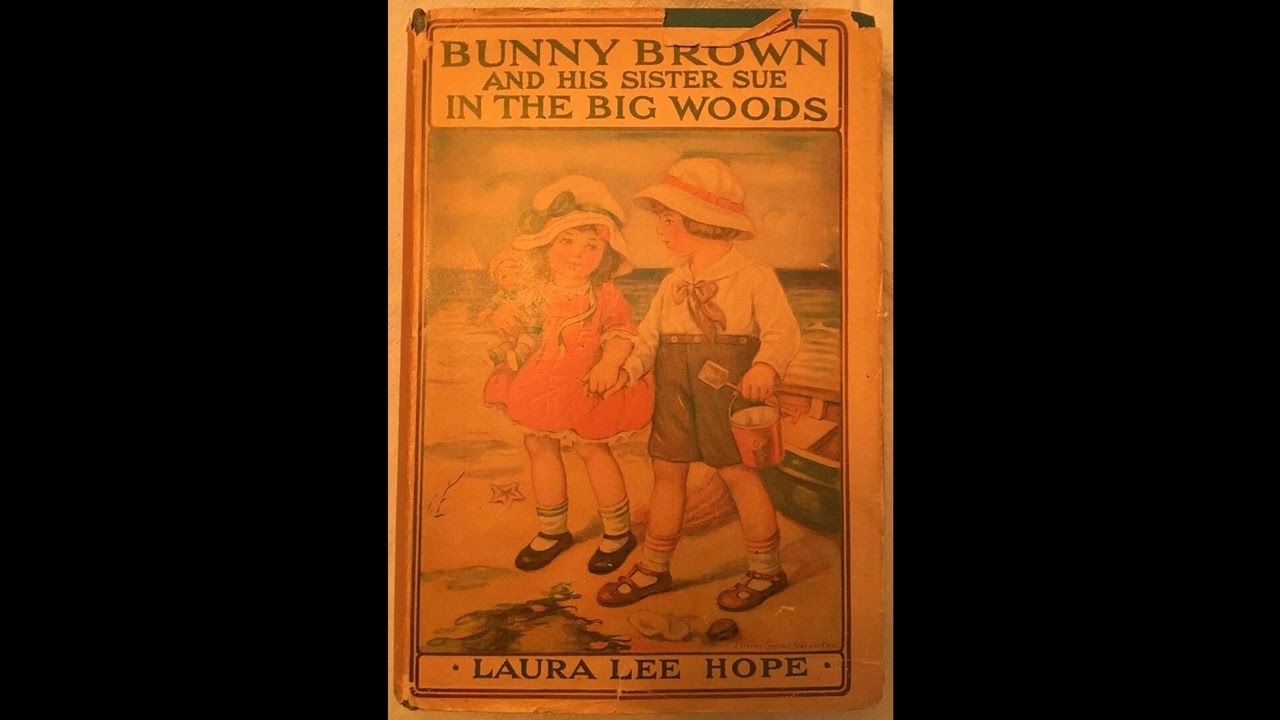
BUNNY BROWN And His SISTER SUE In The BIG WOODS
Step into a world where childhood curiosity meets the untamed beauty of nature in Bunny Brown And His Sister Sue In The BIG WOODS. This cherished selection from the early twentieth century offers more than just a simple tale of two children; it presents a gentle yet compelling invitation to reconnect with the spirit of innocent adventure. For contemporary listeners, it’s a refreshing breath of fresh air, a moment to escape the complexities of modern life and be reminded of the simple joys and profound lessons found in outdoor play and sibling camaraderie. It stands as a testament to the enduring power of classic children's stories, those narratives that softly guide young hearts through discovery and growth, resonating still with anyone who recalls—or wishes to imagine—the boundless freedom of a summer day spent far from adult oversight, where every rustle in the leaves holds a promise of excitement. The story introduces us to the eponymous Bunny Brown and his slightly older, often more sensible sister, Sue. These two delightful youngsters live with their loving parents in a comfortable home that borders the vast and alluring "Big Woods." For Bunny, a mischievous and energetic boy with an insatiable appetite for discovery, the woods represent an endless playground, a place where squirrels chatter secrets from high branches and unseen creatures stir beneath the undergrowth. Sue, while perhaps a touch more cautious, shares her brother's spirit of inquiry, always ready to follow Bunny into a new adventure, though often providing the practical anchor to his boundless enthusiasm. Their daily escapades frequently lead them deeper into the woods, past familiar clearings and along winding paths that beckon with the unknown. Whether they are searching for wild berries, observing a family of birds, or simply inventing elaborate games among the trees, their days are filled with the kind of imaginative play that defines childhood. However, the "Big Woods," for all its charm, also holds its share of surprises and minor challenges. What begins as a quest for a particular flower might turn into a moment of temporary bewilderment as they find themselves a little farther from home than intended, or a desire to follow a fascinating animal track could lead them to an unexpected encounter, testing their resourcefulness and their bond as siblings as they navigate the small hurdles of their outdoor world. The unfolding narrative details their charming misadventures and their clever, often humorous, ways of finding their path back to safety, always a little wiser for their woodland wanderings. The name "Laura Lee Hope" conjures up images of wholesome, engaging tales for young readers, but behind this beloved byline lies a fascinating chapter in American publishing history. "Laura Lee Hope" was, in fact, a house pseudonym created by the Stratemeyer Syndicate, an innovative literary production firm founded by Edward Stratemeyer in the late nineteenth century. Stratemeyer revolutionized children's literature by conceiving series after series, outlining plots, and then employing a stable of ghostwriters—often uncredited—to pen the actual stories. This highly efficient "story factory" approach allowed for the rapid and consistent production of books that met the voracious demand of a burgeoning young readership. While the specific individuals who wrote under the "Laura Lee Hope" name varied over the years, their collective goal was to create morally upright, adventurous, and consistently entertaining narratives. The Syndicate was responsible for many iconic series, most notably The Bobbsey Twins, which, like the Bunny Brown and Sue books, centered on the everyday escapades and gentle mysteries encountered by a group of siblings. Stratemeyer’s genius lay in understanding the psychological appeal of series fiction: once a child fell in love with a character, they would eagerly anticipate the next installment. This method not only made "Laura Lee Hope" a household name for generations of children but also cemented the Stratemeyer Syndicate's place as a foundational force in the development of American popular juvenile fiction. At its core, Bunny Brown And His Sister Sue In The BIG WOODS beautifully articulates several enduring themes that resonate with readers of all ages. One prominent theme is the spirit of independence and resourcefulness in childhood. We see this vividly when Bunny, driven by an almost scientific curiosity, convinces Sue to follow a peculiar birdcall deeper into a thicket. Although their decision initially leads to a brief moment of being disoriented, it's their quick thinking—remembering the direction of the sun, or Sue's earlier observation of a distinctive rock—that allows them to find their way back, demonstrating their budding ability to handle challenges without direct adult intervention. Another central theme is the strength and comfort of sibling bonds. Throughout their excursions, Bunny and Sue rely on each other. When Bunny is feeling particularly bold, Sue might offer a word of caution; conversely, when Sue feels a little intimidated by a new path, Bunny's cheerful optimism often encourages her onward. There's a memorable scene where they share a small lunch they've packed, dividing the treats carefully and discussing their morning’s discoveries, illustrating the mutual support and shared experience that fortifies their relationship, turning minor anxieties into shared triumphs and adventures into cherished memories. The book also quietly champions the wonder and education found in the natural world, portraying the woods not just as a backdrop, but as a living entity filled with lessons about flora, fauna, and the rhythm of life. The emergence of books like Bunny Brown And His Sister Sue In The BIG WOODS during the early decades of the twentieth century was no accident; it perfectly aligned with broader cultural shifts in America. This period saw a significant increase in literacy rates and a growing recognition of childhood as a distinct and important phase of life, rather than merely a preparation for adulthood. With more children attending school and more families seeking wholesome entertainment, there was an exploding demand for reading material specifically tailored to young audiences. Furthermore, while the nation was rapidly industrializing and urbanizing, there was also a prevailing nostalgia for simpler, agrarian times and an emphasis on the virtues of outdoor living and direct engagement with nature. Stories about children venturing into woods, fields, and small towns offered an appealing counterpoint to the complexities of city life, providing wholesome narratives that parents approved of and children eagerly consumed. The Stratemeyer Syndicate, with its prolific output and keen understanding of reader preferences, was perfectly positioned to capitalize on these trends, providing generation after generation with affordable, accessible, and consistently engaging tales that captured the spirit of innocent adventure and discovery. Listening to Bunny Brown And His Sister Sue In The BIG WOODS as an audiobook offers a uniquely immersive experience, transforming the text into a performance that transports you directly into the sun-dappled clearings and rustling undergrowth of the "Big Woods." The narration, spanning several hours, unfolds with a gentle, inviting pace, allowing the listener to truly savor the innocence of Bunny and Sue’s adventures. A skilled narrator brings the distinct personalities of the children to life – Bunny’s irrepressible curiosity, Sue’s thoughtful observations, and the reassuring presence of their parents – through nuanced voice work that captures youthful excitement and quiet contemplation alike. The dialogue feels natural and unforced, as if you’re eavesdropping on their playful conversations and whispered discoveries. Furthermore, the audio format allows the atmosphere of the woods itself to become palpable; you can almost hear the crunch of leaves underfoot, the chirping of unseen birds, and the gentle sounds of the forest, creating a vivid sonic landscape that deepens the connection to this classic tale of childhood wonder.
Enjoyed BUNNY BROWN And His SISTER SUE In The BIG WOODS? A few ways to support us
Audible & Amazon links are affiliate; we may earn a small commission at no extra cost.
About this production
Human narration by a volunteer reader from LibriVox.org, the public-domain audiobook project. LibriVox volunteers record literary works whose copyright has expired in the United States, releasing the resulting recordings into the public domain.
BUNNY BROWN And His SISTER SUE In The BIG WOODS by Laura Lee Hope. The underlying text is in the U.S. public domain. We do not republish any modern copyrighted edition, translation, or commentary.
The 4K cinematic visuals accompanying this audiobook are generated by an AI image model from prompts derived from the source text. No copyrighted photos, paintings, or stock footage are used. AI generation is disclosed on every video on our YouTube channel as required by YouTube's altered/synthetic content policy.
English subtitles are transcribed from the LibriVox recording with OpenAI Whisper. Translations into the 11 other supported languages are produced by Meta's NLLB-200 neural translation model. No human translator's copyrighted translation is used.
Questions about sourcing or rights? See our DMCA & Sourcing policy or contact us.
Enjoyed this audiobook?
If you'd like to own a copy of BUNNY BROWN And His SISTER SUE In The BIG WOODS or hear a professionally produced edition, the links below help support free audiobook production at no extra cost to you.
As an Amazon Associate we earn from qualifying purchases. Audible / print links are affiliate.