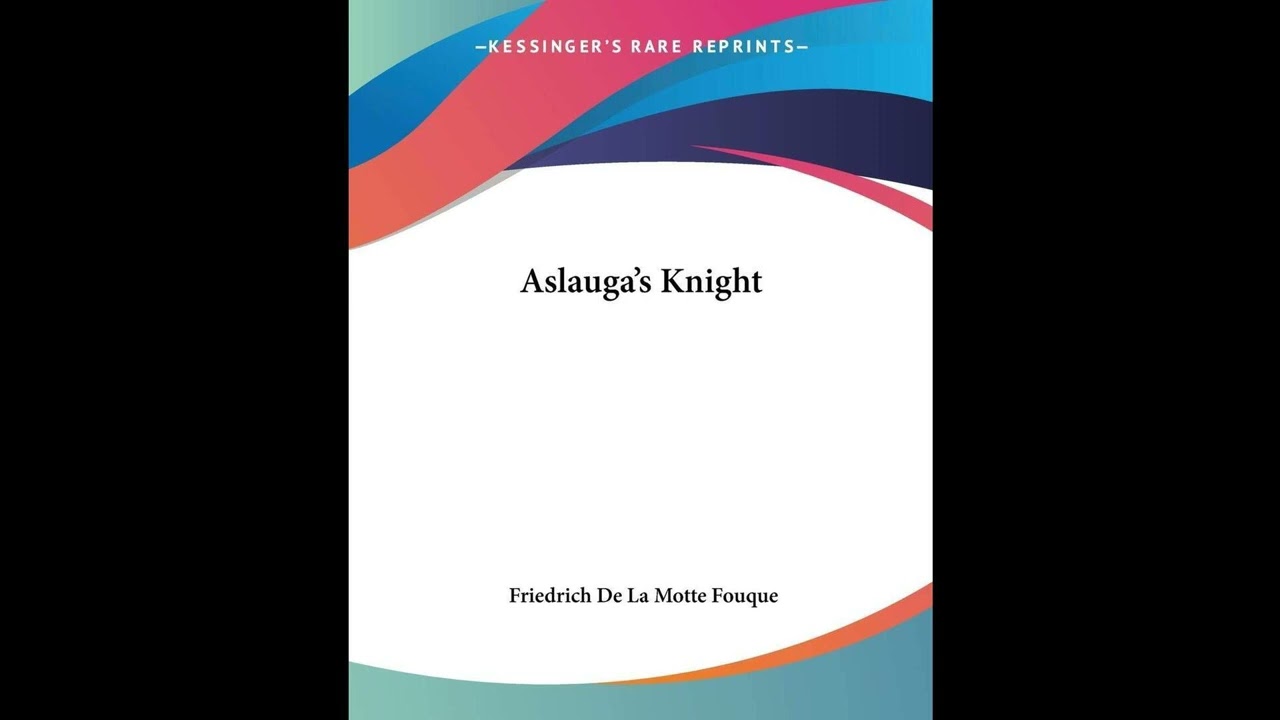
Aslauga's Knight
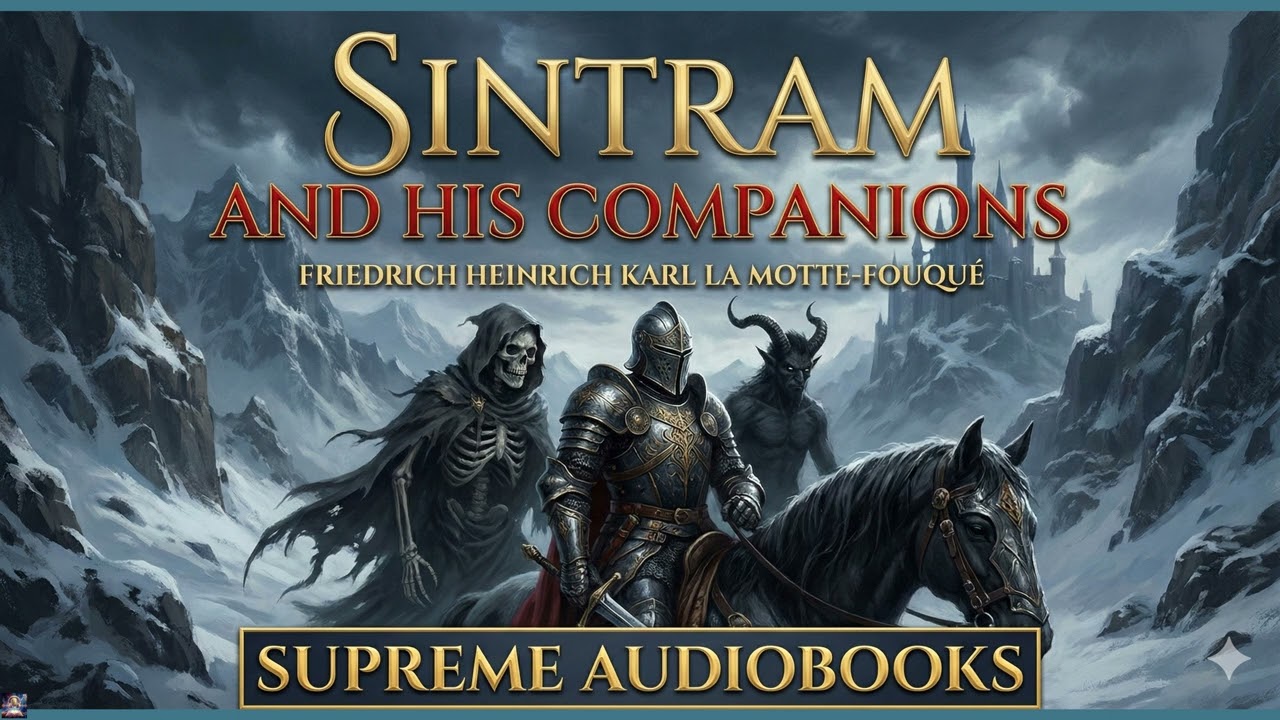
Friedrich de La Motte Fouque's "Aslauga's Knight" stands as a shimmering jewel from the dawn of German Romanticism, a narrative that transports listeners to a world where dreams hold more sway than reality, and a knight's heart can be pledged to a figure of pure legend. This isn't merely a tale of chivalry and adventure; it is an allegorical quest for an ideal, a profound meditation on the tension between spiritual devotion and earthly attachments. More than two centuries after its initial appearance, this novella continues to resonate, speaking to anyone who has ever pursued a profound ideal against the pragmatic demands of the everyday world, or felt the compelling pull of a destiny glimpsed only in the mind's eye. It invites us to consider what it means to live a life guided by an unwavering, almost mystical, aspiration. The story introduces us to Froda, a young knight whose quiet devotion sets him apart from his peers. One serene night, Froda experiences a vivid dream in which he is visited by the legendary Norse queen, Aslauga. Her beauty, grace, and ethereal presence deeply impress themselves upon his soul, filling him with an unshakeable sense of purpose. From that moment forward, Froda pledges himself wholly to her service, not through earthly fealty, but as a spiritual vow. He dedicates his knighthood to living up to the impossible standards set by this dream-maiden, striving for an inner purity and courage worthy of such an ideal. This commitment becomes the central, guiding force of his existence, influencing every decision he makes and every challenge he faces. Froda's path unfolds with a series of encounters and trials that test the depth of his unusual devotion. He serves a benevolent lord, encounters other knights and ladies, and performs valiant deeds, always with the image of Aslauga as his guiding star. Yet, the world around him is filled with human desires and affections that seek to draw him away from his spiritual quest. There are moments of earthly temptation, of friendship, and of potential love that challenge his singular focus. The narrative carefully renders Froda's internal struggles as he navigates these conflicting pulls, questioning how to reconcile his profound, almost sacred, promise to Aslauga with the tangible realities and demands of human connection. The story follows his unwavering commitment through various stages, revealing how such an extreme ideal shapes a life, leading him toward a destiny he could scarcely have imagined. The author, Friedrich de La Motte Fouque, was born in Brandenburg, Prussia, in 1777, into a noble family of Huguenot descent. His background, steeped in military tradition and French aristocratic lineage, profoundly influenced his literary output. After a brief but distinguished military career, which included service in the Napoleonic Wars, Fouque turned increasingly to literature. He became a central figure in the early German Romantic movement, deeply affected by the works of Novalis, Ludwig Tieck, and the Schlegel brothers. Fouque dedicated his life to reviving the spirit of medieval chivalry and Germanic myth through his writing, producing a prolific body of work that included plays, epic poems, and numerous prose romances. While "Aslauga's Knight," published in 1814, is one of his notable works, Fouque is perhaps most celebrated for "Undine," a fairy tale novella about a water spirit who marries a knight to gain a soul, published in 1811. Other significant works include "Sintram and His Companions," "The Magic Ring," and "Thiodolf the Icelander." His writing style is characterized by lyrical prose, a reliance on folklore and legend, and an underlying strain of spiritual allegory. Fouque found a particular resonance in the mystical and the supernatural, often blending the heroic virtues of medieval knights with the mysterious forces of nature and the dream world. He passed away in 1843, leaving behind a legacy that, while later overshadowed by other literary movements, remains a significant marker in the history of German Romanticism. "Aslauga's Knight" enacts several profound themes. Foremost among them is the tension between idealism and reality. Froda's unshakeable devotion to a dream figure, Aslauga, represents an almost impossible ideal of spiritual purity and unwavering commitment. His actions and decisions are constantly measured against this lofty standard, often making him seem detached from the more mundane concerns and affections of the earthly world. For instance, his interactions with other characters, particularly women, reveal his internal struggle to honor his spiritual vow while still existing within human society. This creates a compelling dynamic where his inner conviction battles the external world's expectations. Another significant theme is chivalry as spiritual devotion. Fouque reimagines the traditional knightly virtues – courage, honor, loyalty – not merely for earthly glory or a terrestrial lord, but for a transcendent ideal. Froda's service is not to a queen on a throne, but to a spiritual muse, making his quest an allegorical representation of the human soul's pursuit of a divine or perfect state. His refusal to compromise his dedication, even when faced with compelling human attachments, underscores the spiritualized nature of his knighthood. Furthermore, the novella highlights the power of dreams and the supernatural as guiding forces in human life. Froda's initial encounter with Aslauga happens in a dream, and this dream becomes the very foundation of his identity and purpose, suggesting that subconscious visions and spiritual insights can be just as, if not more, potent than waking experiences. The text imbues dreams with a prophetic and determinative quality. The early 19th century in Germany, when "Aslauga's Knight" was published, was a period of intense cultural and political ferment. The shadow of the Napoleonic Wars loomed large, fostering a deep sense of German nationalism and a longing for a distinct national identity. This era saw the flourishing of German Romanticism, a powerful artistic and intellectual movement that reacted against the rationalism of the Enlightenment. Romanticism emphasized emotion, intuition, the beauty of nature, and a profound interest in the past, particularly the medieval era and folklore. Writers and thinkers looked back to a idealized Germanic past of knights, castles, and legends, seeking to rediscover a national soul. Fouque's work, with its focus on chivalry, ancient myths, and the spiritual quest, perfectly embodied this Romantic spirit, providing readers with heroic figures and magical realms that offered an escape from contemporary struggles and a connection to a mythic heritage. Listening to "Aslauga's Knight" as an audiobook allows the inherent lyricism and dreamlike quality of Fouque's prose to truly come alive. The narrator's voice can lend a solemnity and reverence to Froda's unusual devotion, conveying the subtle shifts in his internal landscape as he navigates his spiritual quest. The measured pacing of the narration provides ample opportunity for listeners to absorb the allegorical depths of the story, reflecting on the protagonist's profound idealism and the challenges he faces. Over the course of its several hours, the auditory experience builds an atmosphere rich with the magic and medieval sensibility of German Romanticism, allowing the listener to be fully immersed in a world where legendary figures and spiritual aspirations shape a knight's every step and breath.
Enjoyed Aslauga's Knight? A few ways to support us
Audible & Amazon links are affiliate; we may earn a small commission at no extra cost.
About this production
Human narration by a volunteer reader from LibriVox.org, the public-domain audiobook project. LibriVox volunteers record literary works whose copyright has expired in the United States, releasing the resulting recordings into the public domain.
Aslauga's Knight by Friedrich de La Motte Fouque. The underlying text is in the U.S. public domain. We do not republish any modern copyrighted edition, translation, or commentary.
The 4K cinematic visuals accompanying this audiobook are generated by an AI image model from prompts derived from the source text. No copyrighted photos, paintings, or stock footage are used. AI generation is disclosed on every video on our YouTube channel as required by YouTube's altered/synthetic content policy.
English subtitles are transcribed from the LibriVox recording with OpenAI Whisper. Translations into the 11 other supported languages are produced by Meta's NLLB-200 neural translation model. No human translator's copyrighted translation is used.
Questions about sourcing or rights? See our DMCA & Sourcing policy or contact us.
Enjoyed this audiobook?
If you'd like to own a copy of Aslauga's Knight or hear a professionally produced edition, the links below help support free audiobook production at no extra cost to you.
As an Amazon Associate we earn from qualifying purchases. Audible / print links are affiliate.