Amarilly of Clothes-line Alley
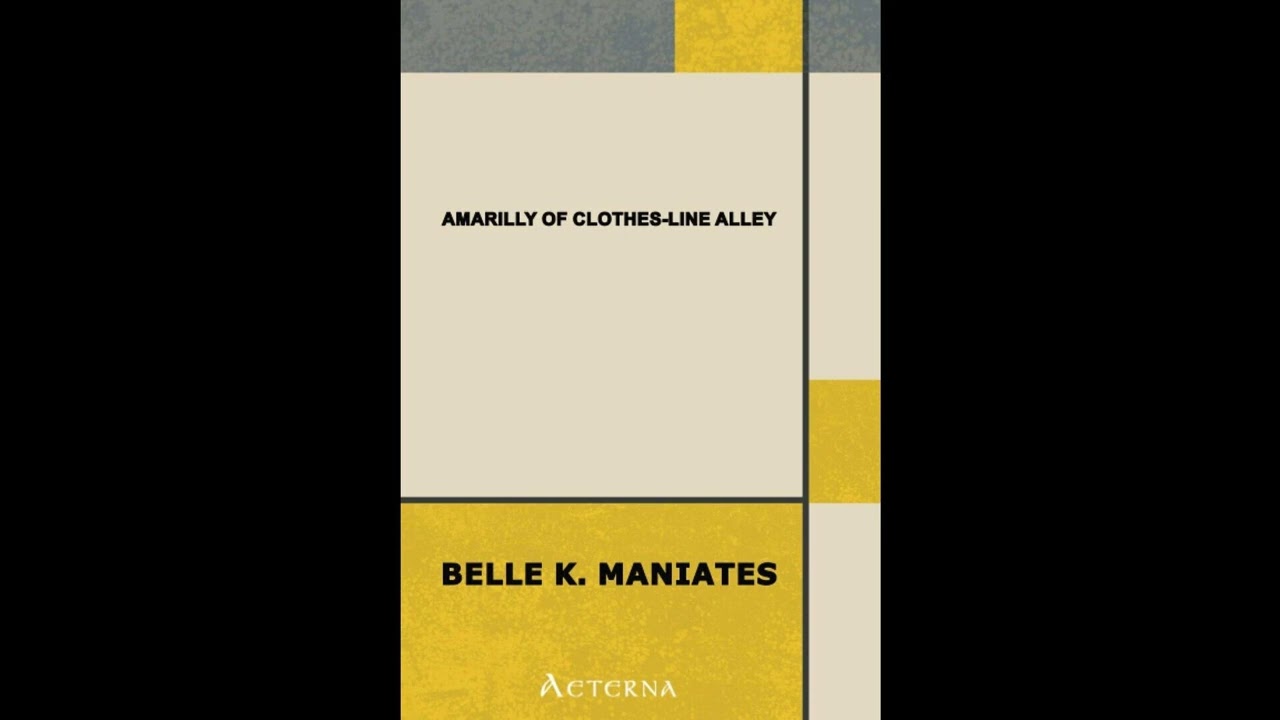
Step into the bustling, turn-of-the-century world of "Clothes-line Alley," a gritty, vibrant district where the lines of laundry strung between tenements tell stories of struggle, hope, and everyday life. At its heart lives Amarilly, a young woman whose wit is as sharp as her needles and whose spirit is brighter than the cleanest sheets drying in the sun. Belle Kanaris Maniates' charming and insightful novel, "Amarilly of Clothes-line Alley," offers more than just a glimpse into a bygone era; it presents an enduring portrait of resilience, ingenuity, and the triumph of character over circumstance. Listeners today will find themselves rooting for Amarilly, recognizing in her journey the universal human desire for dignity, self-improvement, and a little bit of unexpected happiness, proving that true worth often shines brightest from the most unexpected places. Our story introduces us to Amarilly, a resourceful and spirited young woman who, despite her humble origins in the bustling, working-class neighborhood known as Clothes-line Alley, possesses an unshakeable sense of self and an innate dignity. Living with her large, loving, but often struggling family, Amarilly carries a significant burden, contributing to their income through her diligent work as a dressmaker's assistant. Her days are filled with the practicalities of survival and the endless hum of the city, yet her mind often drifts to larger possibilities, a quiet ambition simmering beneath her cheerful exterior. She is observant, quick-witted, and utterly unsentimental about the hardships of her life, choosing instead to find humor and strength in her surroundings. The central conflict ignites when Amarilly, through a series of unexpected events and misunderstandings, finds herself brought into the orbit of a prominent, wealthy family dwelling in a vastly different part of the city. These encounters challenge her perceptions and, more importantly, challenge the preconceived notions of those from the upper echelons of society. She navigates drawing rooms and formal dinners with the same no-nonsense practicality she applies to mending clothes or managing her younger siblings, often much to the consternation and eventual amusement of her new acquaintances. The narrative follows Amarilly as she attempts to bridge these social divides, often inadvertently, and strives to improve her station and secure a better future for herself and her family, all while remaining steadfastly true to her own unique voice and values. Belle Kanaris Maniates, the insightful author behind Amarilly's spirited tale, was an American writer active primarily in the early decades of the twentieth century. Born in 1867, Maniates possessed a keen eye for social observation and a talent for infusing her narratives with both humor and heartfelt sentiment. Her writing often focused on characters who, like Amarilly, navigated the complexities of social class and personal aspiration in a rapidly changing America. While not always a household name in the same vein as some of her contemporaries, Maniates carved out a distinctive niche with her engaging prose and sympathetic characterizations, making her a beloved author for many readers of her time. Throughout her career, Maniates produced several other notable works, including Mildew Manse, David Dunne, and Our Next-Door Neighbors. These stories, much like "Amarilly of Clothes-line Alley," frequently explored themes of domestic life, the clash between different social strata, and the often-humorous misunderstandings that arise from such interactions. Her place in the literary canon can be seen as part of a broader movement of American realist and domestic fiction writers who sought to portray everyday life with authenticity and charm, often using a lighter touch to address deeper societal concerns. Maniates's work is a valuable record of the social attitudes and everyday experiences of early 20th-century America, offering both entertainment and subtle social commentary. At its core, "Amarilly of Clothes-line Alley" enacts several compelling themes. One central idea is the theme of resilience and self-worth. Amarilly, despite growing up in poverty and facing the scorn of those who judge her by her address, maintains an unyielding sense of self. We see this in her tireless work ethic, her willingness to speak her mind even to those in positions of authority, and her refusal to let circumstances diminish her spirit. For instance, when a character from a more privileged background offers her charity with a patronizing air, Amarilly's sharp, polite refusal to accept anything she hasn't earned highlights her unwavering personal integrity. Another significant theme is the disparity of social class and the challenge of prejudice. The novel frequently juxtaposes the simple, honest values of Clothes-line Alley with the often superficial concerns and hidden kindnesses of the wealthy. Amarilly’s interactions with the upper-class characters—her frank observations and unpretentious manners—frequently expose the arbitrariness of social standing. A particular scene might involve a misunderstanding over a piece of clothing, where Amarilly’s practical knowledge of fabrics and sewing outshines the theoretical pronouncements of a fashionable society lady, humorously underscoring that true expertise and character are not bound by wealth or status. This novel emerged during a pivotal time in American history, around 1915, a period defined by significant cultural and political shifts. The United States was on the cusp of World War I, but domestically, it was the height of the Progressive Era. Rapid industrialization had led to massive urbanization, creating both immense wealth and widespread poverty in concentrated city centers. Social reformers were increasingly drawing attention to the plight of the working class and the conditions in tenement districts, like the fictional Clothes-line Alley. "Amarilly of Clothes-line Alley" resonates with these societal concerns, offering a human face to the often-abstract discussions of class and opportunity. Works like Maniates's provided a dual purpose: they offered readers an accessible, often humorous look at social issues without being overtly didactic, while also serving as popular entertainment. The novel reflects a growing fascination with the "self-made" individual and the idea that character could triumph over birthright, a distinctly American ideal that found fertile ground in the social landscape of the early 20th century. Listening to "Amarilly of Clothes-line Alley" as an audiobook allows the listener to fully immerse themselves in the distinct world Maniates created. The narration brings Amarilly's distinctive voice to life—her quick wit, her pragmatic observations, and her underlying warmth will shine through, allowing listeners to experience her unique perspective directly. The "several hours" run length is perfect for a gradual unfolding of the story, allowing the listener to truly settle into the rhythm of Clothes-line Alley and the grand houses beyond. Listen for the subtle shifts in voice and tone as Amarilly interacts with characters from different social strata, highlighting both the comedic misunderstandings and the heartfelt connections that form. The dialogue, rich with period charm and Maniates's characteristic humor, will draw you into the bustling streets and quiet drawing rooms, creating an atmospheric experience that underscores the novel's enduring appeal.
Enjoyed Amarilly of Clothes-line Alley? A few ways to support us
Audible & Amazon links are affiliate; we may earn a small commission at no extra cost.
About this production
Human narration by a volunteer reader from LibriVox.org, the public-domain audiobook project. LibriVox volunteers record literary works whose copyright has expired in the United States, releasing the resulting recordings into the public domain.
Amarilly of Clothes-line Alley by Belle Kanaris Maniates by Belle Kanaris Maniates. The underlying text is in the U.S. public domain. We do not republish any modern copyrighted edition, translation, or commentary.
The 4K cinematic visuals accompanying this audiobook are generated by an AI image model from prompts derived from the source text. No copyrighted photos, paintings, or stock footage are used. AI generation is disclosed on every video on our YouTube channel as required by YouTube's altered/synthetic content policy.
English subtitles are transcribed from the LibriVox recording with OpenAI Whisper. Translations into the 11 other supported languages are produced by Meta's NLLB-200 neural translation model. No human translator's copyrighted translation is used.
Questions about sourcing or rights? See our DMCA & Sourcing policy or contact us.
Enjoyed this audiobook?
If you'd like to own a copy of Amarilly of Clothes-line Alley or hear a professionally produced edition, the links below help support free audiobook production at no extra cost to you.
As an Amazon Associate we earn from qualifying purchases. Audible / print links are affiliate.