Alcyone
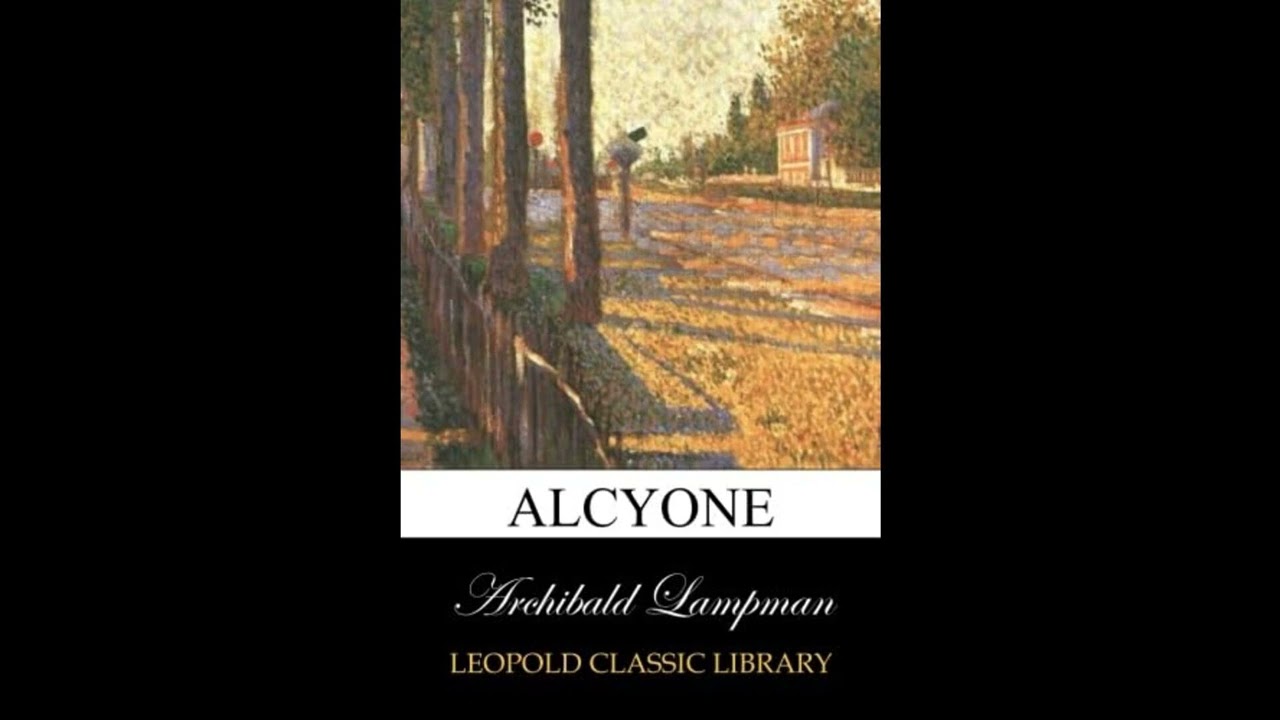
Archibald Lampman’s Alcyone presents an extraordinary collection of lyrical verses, a foundational pillar of Canadian literature that resonates with profound emotional truth and meticulous observation. This isn't just a book of poems; it is a meticulously crafted window into the soul of a particular place and time, filtered through the sensitive intellect of one of Canada's most revered poets. For a modern listener, these poems offer not only the beauty of their language and imagery but also a soothing counterpoint to contemporary noise, inviting quiet contemplation and a renewed appreciation for the natural world and the delicate nuances of human feeling. It is a chance to connect with a voice that sought solace and meaning in the wild beauty of a nascent nation, themes that remain powerfully relevant today. While Alcyone does not unfold a conventional narrative with a singular cast of characters and a linear plot, it instead presents a sequence of lyrical poems that together form a spiritual and aesthetic whole. The "setting" is primarily the untamed yet cherished landscapes of late 19th-century Canada – its forests, lakes, mountains, and the changing seasons, often viewed through the prism of a solitary walk or a moment of quiet reflection. The "main character" is frequently a reflective speaker, a keen observer whose inner life mirrors the outer world, grappling with themes of beauty, loss, the passage of time, and humanity's relationship with nature. The poetic persona acts as a guide, leading the listener through vividly described scenes, from the shimmering heat of summer fields to the stark silence of winter woods. The "central conflict" is therefore less an external struggle and more an internal meditation: the yearning for meaning and connection amidst the transience of life, the search for solace in the natural world, and the confrontation with mortality and human insignificance against the vastness of the cosmos. The "arc of the story," in this context, traces the shifting moods and insights of this poetic sensibility, moving through moments of profound tranquility and wonder to periods of poignant melancholy and philosophical questioning. It builds a coherent vision of existence through a mosaic of individual lyrical expressions, culminating in a profound sense of the interconnectedness of all things, even as it acknowledges the inevitable passage of time and the shadow of sorrow. Archibald Lampman, born in 1861 in Morpeth, Ontario, became one of the most prominent figures among the "Confederation Poets," a group of writers who helped establish a distinctive Canadian literary voice following the country's formation. Lampman's early life was marked by moves due to his clergyman father's postings, which exposed him to various rural Ontario landscapes. He received his education at Trinity College, Toronto, where he distinguished himself academically and began to hone his poetic craft, developing a keen appreciation for English Romantic and Victorian poetry. Upon graduation, Lampman moved to Ottawa, where he secured a position as a clerk in the Post Office Department, a role he held for the remainder of his relatively short life. This bureaucratic employment, while providing a stable income, often contrasted sharply with his artistic inclinations. He would frequently escape the city on long walks into the surrounding Gatineau Hills and along the Ottawa River, finding inspiration in the serene beauty of nature, which became the primary subject of his verse. He maintained close friendships and literary collaborations with fellow poets, particularly Duncan Campbell Scott and William Wilfred Campbell, sharing ideas and critiques, further solidifying the emergent Canadian literary scene. Lampman's literary output, though constrained by his daily responsibilities and a battle with chronic illness, was significant. His first major collection, Among the Millet and Other Poems, appeared in 1888, establishing his reputation. Many of his finest poems, however, including the extensive sequence which forms the heart of Alcyone, were published posthumously, curated by his friends and literary executors. His poetic style is characterized by its precise diction, vivid imagery, and a remarkable ability to blend keen observation of the natural world with philosophical reflection, placing him firmly within the late Romantic and early Victorian traditions while giving them a uniquely Canadian inflection. He passed away prematurely in 1899 at the age of 37, leaving behind a legacy that continues to define Canadian poetry. Among the central concerns expressed in Alcyone is the profound role of nature as a source of spiritual solace and truth. Lampman presents the natural world not merely as a backdrop but as an active, living entity capable of inspiring deep reflection and offering respite from the cares of human existence. For instance, in his depictions of a quiet forest pond reflecting the sky, or the rhythmic sounds of wind through pine trees, he illustrates how these moments of communion can elevate the spirit and offer glimpses of a universal order. The speaker frequently finds in the changing seasons—the burgeoning life of spring, the lushness of summer, the decay of autumn, and the stark beauty of winter—a mirror to human experience, from youthful hope to inevitable decline. Another significant concern is the contemplation of mortality and the transient nature of beauty. While Lampman celebrates the enduring power of the natural world, he is keenly aware of individual impermanence. His poems often hold moments of quiet sadness, reflecting on the brevity of life and the fleeting quality of human joy and endeavor. A scene depicting a faded flower or a forgotten path can become a poignant reminder of time's relentless march. Yet, even in this awareness of loss, there is often a sense of acceptance, a quiet dignity found in aligning one's own small existence with the grand, ongoing cycles of nature, finding a kind of continuity in the eternal return of seasons and the enduring presence of the landscape. The period in which Lampman wrote was one of significant transition for Canada. Following its Confederation in 1867, the young nation was actively forging its identity, both politically and culturally. There was a burgeoning sense of nationalism and a desire to articulate a distinct Canadian voice in the arts. Lampman and his contemporaries were instrumental in this effort, shifting away from purely British themes and instead focusing on the unique landscapes, history, and experiences of Canada. This was also a time when industrialization was beginning to reshape parts of North America, bringing new technologies and urban expansion, which stood in stark contrast to the natural beauty Lampman so cherished. Lampman's poetry emerged at a fascinating crossroads of literary movements. He inherited much from the English Romantics—Wordsworth's reverence for nature, Keats's sensory richness, and Shelley's lyrical intensity. These influences are evident in his descriptive power and his philosophical approach to the natural world. However, he filtered these through a distinctly Canadian lens, applying them to his local environment rather than European scenes. He also worked within the formal constraints often favored by Victorian poets, employing traditional meters and rhyme schemes, yet his subject matter and an emerging sense of national consciousness gave his work a fresh, new resonance that helped define Canadian literature for generations. Listening to Alcyone as an audiobook offers a unique and intimate way to experience Lampman's poetic artistry. His verses are crafted with a careful attention to rhythm and sound, elements that truly come alive when spoken aloud. The precision of his word choice, the subtle musicality of his lines, and the evocative imagery he conjures are all enhanced by the human voice. The several hours of narration allow for sustained immersion in his poetic world, providing an opportunity to absorb the shifting moods and thematic currents without interruption. Listen for the subtle pauses, the emphasis on particular words, and the way the narration breathes life into descriptions of sunlight on water or wind through trees, allowing the natural rhythms of the language to carry you into the heart of Lampman's quiet, profound vision.
Enjoyed Alcyone? A few ways to support us
Audible & Amazon links are affiliate; we may earn a small commission at no extra cost.
About this production
Human narration by a volunteer reader from LibriVox.org, the public-domain audiobook project. LibriVox volunteers record literary works whose copyright has expired in the United States, releasing the resulting recordings into the public domain.
Alcyone by Archibald Lampman. The underlying text is in the U.S. public domain. We do not republish any modern copyrighted edition, translation, or commentary.
The 4K cinematic visuals accompanying this audiobook are generated by an AI image model from prompts derived from the source text. No copyrighted photos, paintings, or stock footage are used. AI generation is disclosed on every video on our YouTube channel as required by YouTube's altered/synthetic content policy.
English subtitles are transcribed from the LibriVox recording with OpenAI Whisper. Translations into the 11 other supported languages are produced by Meta's NLLB-200 neural translation model. No human translator's copyrighted translation is used.
Questions about sourcing or rights? See our DMCA & Sourcing policy or contact us.
Enjoyed this audiobook?
If you'd like to own a copy of Alcyone or hear a professionally produced edition, the links below help support free audiobook production at no extra cost to you.
As an Amazon Associate we earn from qualifying purchases. Audible / print links are affiliate.