Jewel Weed
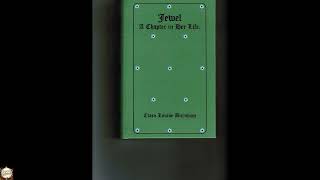
Alice Ames Winter's "Jewel Weed" emerges from the early twentieth century as a thoughtful novel, one that, despite its period setting, speaks with surprising relevance to contemporary listeners. At its core, the novel questions the very nature of value – what we prize in ourselves, in others, and in society at large. It is a story about authenticity and the quiet strength of character pitted against the glittering, often superficial, demands of the world. Why care about Elma Gray's struggles today? Because the pressure to conform, to chase external markers of success or beauty, or to compromise one's inner truth for social acceptance, remains a deeply human conflict. "Jewel Weed" offers not just a glimpse into a past era, but a mirror reflecting our own persistent dilemmas of self-definition and integrity. The story introduces us to Elma Gray, a young woman of humble origins from the tranquil, forested edges of a burgeoning Midwestern city. She possesses an uncommon quietude and an innate dignity, qualities often overlooked in a society increasingly dazzled by outward display. Elma’s life takes an unexpected turn when circumstances—perhaps the passing of a distant relative or an unforeseen opportunity—place her within the orbit of the city’s more established and affluent families. She finds herself navigating the complex social circles of the wealthy, a world of elaborate teas, formal dinners, and whispered judgments where personal worth is often measured by one's lineage, possessions, and social standing. Central to Elma's experience is her encounter with the formidable Mrs. Vandergelt, a matriarch who embodies the era's rigid social conventions, and Mrs. Vandergelt's charismatic but morally ambiguous nephew, Arthur. Elma's steadfast spirit and unvarnished perspective initially intrigue them, but her refusal to entirely abandon her natural candor for social artifice soon becomes a source of tension. She grapples with the allure of a life of ease and recognition, contrasted with the quiet strength of her own values. As a series of events unfold, forcing her to make difficult choices about love, loyalty, and her future, Elma must discern between the artificial brilliance that promises quick ascent and the slower, more enduring growth that defines true character. Her arc becomes one of resilience, a quiet determination to remain true to herself amidst societal currents that threaten to sweep her away. Alice Ames Winter (née Alice Edna Ames) was a significant, albeit sometimes overlooked, voice from a pivotal period in American history. Born in Albany, New York, in 1860, she was educated at Wellesley College, an institution renowned for fostering intellectual independence in women. Her marriage to Thomas G. Winter led her to Minneapolis, Minnesota, where she became deeply involved in the social and civic life of her adopted community. This move to the Midwest, a region then undergoing rapid development and cultural definition, undoubtedly shaped her perspective, providing fertile ground for her observations on society and character. Winter was not merely a novelist; she was a prominent figure in the women's club movement, rising to become the president of the General Federation of Women's Clubs (GFWC) from 1920 to 1924. This was a powerful national organization that championed social reforms, education, public health, and women’s suffrage. Her work with the GFWC placed her at the forefront of efforts to expand women's roles beyond the domestic sphere into public life, advocating for their full participation as citizens. Her written works, including "The Prize Story" (1903), "The Little Life of Mary" (1918), and a non-fiction work on civic engagement, "The Business of Being a Citizen" (1924), naturally reflected her deep commitment to these societal issues, presenting her as a thoughtful observer of human nature and social dynamics in a changing America. "Jewel Weed" stands out for its thoughtful engagement with several core themes. Foremost among them is the tension between authenticity and outward appearance. The protagonist, Elma Gray, embodies the quiet strength of character, much like the "jewel weed" itself—a plant that, though unassuming, possesses a unique resilience and beauty, often growing in wild, overlooked places. Elma faces constant pressure to adopt the mannerisms and values of the upper class, such as when she attends a sophisticated dinner party and feels the sting of judgment for her plain dress and direct conversation, rather than conforming to superficial expectations. This internal struggle highlights the novel's focus on defining genuine worth beyond material trappings. Another vital theme is the evolving role of women in society during the early 20th century. Elma, a woman with intelligence and a strong moral compass, must navigate a world that often confined women to specific domestic or social roles. She encounters characters who epitomize both the constraints and emerging possibilities for women. For instance, her conversations with an older, more traditional society matron illustrate the limited choices available to women of that era, while her own determination to maintain her independence, even at social cost, speaks to the nascent stirrings of female agency. The book also subtly comments on social class and mobility, observing how Elma's background initially acts as both a barrier and, ultimately, a source of her strength, showcasing the prejudices and opportunities present in a society undergoing rapid transformation. Published in 1906, "Jewel Weed" emerged during America's Progressive Era, a period of profound social and political reform. The turn of the twentieth century was a time of immense change, marked by rapid industrialization, urbanization, and a growing awareness of societal inequalities. Women, in particular, were actively pushing for greater rights and a more expansive role in public life, with the suffrage movement gaining considerable momentum. Authors of this period often turned their pens to realism, addressing social issues, critiquing class distinctions, and examining the ethical challenges of a modernizing nation. Alice Ames Winter's work fits squarely within this context. Her experiences as a social reformer and leader within the women's club movement provided her with a unique lens through which to observe the human condition and the societal pressures of her time. "Jewel Weed" reflects these cultural shifts, posing questions about moral responsibility, the definition of success, and the place of the individual within an increasingly complex social fabric. It is a work that not only offers entertainment but also serves as a subtle social commentary, characteristic of the era's literary output. Listening to "Jewel Weed" as an audiobook offers a singular opportunity to fully immerse oneself in Alice Ames Winter's world. A skilled narrator brings the period language to life, allowing the listener to appreciate the nuanced dialogue and descriptive prose without the potential stumbling blocks of unfamiliar idioms. The run length of several hours makes it an ideal companion for a series of commutes, household tasks, or extended relaxation, allowing the story to unfold gradually. A sensitive performance can heighten the emotional depth of Elma's internal conflicts, giving voice to her quiet strength and the subtle inflections of social class that define her interactions. The spoken word deepens the atmosphere of the early 20th century, making the struggles for authenticity and self-definition feel immediate and resonant.
Enjoyed Jewel Weed? A few ways to support us
Audible & Amazon links are affiliate; we may earn a small commission at no extra cost.
About this production
Human narration by a volunteer reader from LibriVox.org, the public-domain audiobook project. LibriVox volunteers record literary works whose copyright has expired in the United States, releasing the resulting recordings into the public domain.
Jewel Weed by Alice Ames Winter. The underlying text is in the U.S. public domain. We do not republish any modern copyrighted edition, translation, or commentary.
The 4K cinematic visuals accompanying this audiobook are generated by an AI image model from prompts derived from the source text. No copyrighted photos, paintings, or stock footage are used. AI generation is disclosed on every video on our YouTube channel as required by YouTube's altered/synthetic content policy.
English subtitles are transcribed from the LibriVox recording with OpenAI Whisper. Translations into the 11 other supported languages are produced by Meta's NLLB-200 neural translation model. No human translator's copyrighted translation is used.
Questions about sourcing or rights? See our DMCA & Sourcing policy or contact us.
Enjoyed this audiobook?
If you'd like to own a copy of Jewel Weed or hear a professionally produced edition, the links below help support free audiobook production at no extra cost to you.
As an Amazon Associate we earn from qualifying purchases. Audible / print links are affiliate.