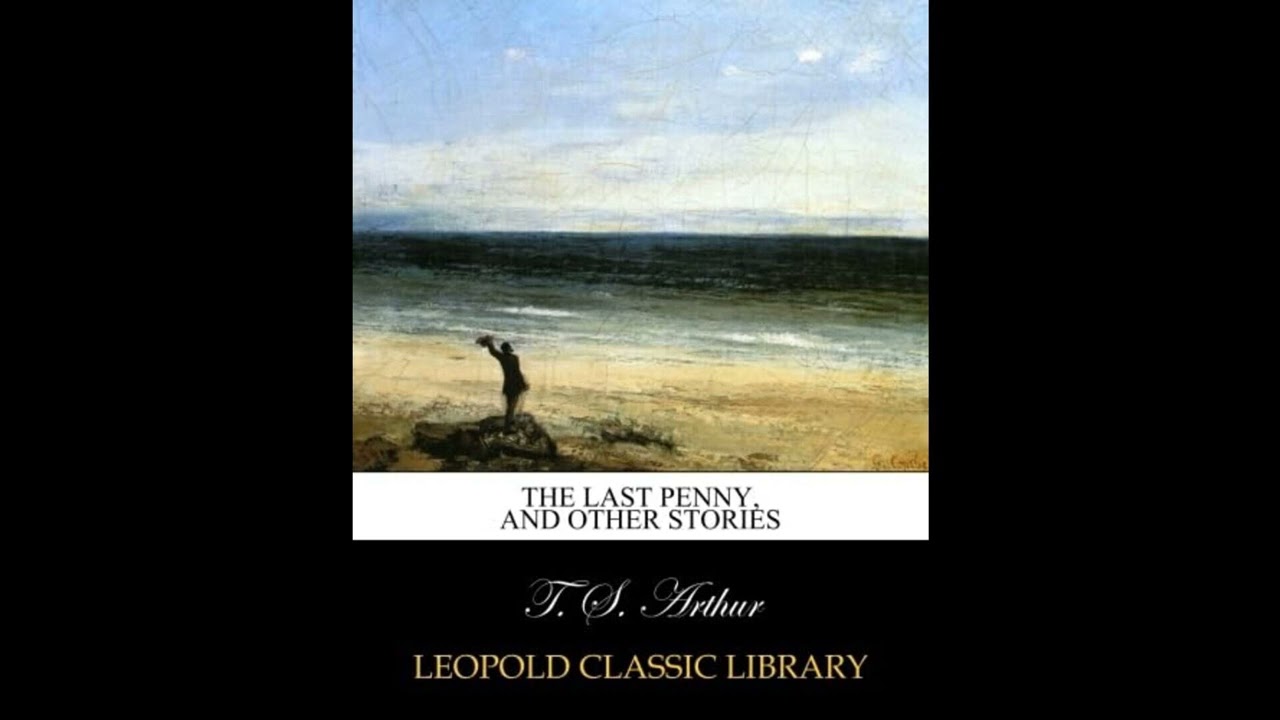
The last penny, and other stories
Step into a world where everyday decisions carry the weight of destiny, where the strength of character is tested by the harsh realities of life, and where a single choice can unravel a family's future or secure its salvation. T. S. Arthur's collection, "The Last Penny, and Other Stories," opens a precise window into the moral landscape of 19th-century America, offering not just narratives but parables designed to illuminate the human condition. Even today, long after the gas lamps have faded and the horse-drawn carriages have been replaced, the core struggles depicted within these pages – the battle against temptation, the pursuit of virtue, the enduring power of familial love – resonate with a profound and familiar echo, inviting listeners to reflect on their own lives and the timeless principles that govern human experience. The title story, "The Last Penny," plunges us into the quiet despair of a family facing financial ruin. We find them in a dimly lit parlor, the shadows mirroring the cloud hanging over their spirits. Mr. Elms, a man whose good intentions often falter under pressure, grapples with the consequences of his poor judgment and a troubling fondness for drink, which slowly but surely chips away at his meager earnings. His wife, Mrs. Elms, a figure of quiet fortitude, attempts to stretch their last few coins, her every action an exercise in desperate frugality, shielding her young children from the full horror of their poverty. The central conflict unfolds as their last penny literally becomes a symbol of their breaking point, forcing a stark confrontation between pride and humility, self-destruction and the desperate need for redemption. The other stories in this collection similarly explore various facets of domestic life, often set in the burgeoning cities or quaint towns of Arthur's era. Listeners will encounter earnest young men grappling with the temptations of urban vice, diligent wives striving to maintain household harmony amidst hardship, and children observing the moral dramas of their parents with a clear, often poignant, gaze. Each narrative presents a clear moral dilemma or a situation where characters must choose between the path of self-interest and the path of integrity. The arc of these tales typically moves from an initial state of challenge or temptation, through a series of actions and reactions, to a culminating moment of consequence or revelation, serving to highlight the direct link between character and fate without ever giving away the precise outcome. Timothy Shay Arthur, born in Newburgh, New York, in 1809, and passing away in Philadelphia in 1885, was an extraordinarily prolific and influential American author of the 19th century. Growing up primarily in Baltimore, Maryland, Arthur started his literary career early, contributing to newspapers and magazines in the 1830s. He quickly established himself as a prominent voice in the burgeoning popular fiction market, known for his moralistic tales and domestic dramas. Beyond his extensive writing – which included over 100 books – Arthur also founded and edited several successful periodicals, most notably Arthur's Home Magazine, which catered to a wide female readership and often published his own stories. Arthur's work became synonymous with the temperance movement, a powerful social reform effort of his time. His most famous novel, Ten Nights in a Bar-Room and What I Saw There (1854), became a sensation, selling hundreds of thousands of copies and being adapted into a popular stage play. This novel, along with countless short stories, solidified his reputation as a champion of domestic virtue and a keen observer of the pitfalls of intemperance and other moral failings. While literary critics sometimes categorized his work as sentimental or didactic, Arthur's ability to connect with a mass audience through relatable characters and clear moral lessons secured his place as a significant cultural figure, shaping public opinion on social issues during a transformative period in American history. One of the most prominent themes weaving through "The Last Penny, and Other Stories" is the dire consequences of intemperance. Arthur consistently illustrates how alcohol consumption, even in moderation at first, can lead to financial ruin, domestic strife, and the erosion of personal dignity. In "The Last Penny," for instance, Mr. Elms's struggles are directly tied to his visits to the tavern, which drain his limited funds and his capacity for sound judgment, leaving his family in destitution. The stories often paint vivid, cautionary pictures of the home ravaged by drink, showing the quiet suffering of wives and children as their livelihoods and peace are systematically destroyed. Another central theme is the sanctity of the domestic sphere and the virtues required to maintain it. Arthur frequently champions the resilient and resourceful wife, portraying her as the moral anchor of the family, striving to uphold order and love even when her husband falters. These narratives underscore the importance of thrift, industry, and sobriety within the home, presenting them not just as personal attributes but as essential pillars of societal stability. Furthermore, the theme of personal accountability runs deep, with characters consistently facing the direct, often unavoidable, results of their moral choices, whether they lead to redemption or further descent into hardship, reinforcing the idea that virtue is its own reward and vice its own punishment. These stories emerged from a specific cultural moment in mid-19th century America, a period marked by rapid social change, industrialization, and significant anxieties about the moral fabric of society. The decades leading up to the Civil War saw the rise of numerous social reform movements – abolition, women's rights, and temperance chief among them. With urbanization and increased access to popular print media, authors like Arthur found a vast audience eager for stories that reflected their concerns and offered moral guidance. His work particularly resonated with a public grappling with the perceived threats to traditional family values and community stability posed by poverty, alcoholism, and the pressures of modern life. Arthur's tales provided a comforting framework of clear moral principles in a world that often felt increasingly complex and uncertain. Listening to "The Last Penny, and Other Stories" as an audiobook offers a unique and intimate way to experience T. S. Arthur's distinctive voice. The narration brings to life the often earnest and sometimes dramatic dialogue, allowing listeners to fully appreciate the emotional nuances of characters striving for virtue or succumbing to temptation. With a run time of several hours, this collection is perfectly suited for extended periods of contemplation, whether during a quiet evening at home or while commuting. The pacing of the narration often mirrors the deliberate, reflective tone of Arthur's prose, giving ample space to absorb the moral lessons embedded in each narrative. Listen for the subtle inflections that distinguish the virtuous from the wayward, and how the narrator's performance crafts an atmosphere that truly transports you back to a time when honesty and hard work were not just ideals, but the very bedrock of a good life.
Enjoyed The last penny, and other stories? A few ways to support us
Audible & Amazon links are affiliate; we may earn a small commission at no extra cost.
About this production
Human narration by a volunteer reader from LibriVox.org, the public-domain audiobook project. LibriVox volunteers record literary works whose copyright has expired in the United States, releasing the resulting recordings into the public domain.
The last penny, and other stories by T. S. Arthur. The underlying text is in the U.S. public domain. We do not republish any modern copyrighted edition, translation, or commentary.
The 4K cinematic visuals accompanying this audiobook are generated by an AI image model from prompts derived from the source text. No copyrighted photos, paintings, or stock footage are used. AI generation is disclosed on every video on our YouTube channel as required by YouTube's altered/synthetic content policy.
English subtitles are transcribed from the LibriVox recording with OpenAI Whisper. Translations into the 11 other supported languages are produced by Meta's NLLB-200 neural translation model. No human translator's copyrighted translation is used.
Questions about sourcing or rights? See our DMCA & Sourcing policy or contact us.
Enjoyed this audiobook?
If you'd like to own a copy of The last penny, and other stories or hear a professionally produced edition, the links below help support free audiobook production at no extra cost to you.
As an Amazon Associate we earn from qualifying purchases. Audible / print links are affiliate.