A Little Bush Maid
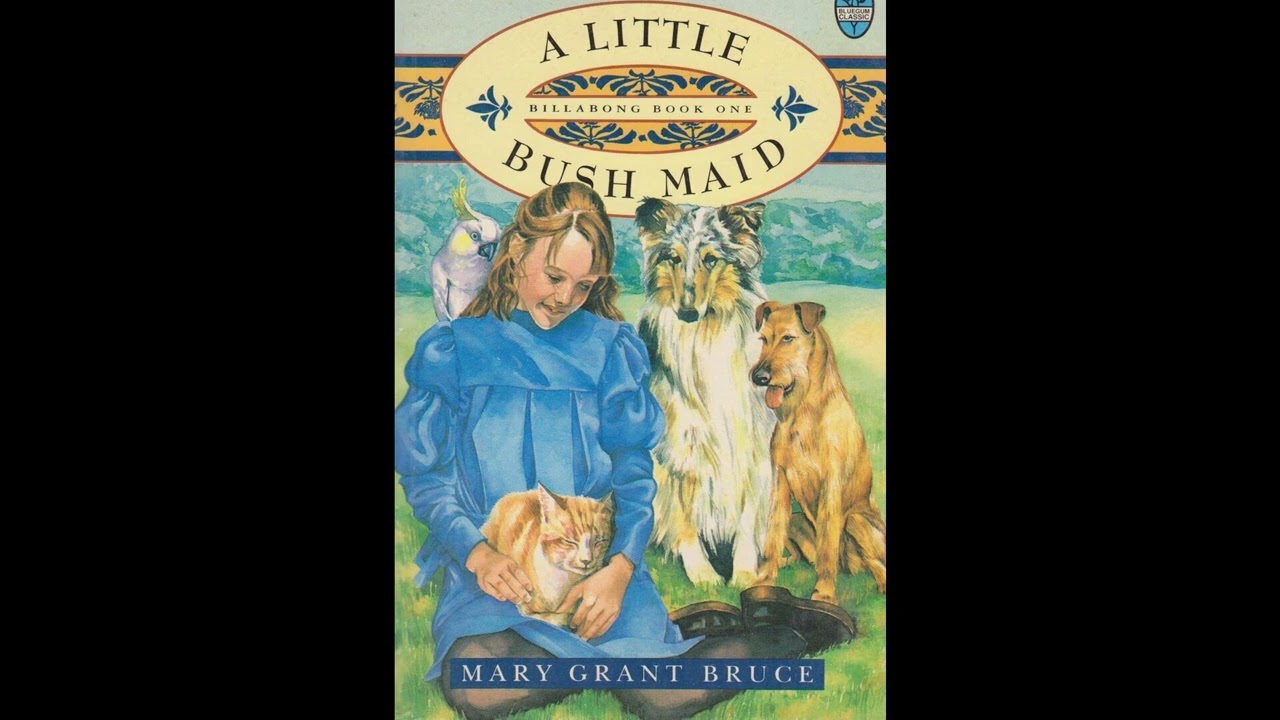
Step into a sun-drenched landscape where the call of the kookaburra echoes through gum trees, and the spirit of untamed Australia shapes a young girl's heart. "A Little Bush Maid," the beloved first installment of Mary Grant Bruce's iconic Billabong series, offers a delightful return to a simpler, wilder time, inviting listeners to experience the charm and challenges of life on a sprawling Victorian cattle station. This classic tale resonates today as a celebration of independence, a poignant look at the collision of nature and convention, and a testament to the enduring appeal of a spirited protagonist finding her place in a world poised between tradition and modernity. It’s an absorbing listen for anyone seeking an escape into literary history and a foundational story of Australian identity. Our story begins deep within the Australian bush, at Billabong Station, a vast cattle property in Victoria. Here, we meet Norah Linton, a high-spirited and utterly unconventional young girl who has known little else but the freedom of the open plains. Orphaned at a tender age, Norah has been raised by her older brother, Jim, who manages Billabong with a steady hand and a deep affection for his wild sister. Norah's days are filled with riding her pony, exploring the bush, interacting with the station's Aboriginal stockmen, and learning the practical skills necessary for survival in her rugged environment. She is resourceful, fearless, and utterly at home in nature, her life a joyous rebellion against drawing-room etiquette. The arrival of Mrs. Brown and her seemingly sophisticated daughter, Maggie, however, introduces a new dynamic to Billabong. Maggie, a girl of Norah's age, represents the polite society and structured learning Norah has largely avoided. This unexpected arrival sets the stage for the central conflict. Norah finds her free-spirited existence challenged by the expectations of the "civilized" world Maggie embodies, and later, by the introduction of a new governess, Miss Gray, whose ideas of proper upbringing clash dramatically with Norah's bush-bred independence. The narrative deftly follows Norah as she navigates these cultural differences, struggling to reconcile her love for the bush with the pressures to conform to more conventional feminine roles. While the story maintains its lighthearted charm, it subtly addresses the growing pains of a young woman discovering her own identity amidst external pressures. Adventures — both grand and small — punctuate the story, from encounters with bushfires and wild animals to the simple joys of life on the station, all unfolding against the vivid backdrop of the Australian landscape. Mary Grant Bruce, born in Gippsland, Victoria, in 1878, would become one of Australia's most cherished authors for young people. Her life was deeply entwined with the very landscapes and experiences she brought to life in her books. Growing up in rural Victoria, she absorbed the details of bush life firsthand, from the rhythms of station work to the unique flora and fauna that populate her stories. This personal connection to the Australian countryside lent an unparalleled authenticity to her writing, making her a crucial figure in the early development of Australian children's literature. Before finding her calling as a novelist, Bruce worked as a journalist, contributing to various newspapers and magazines, a profession that honed her keen observational skills and narrative voice. Bruce’s literary legacy is predominantly defined by her "Billabong" series, which began with "A Little Bush Maid" in 1910 and continued through fifteen subsequent volumes, following Norah and Jim Linton through their many adventures. Her books were incredibly popular throughout the 20th century, shaping generations of Australian readers' perceptions of their own country and culture. She published other works, including short stories and novels, but it is the Billabong world—a place of wholesome adventure, strong family bonds, and deep respect for the land—that secured her place in the literary canon. Bruce passed away in England in 1958, but her contributions remain a touchstone for understanding Australia's literary heritage. "A Little Bush Maid" artfully renders several compelling themes. Central among these is the stark contrast between freedom and convention, seen vividly in Norah's wild, uninhibited existence versus the structured, polite world introduced by Maggie and Miss Gray. For instance, Norah's immediate instinct to ride bareback through the bush, a symbol of her innate connection to nature, stands in direct opposition to Maggie's insistence on proper riding attire and manners. The book also celebrates Australian identity and bush lore, showcasing the unique skills, knowledge, and spirit required to thrive in the Australian outback. Bruce illustrates this through Norah's intimate understanding of the land, her ability to track animals, her fearlessness in the face of natural challenges, and her comfortable interactions with the station's Indigenous workers, painting a picture of self-reliance forged by the environment. Furthermore, the theme of family and loyalty underpins the entire narrative, particularly through the unwavering bond between Norah and her brother Jim, who acts as both guardian and confidante, always prioritizing Norah’s happiness and well-being even when he struggles with the "proper" way to raise a young lady. Another significant theme present is resourcefulness and resilience, exemplified by Norah's practical intelligence and her capacity to handle unexpected situations with courage and quick thinking. A memorable scene might depict Norah facing a minor crisis in the bush—perhaps a lost animal or a sudden storm—and relying on her innate knowledge and skills to resolve it, rather than waiting for assistance. This highlights the practical education the bush provides, an education often more valuable than formal schooling in the context of her world. Bruce presents these themes not as abstract concepts but as lived experiences, deeply embedded in Norah’s character and the fabric of Billabong life. The publication of "A Little Bush Maid" in 1910 arrived at a pivotal moment in Australian history, shortly after the federation of the Australian colonies into a single nation in 1901. This period was marked by a burgeoning sense of national identity, a desire to define what it meant to be Australian, distinct from its British colonial origins. Authors like Mary Grant Bruce contributed significantly to this cultural movement, turning their gaze inward to Australian landscapes and characters, moving away from purely Eurocentric narratives. The "bush" itself became a powerful symbol of Australian identity—a place of both hardship and immense beauty, demanding self-reliance and fostering a unique spirit. Bruce's work emerged from and contributed to this literary tradition, offering tales that glorified rural life and the unique qualities of those who lived it, at a time when rapid urbanization was also beginning to reshape the country. Her stories provided a romanticized yet deeply authentic window into a way of life that many Australians cherished and identified with. Listening to "A Little Bush Maid" as an audiobook brings this spirited narrative and its vivid setting to life in a way that reading on the page simply cannot replicate. The several hours of run time allow for complete immersion in Norah Linton's world, letting the listener settle into the rhythms of Billabong Station. A skilled narrator will undoubtedly capture Norah's youthful exuberance, Jim's steady resolve, and Maggie's sometimes comical fussiness, giving each character a distinct presence. Pay attention to how the voice acting conveys the atmosphere of the Australian bush—the quiet expanses, the urgency of an adventure, the warmth of a family gathering—and how the pacing mirrors the ebb and flow of life in this remote yet captivating corner of the world. The rich dialogue and descriptions of the landscape truly flourish when spoken, creating a dynamic auditory experience that transports you directly to Billabong.
Enjoyed A Little Bush Maid? A few ways to support us
Audible & Amazon links are affiliate; we may earn a small commission at no extra cost.
About this production
Human narration by a volunteer reader from LibriVox.org, the public-domain audiobook project. LibriVox volunteers record literary works whose copyright has expired in the United States, releasing the resulting recordings into the public domain.
A Little Bush Maid by Mary Grant Bruce. The underlying text is in the U.S. public domain. We do not republish any modern copyrighted edition, translation, or commentary.
The 4K cinematic visuals accompanying this audiobook are generated by an AI image model from prompts derived from the source text. No copyrighted photos, paintings, or stock footage are used. AI generation is disclosed on every video on our YouTube channel as required by YouTube's altered/synthetic content policy.
English subtitles are transcribed from the LibriVox recording with OpenAI Whisper. Translations into the 11 other supported languages are produced by Meta's NLLB-200 neural translation model. No human translator's copyrighted translation is used.
Questions about sourcing or rights? See our DMCA & Sourcing policy or contact us.
Enjoyed this audiobook?
If you'd like to own a copy of A Little Bush Maid or hear a professionally produced edition, the links below help support free audiobook production at no extra cost to you.
As an Amazon Associate we earn from qualifying purchases. Audible / print links are affiliate.