A Century of Negro Migration
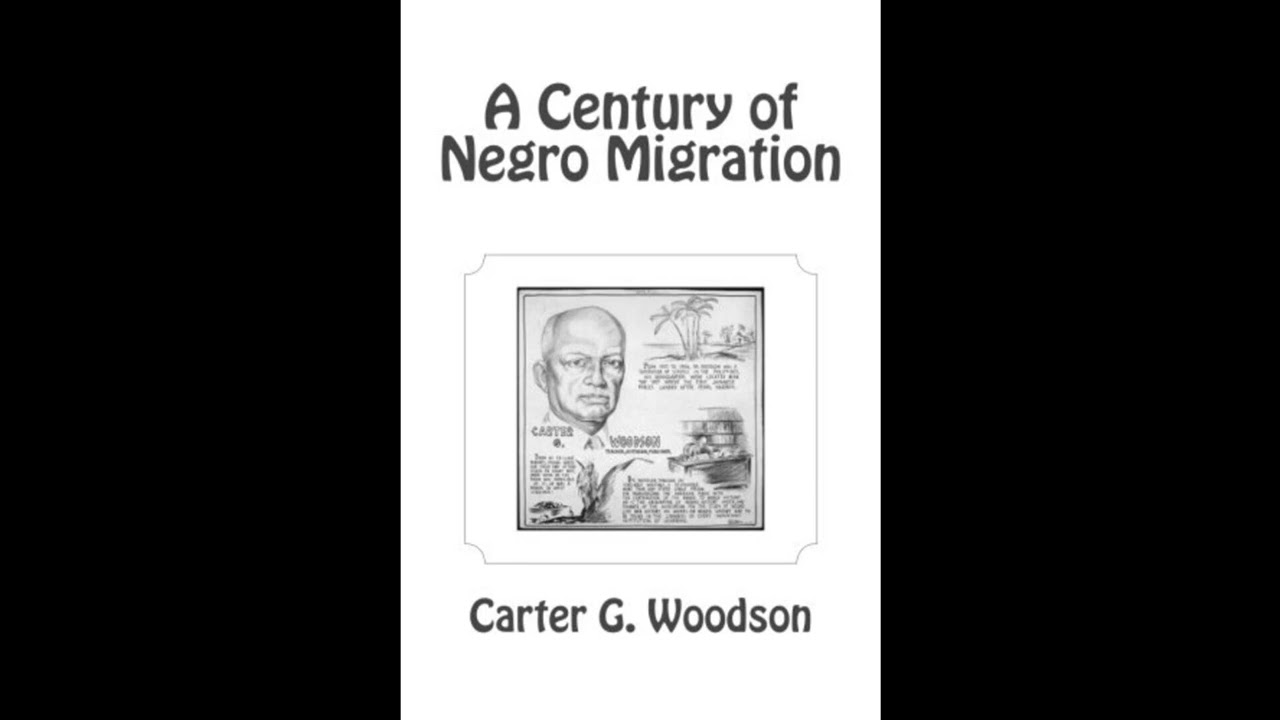
Long before the headlines spoke of the Great Migration, long before documentaries unpacked its profound impact on American life, Carter G. Woodson, a pioneering historian, laid bare its origins and dynamics in "A Century of Negro Migration." This seminal work, published over a hundred years ago, is far more than a historical account; it is a foundational text that reveals the deep structural forces that shaped the movement of millions of African Americans from the rural South to the urban North and West. For anyone seeking to understand the roots of modern American demographics, the persistent struggles for equality, and the enduring resilience of a people, this book offers an indispensable lens, showing how the past continues to reverberate through our present. It explains not merely what happened, but why it happened, grounding monumental societal shifts in the lived experiences and choices of individuals facing extraordinary pressures. Woodson’s narrative begins in the immediate aftermath of the Civil War, when newly emancipated African Americans, having secured legal freedom, faced the daunting task of building lives of dignity and economic independence in a South still deeply entrenched in systems of racial oppression. He meticulously details the initial hesitant steps of migration, not as a sudden mass exodus, but as a gradual, often localized, movement driven by immediate needs and aspirations. The setting is primarily the post-Reconstruction South, characterized by sharecropping, debt peonage, rampant racial violence, and the systemic disenfranchisement of Black citizens. The central "characters" are the thousands of individuals and families who, collectively, made the conscious, courageous choice to seek better lives elsewhere. The conflict presented is the relentless struggle against this oppressive environment—the economic exploitation that kept families perpetually indebted, the political machinations that stripped away their voting rights, and the ever-present threat of mob violence and Jim Crow laws that rendered their lives precarious. Woodson traces the arc of this migration through several distinct phases, from early movements within the South, to the more organized efforts to relocate to Kansas and other western states during the late 19th century, and finally, to the burgeoning industrial centers of the North in the early 20th century. He highlights the motivations—the desire for education, the lure of higher wages, and above all, the yearning for a society where their rights and humanity would be respected. Woodson effectively builds a picture of how these cumulative individual decisions, fueled by necessity and hope, coalesced into one of the most significant internal migrations in American history, fundamentally reshaping the nation's social, economic, and political landscape. Carter G. Woodson, born in 1875 in New Canton, Virginia, to formerly enslaved parents, overcame immense obstacles to become one of America’s most influential historians and educators. His early life was marked by manual labor in the coal mines of West Virginia, yet his unquenchable thirst for knowledge led him to pursue education with uncommon vigor. He earned his bachelor's and master's degrees from the University of Chicago and later became the second African American to receive a Ph.D. in history from Harvard University in 1912, following W. E. B. Du Bois. Woodson dedicated his life to correcting the pervasive historical inaccuracies and omissions concerning African Americans, realizing that a people without a history are a people without identity and agency. In 1915, he founded the Association for the Study of Negro Life and History (now the Association for the Study of African American Life and History, ASALH), an organization instrumental in promoting the scientific study of Black history. The following year, he established The Journal of Negro History, the first scholarly journal devoted to African American history. He also founded Associated Publishers to produce books on Black life and history, recognizing the limitations of mainstream publishing. Woodson’s tireless efforts to collect, preserve, and disseminate African American historical narratives earned him the revered title, "Father of Black History." His intellectual legacy, which includes works like The Negro in Our History and The Mis-Education of the Negro, continues to shape our understanding of the Black experience and its central place in American identity until his passing in 1950. One of the prominent themes woven through "A Century of Negro Migration" is the relentless pursuit of agency and self-determination against overwhelming odds. Woodson illustrates this through countless examples, such as the organized efforts of formerly enslaved people pooling their meager resources to purchase land and establish independent communities, or the calculated decisions of families to leave the familiarity of the South for unknown opportunities in distant cities. These are not merely statistics; they are concrete instances of individuals asserting their will to carve out better futures, even when societal structures actively sought to deny them such control. Another crucial theme is economic determinism, revealing how the South's reliance on cheap labor and the North's industrial demand for workers served as powerful, albeit often exploitative, catalysts for migration. Woodson shows how the lure of slightly higher wages, even for dangerous factory work, acted as a significant pull factor, demonstrating the profound economic desperation that drove many to relocate. The book also powerfully foregrounds the role of systemic racism and violence as push factors. Woodson provides vivid, if sobering, details of the constant threat of lynching, the dehumanizing practices of Jim Crow segregation, and the legal and extra-legal means employed to suppress Black advancement. He uses specific examples of racial terrorism and economic disenfranchisement to demonstrate how these conditions created an untenable environment, compelling people to flee not just for economic betterment, but for basic safety and human dignity. Moreover, the text speaks to the persistence of hope—a belief that somewhere, whether in Kansas or Chicago, a life free from such oppression was possible. This hope, despite repeated disappointments and the discovery that racism was not confined to the South, fueled the continued movement, underscoring the enduring human spirit in the face of adversity. Carter G. Woodson published "A Century of Negro Migration" in 1918, a pivotal moment in American history. World War I was raging, accelerating the demand for industrial labor in Northern cities as European immigration waned and factories ramped up production for the war effort. This period saw the Great Migration entering one of its most intense phases, with hundreds of thousands of African Americans moving North. Simultaneously, racial tensions were escalating across the nation, leading to the "Red Summer" of 1919 and a resurgence of the Ku Klux Klan. Jim Crow laws were firmly entrenched in the South, and while the North offered a different set of challenges, it was perceived as a land of greater opportunity and freedom. Woodson’s work emerged precisely when this monumental demographic shift was unfolding, offering one of the earliest scholarly attempts to analyze its causes, patterns, and implications from a perspective centered on the experiences of African Americans themselves, rather than through the lens of white observers or policymakers. Listening to "A Century of Negro Migration" as an audiobook offers a unique, immersive experience. The several hours of narration provide the necessary space for Woodson’s meticulous research and thoughtful analysis to unfold at a comfortable pace, allowing listeners to absorb the complex historical details and the weight of the events described. A skilled narrator brings clarity to Woodson’s precise prose, transforming historical data and analytical observations into a compelling oral history. The sustained voice over the narrative’s length fosters a deep engagement with the material, letting the listener contemplate the vast scale of the migration and the profound human stories it represents. It allows for a continuous flow of information, painting a comprehensive picture of a transformative era in American history, best heard without interruption.
Enjoyed A Century of Negro Migration? A few ways to support us
Audible & Amazon links are affiliate; we may earn a small commission at no extra cost.
About this production
Human narration by a volunteer reader from LibriVox.org, the public-domain audiobook project. LibriVox volunteers record literary works whose copyright has expired in the United States, releasing the resulting recordings into the public domain.
A Century of Negro Migration by Carter G. Woodson. The underlying text is in the U.S. public domain. We do not republish any modern copyrighted edition, translation, or commentary.
The 4K cinematic visuals accompanying this audiobook are generated by an AI image model from prompts derived from the source text. No copyrighted photos, paintings, or stock footage are used. AI generation is disclosed on every video on our YouTube channel as required by YouTube's altered/synthetic content policy.
English subtitles are transcribed from the LibriVox recording with OpenAI Whisper. Translations into the 11 other supported languages are produced by Meta's NLLB-200 neural translation model. No human translator's copyrighted translation is used.
Questions about sourcing or rights? See our DMCA & Sourcing policy or contact us.
Enjoyed this audiobook?
If you'd like to own a copy of A Century of Negro Migration or hear a professionally produced edition, the links below help support free audiobook production at no extra cost to you.
As an Amazon Associate we earn from qualifying purchases. Audible / print links are affiliate.