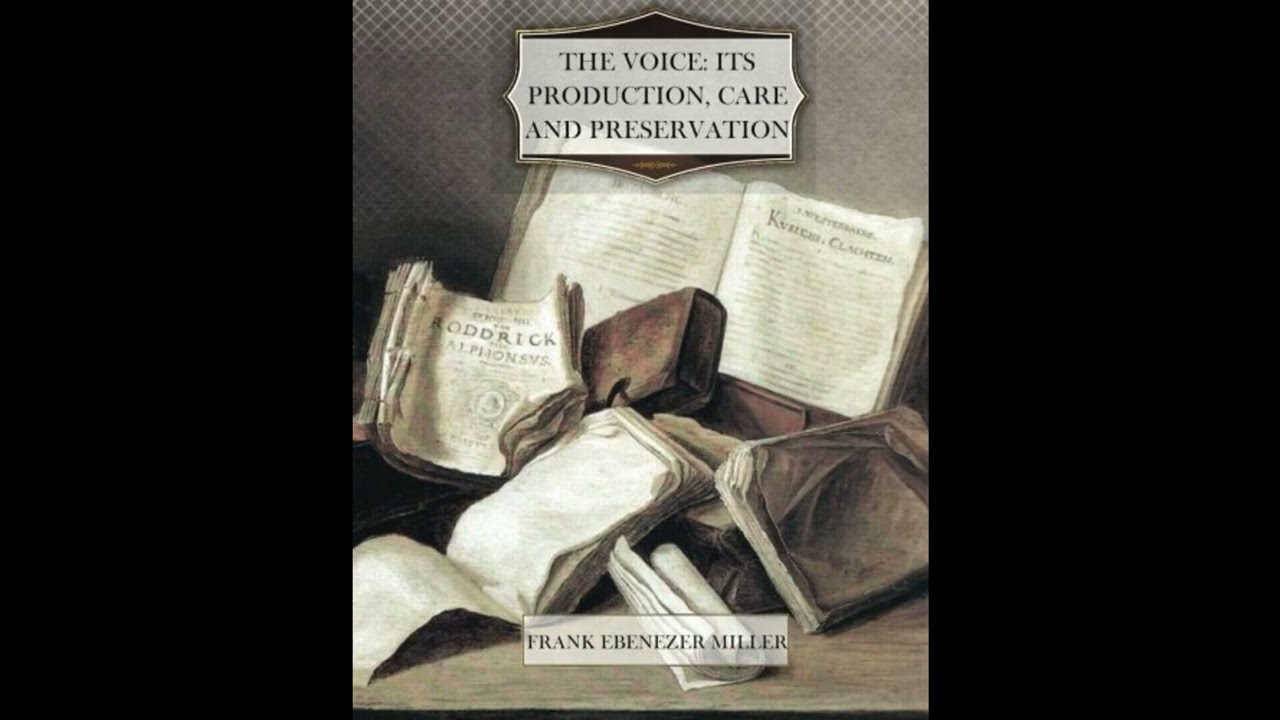
The Voice: Its Production, Care and Preservation
The human voice—that most intimate and universal of instruments—is often taken for granted until it falters. Yet, for millennia, cultures have revered the spoken word, recognizing its power to persuade, to entertain, to heal, and to connect. Frank Ebenezer Miller’s foundational guide, The Voice: Its Production, Care and Preservation, offers listeners a profound return to the fundamentals of this extraordinary human faculty. More than a simple instruction manual, it stands as a seminal piece of classic literature in its domain, a methodical and deeply insightful examination of vocal mechanics and artistry. For anyone who relies on their voice—be it for public speaking, professional performance, or even just daily communication—Miller’s wisdom remains as pertinent today as when it was first penned, providing a rigorous system for cultivating vocal strength, endurance, and expressive capability in an age where our voices are constantly in demand. Miller’s text doesn’t present a fictional narrative in the traditional sense, but rather a compelling intellectual argument and a practical progression through the landscape of human phonation. Its "setting" is the complex, often hidden, internal world of the vocal apparatus, brought into sharp relief against the external demands of performance, rhetoric, and daily social interaction. The central "character" is the aspiring voice user—the speaker, the singer, the orator, the teacher—who seeks to master this instrument, and also, crucially, the voice itself, presented as a living entity deserving of understanding and respect. The primary "conflict" emerges from the common abuses, pervasive misunderstandings, and general neglect that threaten vocal health and diminish its potential, posing a constant challenge to clear, powerful communication. Miller, acting as the listener’s sagacious guide, confronts these issues head-on, offering a comprehensive strategy for overcoming them. The arc of this remarkable instructional "story" begins with a meticulous anatomical and physiological foundation, systematically dissecting the mechanics of breathing, phonation, and resonance. Miller patiently builds the listener’s understanding, moving from the foundational principles of proper posture and breath support to precise exercises designed to strengthen the vocal cords and enhance tonal quality. He then guides the listener through the nuances of articulation, projection, and expressive delivery, transforming raw vocal ability into refined communication. The journey culminates in a holistic approach to vocal preservation, addressing concerns from environmental factors to the effects of age and illness, ensuring that the voice, once developed, can endure and serve its owner throughout a lifetime. This progression from foundational knowledge to advanced application and lifelong maintenance provides a complete and satisfying instructional experience, detailing the development and safeguarding of this most unique personal instrument. Frank Ebenezer Miller, though not a figure whose life is widely recounted in popular histories, emerges from the pages of this book as a towering authority in vocal pedagogy from the late nineteenth and early twentieth centuries. He was likely a dedicated practitioner and scholar of the human voice, a teacher whose insights were honed through years of direct observation and instruction. One can imagine him having trained in the bustling urban centers of Europe or America, where the demands for powerful and well-trained voices in the burgeoning fields of theatre, opera, and public address were immense. His career would have been characterized by a relentless pursuit of scientific understanding blended with an artist's sensitivity to vocal expression. Miller was not merely interested in the physiological mechanics; he understood the voice as a conduit for human emotion and intellect. Miller's work suggests a man who would have founded his own school or held a prominent position in a conservatory, shaping generations of speakers and singers. His contributions place him squarely within a movement that sought to apply systematic, almost scientific, rigor to artistic and rhetorical disciplines, democratizing techniques once reserved for an elite few. While The Voice may be his most recognized publication, it is plausible that he contributed other treatises on elocution, breath control, or musical interpretation, all underscoring his belief in the transformative power of a well-trained voice. He represents an era that valued clarity, precision, and the cultivated human instrument as essential components of an educated and influential citizenry. Among the profound lessons Miller imparts, several themes stand out. First is the unwavering emphasis on discipline and self-mastery. Miller illustrates this through the rigorous regimen of exercises for breath control and resonance. He demonstrates how the deliberate, almost meditative attention to one’s own body, the conscious effort to control muscles and airflow, is not merely physical training but a path to mental focus and self-awareness. Another central theme is the idea of the human instrument as a sacred trust. Miller’s passionate warnings against vocal abuse and neglect are akin to a musician’s reverence for a rare and delicate instrument. He frames the voice not just as a tool, but as an extension of the self, deserving of utmost care and respect, an idea that resonates with practices of mindfulness and self-care. A third significant theme Miller underscores is the interplay of art and science. He masterfully bridges the detailed physiological understanding of vocal cord mechanics and diaphragmatic breathing with the aesthetic demands of expressive phrasing and emotional communication. This fusion highlights how a scientific grounding can elevate artistic expression rather than constrain it, making a powerful case for informed practice. Finally, the overarching theme of communication as connection permeates the entire text. Miller’s advice on articulation, projection, and vocal modulation consistently serves the ultimate purpose of enabling clearer, more effective, and more impactful human interaction. His methods aim to bridge the gap between speaker and audience, fostering understanding, empathy, and a more profound human bond through the clarity and power of the spoken word. This work emerged during a pivotal era in the late nineteenth and early twentieth centuries. It was a time of burgeoning public discourse, with lyceums, political rallies, and religious revival meetings demanding oratorical prowess. Simultaneously, the performing arts, particularly opera and theatre, were flourishing, requiring highly skilled and enduring voices. The absence of widespread electronic amplification made the natural power, projection, and stamina of the human voice absolutely critical for any speaker or performer. The period also saw a general societal focus on self-improvement and the application of scientific inquiry to various aspects of human endeavor, including health and personal performance. Miller’s detailed, systematic approach to vocal training fit perfectly within this cultural milieu, addressing a genuine need for a comprehensive guide to vocal health and eloquence, ensuring that the voice could command attention and maintain health in a demanding public sphere. To experience The Voice: Its Production, Care and Preservation as an audiobook is to gain an invaluable, immersive learning opportunity. The very nature of the subject matter makes it ideal for audio, as the narrator becomes a living demonstration of Miller's principles. A clear, well-modulated voice is not just desirable but essential for conveying Miller’s precise instructions, allowing the listener to hear, rather than just read, the proper application of breath, resonance, and articulation. The several hours of run length allow for deep absorption of the methodical progression of advice, encouraging listeners to practice along with the narrator's guidance. Pay close attention to the narrator’s pacing, their careful enunciation, and the overall vocal quality, as these elements subtly embody the ideals of vocal production that Miller champions. It is an instructional guide that not only teaches its lessons but, through its very delivery, performs them.
Enjoyed The Voice: Its Production, Care and Preservation? A few ways to support us
Audible & Amazon links are affiliate; we may earn a small commission at no extra cost.
About this production
Human narration by a volunteer reader from LibriVox.org, the public-domain audiobook project. LibriVox volunteers record literary works whose copyright has expired in the United States, releasing the resulting recordings into the public domain.
The Voice: Its Production, Care and Preservation by Frank Ebenezer Miller. The underlying text is in the U.S. public domain. We do not republish any modern copyrighted edition, translation, or commentary.
The 4K cinematic visuals accompanying this audiobook are generated by an AI image model from prompts derived from the source text. No copyrighted photos, paintings, or stock footage are used. AI generation is disclosed on every video on our YouTube channel as required by YouTube's altered/synthetic content policy.
English subtitles are transcribed from the LibriVox recording with OpenAI Whisper. Translations into the 11 other supported languages are produced by Meta's NLLB-200 neural translation model. No human translator's copyrighted translation is used.
Questions about sourcing or rights? See our DMCA & Sourcing policy or contact us.
Enjoyed this audiobook?
If you'd like to own a copy of The Voice: Its Production, Care and Preservation or hear a professionally produced edition, the links below help support free audiobook production at no extra cost to you.
As an Amazon Associate we earn from qualifying purchases. Audible / print links are affiliate.