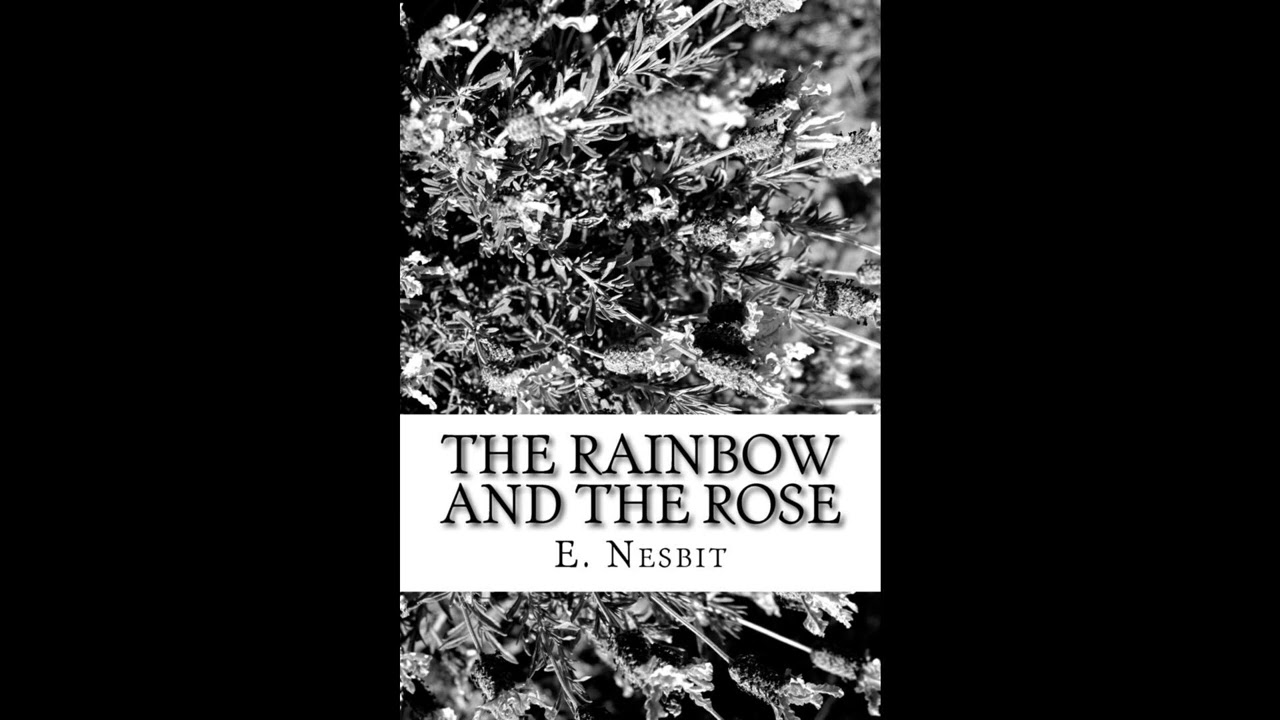
The Rainbow and the Rose
Beyond the playful magic and spirited children that define E. Nesbit's lasting legacy, there exists a quiet corner of her literary output – a space where grown-up concerns of loss, longing, and the persistence of memory take precedence. The Rainbow and the Rose, first published in 1912, stands as a poignant reminder that Nesbit was far more than a purveyor of whimsical fantasy for the young. It offers an intimate and haunting narrative for adults, inviting listeners into a deeply personal account of a woman grappling with the indelible impact of a lost love. Today, as we navigate our own complex relationships with the past, with grief, and with the search for meaning in the face of absence, Nesbit's gentle, yet profound, contemplation of enduring affection and the veil between worlds resonates with a particular sensitivity, proving that love's echoes can stretch across time, offering both solace and challenge. The story introduces us to Ursula Lee, a young woman whose life has been irrevocably shaped by a profound and unconventional love, now severed by the death of her beloved, John. The setting is primarily a sprawling English country estate, a place steeped in history and personal recollection, where every room, every garden path, seems to hold the ghost of a shared moment. Ursula is not merely mourning; she lives within a singular reality where John’s presence, though unseen by others, remains acutely felt. Her days are spent in a delicate dance between accepting the material world and acknowledging the spiritual or psychological manifestations of John's continuing influence. This isn't a typical ghost story aimed at fright, but rather a tender, almost lyrical examination of how deeply interwoven two souls can become, so much so that even physical death struggles to fully untangle them. Ursula's internal struggle forms the central conflict: how does one move forward when the past is not truly past, but a living, breathing aspect of one's present? Her unique perception often places her at odds with those around her, who urge her to return to conventional life, to forget, to find new connections. Yet, Ursula finds a profound, if sometimes melancholic, comfort in her singular devotion. The narrative arc follows her journey not to "get over" her loss, but to understand its new form, to decipher the subtle signs and feelings that suggest a continued bond. It is a sensitive and often poetic portrayal of a love that defies societal expectations and the ultimate barrier of mortality, as Ursula seeks to reconcile her vivid inner world with the demands of external reality, finding an unusual path to peace. Edith Nesbit, born in 1858 in Kennington, Surrey, lived a life as unconventional and vibrant as many of her stories. Far from the staid Victorian image, Nesbit was a bohemian socialist, a co-founder of the influential Fabian Society, and a passionate advocate for social reform. Her personal life was notoriously complex, marked by open marriages, affairs, and the raising of children who were not her own biological offspring. These rich and often challenging experiences undoubtedly fed into the psychological depth and emotional honesty found in her adult writings, including The Rainbow and the Rose. Though she passed away in 1924, Nesbit's contribution to literature, particularly her innovations in children's fiction, cemented her place as a pivotal figure of the Edwardian era. While best remembered for beloved classics like The Story of the Treasure Seekers, The Railway Children, and Five Children and It, which revolutionized children's literature by presenting realistic children in fantastical circumstances, Nesbit also published numerous poems, short stories, and novels for adults. These lesser-known works frequently dipped into themes of the supernatural, the psychological, and the intricacies of human relationships, showcasing a different facet of her literary genius. Her adult fiction, though often overshadowed by her children's books, demonstrates her versatility and her keen insight into the human condition, moving beyond simple moral lessons to grapple with complex emotional landscapes and existential questions. The Rainbow and the Rose gracefully enacts several profound themes, chief among them being grief and the enduring nature of memory. Ursula’s persistent sensation of John’s presence, whether through a familiar scent, a whispered word on the wind, or a sudden, vivid recollection triggered by an object, illustrates the profound way loss reshapes perception, allowing the past to live alongside the present. The book suggests that memory is not merely a recollection but a tangible force, capable of shaping one's ongoing reality. Another core theme is the unconventional nature of love and its transcendence of physical barriers. Ursula's connection to John after his death challenges traditional notions of mourning and moving on. Her refusal to abandon her deeply felt bond, despite societal pressure, portrays a love that finds its own unique continuum, existing beyond the confines of life and death, almost as a spiritual or psychic attachment. Furthermore, the narrative subtly navigates the ambiguity between psychic phenomena and psychological reality. Nesbit never fully commits to whether John’s presence is a true spectral manifestation or a powerful internal projection of Ursula’s grief-stricken mind. This ambiguity allows the listener to contemplate the subjective nature of reality and the powerful ways the human psyche processes loss and intense emotional bonds. Ursula’s experiences invite consideration of how belief and desire can blur the lines between what is perceived and what truly exists. Lastly, the novel touches upon identity and self-discovery through loss. Ursula's journey is not just about remembering John, but about redefining herself in the wake of his absence. She must come to terms with her unique way of experiencing the world and her love, ultimately finding a profound sense of self that is inextricably linked to her singular, enduring affection. When The Rainbow and the Rose was published in 1912, the world stood on the precipice of immense change. It was the twilight of the Edwardian era, a period characterized by lingering Victorian sensibilities regarding class, gender, and social propriety, yet simultaneously pulsating with the tremors of modernity. The women's suffrage movement was gaining significant traction, challenging traditional roles, and cultural shifts were increasingly evident. Spiritually, there remained a strong public fascination with spiritualism and the occult, a legacy of the Victorian era's attempts to reconcile science with faith and to find comfort in the face of death. This widespread interest provided fertile ground for stories that blurred the lines between the living and the dead, making Nesbit's gentle ghost story feel both familiar and deeply resonant. Literarily, British fiction was in a transitional phase, moving from the realism and social commentary of the Victorians towards the experimentalism and psychological depth that would define modernism. Nesbit's adult fiction, while retaining a certain romanticism, also leaned into psychological introspection, anticipating later literary developments. Her ability to weave delicate emotional states with a touch of the uncanny placed her work within a popular tradition of ghost stories—though hers often prioritized sentiment and the internal world over outright horror. The Rainbow and the Rose emerged from this period as a quietly revolutionary novel, offering a distinctly female perspective on enduring grief and an unconventional love, reflecting the nuanced anxieties and shifting belief systems of its time. Listening to The Rainbow and the Rose as an audiobook transforms this intimate narrative into an even more personal experience. The story’s reflective, often melancholic tone and its focus on Ursula’s internal world are ideally suited for audio, allowing a skilled narrator to draw the listener deeply into her perceptions and emotions. Spanning several hours, the book offers a sustained opportunity for quiet contemplation, perfect for an evening’s dedicated listening, a long drive, or moments of peaceful solitude. Pay close attention to the narrator’s pacing, which should mirror Ursula’s thoughtful, sometimes halting, processing of her grief and wonder. The voice work will be crucial in conveying the nuanced atmosphere of gentle sorrow, the delicate hints of the uncanny, and Ursula's unique blend of vulnerability and quiet strength, allowing her profound love to resonate long after the final words.
Enjoyed The Rainbow and the Rose? A few ways to support us
Audible & Amazon links are affiliate; we may earn a small commission at no extra cost.
About this production
Human narration by a volunteer reader from LibriVox.org, the public-domain audiobook project. LibriVox volunteers record literary works whose copyright has expired in the United States, releasing the resulting recordings into the public domain.
The Rainbow and the Rose by E. Nesbit. The underlying text is in the U.S. public domain. We do not republish any modern copyrighted edition, translation, or commentary.
The 4K cinematic visuals accompanying this audiobook are generated by an AI image model from prompts derived from the source text. No copyrighted photos, paintings, or stock footage are used. AI generation is disclosed on every video on our YouTube channel as required by YouTube's altered/synthetic content policy.
English subtitles are transcribed from the LibriVox recording with OpenAI Whisper. Translations into the 11 other supported languages are produced by Meta's NLLB-200 neural translation model. No human translator's copyrighted translation is used.
Questions about sourcing or rights? See our DMCA & Sourcing policy or contact us.
Enjoyed this audiobook?
If you'd like to own a copy of The Rainbow and the Rose or hear a professionally produced edition, the links below help support free audiobook production at no extra cost to you.
As an Amazon Associate we earn from qualifying purchases. Audible / print links are affiliate.
![Children's Classics in Dramatic Form, Book Two. [1909] by Augusta Stevenson — free full audiobook](https://img.youtube.com/vi/h4bTKUeuO7U/maxresdefault.jpg)