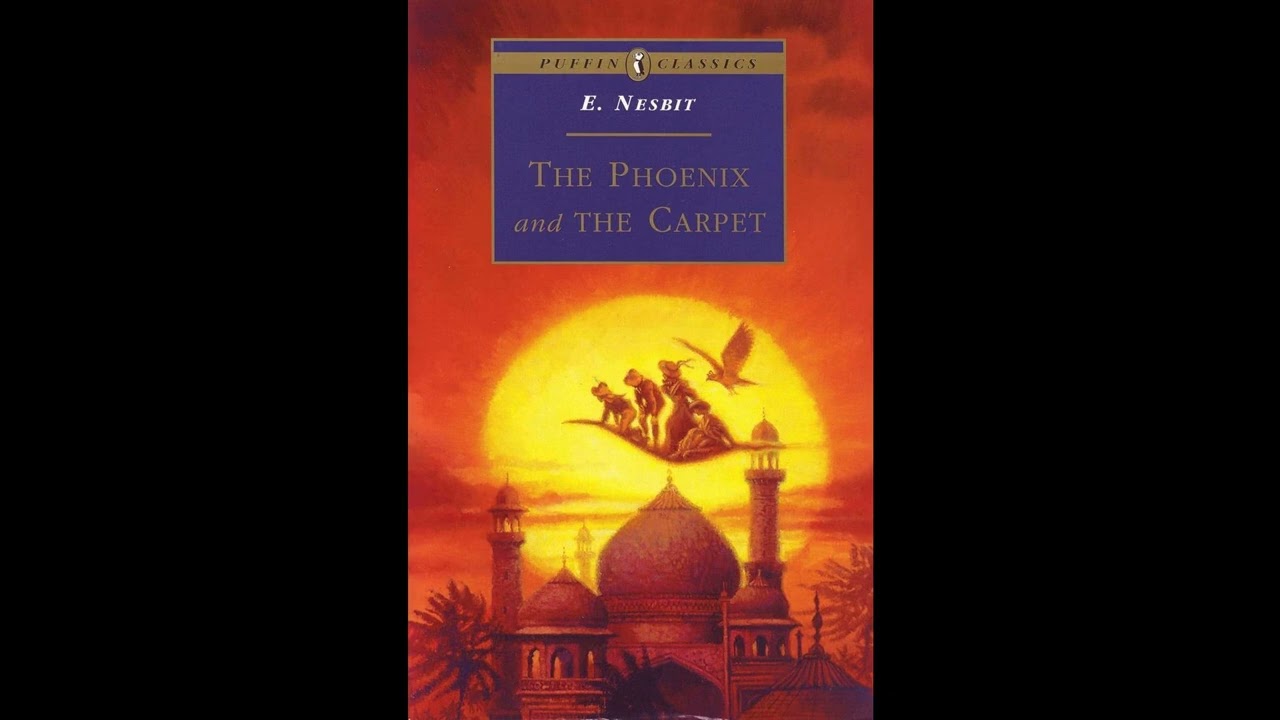
The Phoenix and the Carpet (Puffin Classics)
Step into a world where the ordinary is merely a disguise for the extraordinary, where a mundane house fire can reveal not ruin, but boundless adventure. E. Nesbit's The Phoenix and the Carpet invites listeners into such a realm, spinning a tale of magic, mayhem, and the delightful chaos that ensues when wishes truly come true. This classic, first published in 1904, remains as fresh and relevant today as it was over a century ago, a testament to Nesbit's understanding of childhood imagination and the universal human desire for a little bit of magic to brighten the everyday. It’s a story that reminds us of the power of belief, the unpredictability of destiny, and the sometimes-hilarious consequences of getting exactly what you asked for. The story begins with the four well-known children—Cyril, Anthea, Robert, and Jane—who, having recently moved into a new house in London, find themselves beset by a nursery fire. While helping their nurse move furniture to safety, they uncover a peculiar, old carpet. This isn't just any rug; it is a genuine, wish-granting magic carpet, capable of whisking its occupants anywhere in the world and fulfilling desires spoken while sitting upon its enchanted fibers. Their first clumsy wish, for a picnic in a pleasant, faraway spot, quickly proves the carpet's authenticity, if not their own skill in handling such power. Soon after, another accidental discovery—a large, ancient egg—hatches to reveal a magnificent, if somewhat vain, Phoenix, the legendary bird reborn from ashes. The Phoenix, with its grandiloquent speech and an air of ancient wisdom, becomes an unlikely companion and occasional mentor to the children, though its advice often leans towards the dramatic. The magical carpet, however, remains the primary source of their adventures, transporting them to distant lands and granting their impulsive wishes with often-unforeseen and comically disastrous results. From wishing for an elephant to reside in their small London home, leading to immense structural problems, to inadvertently replacing a baby with a "baby" made of bricks, the children repeatedly find themselves in absurd predicaments. Their attempts to do good or satisfy simple desires constantly backfire, forcing them to learn, through trial and error, about the true nature of power and the importance of thinking before they speak their heart's desires into existence. Edith Nesbit, born in 1858, lived a life as colorful and unconventional as the stories she penned. A committed socialist and one of the co-founders of the Fabian Society alongside George Bernard Shaw and H.G. Wells, she often hosted intellectuals and artists in her bohemian London and Kent homes. Nesbit initially wrote poetry and stories for adults, but it was in children's literature that she found her enduring voice. Her early novels, like The Story of the Treasure Seekers (1899), quickly established her as a groundbreaking author, moving away from the overtly moralistic and didactic Victorian children's books toward stories that featured realistic, if often mischievous, children encountering genuine magic. She passed away in 1924, leaving behind a legacy that continues to resonate. Nesbit's impact on children's literature is immense, often credited with inventing the modern children's fantasy novel. Her unique blend of domestic realism—showing children grappling with everyday issues like school, family squabbles, and money troubles—with high-stakes, believable magic was revolutionary. Other notable works such as Five Children and It (which introduced the Psammead and its chaotic wish-granting), The Story of the Amulet, and The Railway Children solidified her place in the literary canon, influencing generations of authors from C.S. Lewis to J.K. Rowling, who acknowledged Nesbit as a significant inspiration. The Phoenix and the Carpet masterfully presents several key themes. One prominent idea is the consequences of power and wishes. The children's impulsive desires, like wishing for an elephant for entertainment, quickly lead to chaos and nearly ruin their home, illustrating that power without foresight can be more of a burden than a blessing. Their attempts to use the carpet for practical gain, such as acquiring money, often backfire spectacularly, resulting in a deluge of foreign currency they cannot spend. Another powerful theme is sibling dynamics. Nesbit portrays the four children—bossy Cyril, practical Anthea, dreamy Robert, and observant Jane—with remarkable realism. Their squabbles, rivalries, and eventual cooperation are central to how they navigate their magical challenges, reflecting the authentic give-and-take of family life. We see them argue over who gets to make a wish or who is to blame for a mishap, only to unite when facing an external threat or trying to fix their latest blunder. The novel also thoughtfully addresses the interplay between imagination and reality. Nesbit seamlessly integrates fantastic elements into a grounded, Edwardian setting. The children don't just accept magic; they react to it with a mixture of wonder, skepticism, and practical concern, treating a talking Phoenix or a flying carpet as an unusual, but ultimately manageable, part of their lives. This approach encourages young listeners to view the world with an open mind, where the line between what is possible and what is imagined can often blur. Finally, the story touches on responsibility. As the children contend with the outcomes of their wishes, they gradually learn to be more careful, moving from selfish and whimsical desires to considering the broader impact of their actions, slowly internalizing the weight that comes with wielding extraordinary power. Published in 1904, The Phoenix and the Carpet emerged during the Edwardian era, a period of significant social and technological change in Britain. Culturally, there was a shift away from the strict moralizing of the Victorian age towards a greater emphasis on childhood as a distinct and valuable phase of life, deserving of its own literature. Politically, the British Empire was at its zenith, and while Nesbit's stories often presented adventurous escapism, they also subtly questioned some of the societal norms and class structures of the time. In the literary world, authors like Nesbit were at the forefront of a movement that sought to entertain children with engaging plots and relatable characters, rather than simply instruct them. Her work, including this novel, tapped into a growing appetite for stories that respected children's intelligence and capacity for wonder, offering a refreshing departure from earlier, more didactic fare. Listening to The Phoenix and the Carpet as an audiobook brings Nesbit's delightful prose to life in a special way. The distinct voices of the four children—their squabbles, their earnest debates, and their moments of shared wonder—are made even more vivid through skilled narration. The grandiose pronouncements of the ancient Phoenix, delivered with just the right touch of pomp and circumstance, add another layer of humor and character. Listeners can savor the pacing of these episodic adventures, each chapter presenting a new magical mishap and a new lesson learned, perfectly suited for listening in segments or for an extended, immersive experience. The descriptive language, painting pictures of mundane London homes and exotic, faraway lands, truly shines when spoken, allowing the atmosphere of both the everyday and the extraordinary to envelop the listener. It's a perfect selection for those seeking a heartwarming, genuinely funny story about magic, family, and the enduring spirit of childhood.
Enjoyed The Phoenix and the Carpet (Puffin Classics)? A few ways to support us
Audible & Amazon links are affiliate; we may earn a small commission at no extra cost.
About this production
Human narration by a volunteer reader from LibriVox.org, the public-domain audiobook project. LibriVox volunteers record literary works whose copyright has expired in the United States, releasing the resulting recordings into the public domain.
The Phoenix and the Carpet (Puffin Classics) by E. Nesbit. The underlying text is in the U.S. public domain. We do not republish any modern copyrighted edition, translation, or commentary.
The 4K cinematic visuals accompanying this audiobook are generated by an AI image model from prompts derived from the source text. No copyrighted photos, paintings, or stock footage are used. AI generation is disclosed on every video on our YouTube channel as required by YouTube's altered/synthetic content policy.
English subtitles are transcribed from the LibriVox recording with OpenAI Whisper. Translations into the 11 other supported languages are produced by Meta's NLLB-200 neural translation model. No human translator's copyrighted translation is used.
Questions about sourcing or rights? See our DMCA & Sourcing policy or contact us.
Enjoyed this audiobook?
If you'd like to own a copy of The Phoenix and the Carpet (Puffin Classics) or hear a professionally produced edition, the links below help support free audiobook production at no extra cost to you.
As an Amazon Associate we earn from qualifying purchases. Audible / print links are affiliate.
![Children's Classics in Dramatic Form, Book Two. [1909] by Augusta Stevenson — free full audiobook](https://img.youtube.com/vi/h4bTKUeuO7U/maxresdefault.jpg)