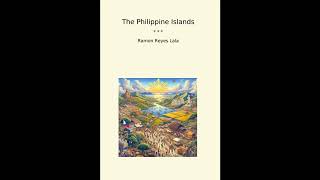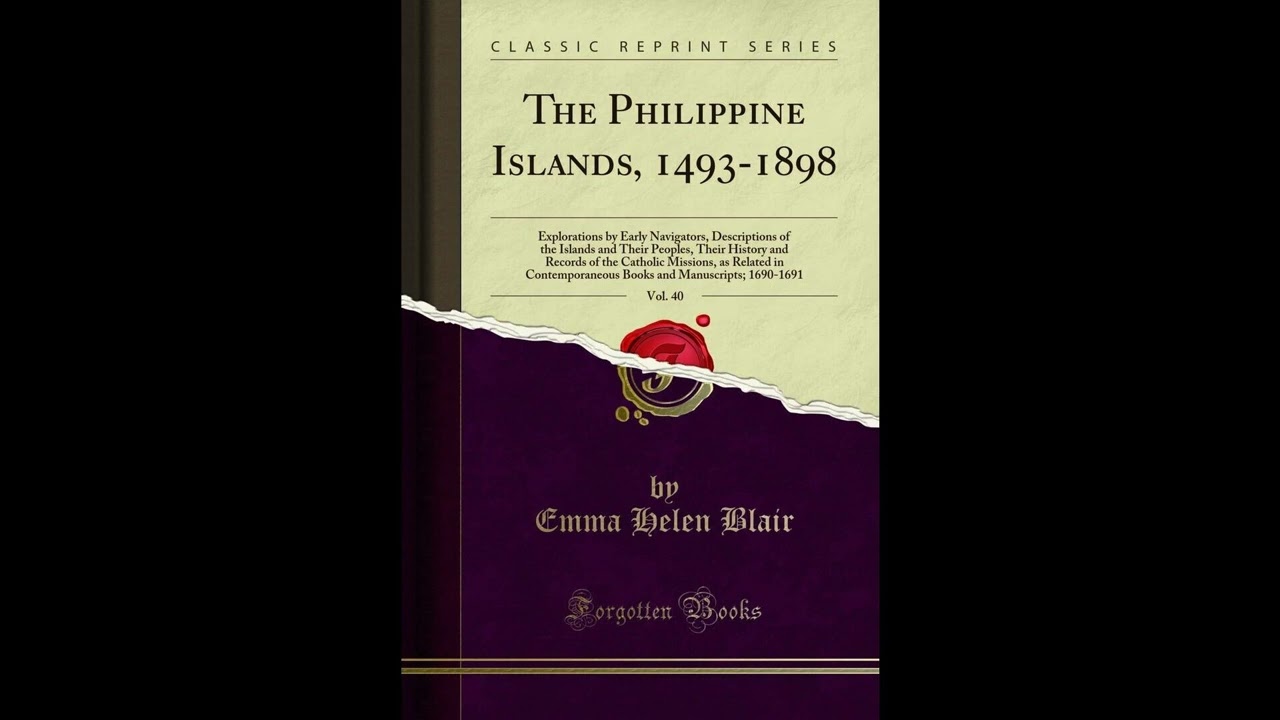
The Philippine Islands, 1493-1898, Vol. 40: Explorations
Imagine a vast ocean, largely unknown, dotted with islands that shimmered on the horizon like forgotten jewels. Picture stout wooden ships, propelled by wind and human will, pushing into waters previously unplotted by European hands, their crews a mix of ambitious mariners, curious scholars, and zealous missionaries. "The Philippine Islands, 1493-1898, Vol. 40: Explorations" offers a direct portal into this foundational era of global expansion, presenting the unvarnished perspectives of those who first charted, observed, and began to claim a significant part of the world. This monumental volume strips away modern interpretation, allowing the listener to engage directly with the primary accounts that shaped our understanding of the Philippines and the broader Pacific, revealing the roots of contemporary geopolitical and cultural landscapes through the very words of its earliest participants. This collection does not present a single fictional plot, but rather unfolds a sweeping chronicle of discovery and encounter, drawing from the logs, letters, and reports of a multitude of historical figures. The setting begins in the late fifteenth century, stretching across the vast, often treacherous Pacific Ocean and converging on the archipelago that would become known as the Philippine Islands. The early navigators, whose writings form the core of this volume, are the central players—not as singular heroes, but as a composite force of human ambition and resilience. From the initial European sightings and tentative landings, through the arduous process of mapping coastlines and identifying natural resources, to the establishment of nascent trade routes and the first attempts at cultural interaction, the narrative arc documents a relentless push into the unknown. The "story" within this volume is the unfolding drama of worlds colliding: the European powers driven by a thirst for knowledge, wealth, and spiritual conversion, meeting the diverse indigenous populations of the islands, each with their own complex societies and beliefs. The central tension arises from this encounter—the awe of discovery often quickly followed by the friction of colonial ambition. Listeners witness the pragmatic concerns of survival at sea, the challenges of navigating unfamiliar topographies, and the often-misunderstood exchanges between vastly different cultures. The collection moves from accounts of initial, sometimes peaceful, bartering to detailed descriptions of early administrative efforts and the establishment of fortified settlements, illustrating the gradual solidification of external influence over the islands without revealing the final outcomes of these long-standing conflicts. The original compilation, "The Philippine Islands, 1493-1898," is not the work of a single author in the traditional sense, but a colossal undertaking by Emma Helen Blair and James Alexander Robertson. This pair of American scholars dedicated themselves to assembling and translating a staggering array of primary source documents pertaining to Philippine history. Published in 55 volumes between 1903 and 1909, their collection aimed to make accessible to English-speaking audiences the scattered and often obscure records of four centuries of Spanish rule and interaction. Volume 40, "Explorations," specifically gathers the reports of the early mariners, friars, soldiers, and administrators whose firsthand accounts laid the groundwork for European understanding—and ultimately, control—of the region. Blair and Robertson meticulously translated these documents from Spanish, Latin, French, and other languages, creating a truly foundational resource for historical study. Their painstaking efforts preserved invaluable records, offering a direct window into the perspectives and motivations of the historical figures who witnessed and shaped the early phases of Philippine colonial history. Several potent themes emerge from these early accounts. One striking thread is the nature of observation and naming. The documents repeatedly show the European impulse to categorize and label the "new world" they encountered, imposing familiar structures on unfamiliar landscapes. For instance, the detailed descriptions of previously unknown flora and fauna, or the anxious attempts to chart new coastlines, reveal a desire not merely to see, but to understand, and ultimately, to control through nomenclature. Another prominent theme is cultural encounter and misunderstanding. Accounts often detail the initial, often awkward, attempts at communication and trade between the navigators and the islanders. These records provide poignant, if biased, glimpses into the clash of customs and intentions—from the simple exchange of goods to the profound differences in religious beliefs and social hierarchies that often led to conflict. The collection also foregrounds the theme of colonial ambition and justification. Underlying many of the reports is a clear rationale for expansion—be it the search for spices, the quest for souls to convert, or the strategic imperative to control trade routes. The texts frequently frame these motivations as divinely ordained or economically necessary, showcasing how the historical actors rationalized their actions. Finally, a significant theme is the power of documentation itself. These reports, ship logs, and letters were not merely observations; they were instruments of control. They shaped subsequent policy, guided future expeditions, and became the "official" historical record, demonstrating how written accounts could codify power and influence perceptions for centuries to come. This monumental series emerged at a pivotal moment in American history. Published in the early 20th century, it followed closely on the heels of the Spanish-American War in 1898 and the subsequent Philippine-American War. With the United States suddenly finding itself a major colonial power in the Pacific, there was an urgent and practical need to understand the history, culture, and previous administration of its new territories. Blair and Robertson's work filled this void, providing American scholars, administrators, and the public with an unprecedented collection of primary sources. It allowed the new colonial power to access the historical context of its acquisition, framing the narrative of the Philippines for a new generation of American engagement and governance. This scholarly enterprise coincided with a broader academic movement in the West to systematize and publish historical archives, reflecting a drive toward empirical historical study. Listening to "The Philippine Islands, 1493-1898, Vol. 40: Explorations" as an audiobook offers a uniquely immersive experience. With a running length of several hours, it presents a substantial period of history in a format conducive to sustained absorption. A skilled narrator becomes essential here, lending clarity and distinction to the varying voices and historical registers found within the documents—from the practical, clipped tones of a ship's log to the more expansive, often evangelistic prose of a missionary's report. The narration can skillfully navigate the shifts in focus and tone, allowing the listener to absorb complex details without the visual strain of dense historical text. It establishes an atmosphere of historical gravitas, allowing the listener to engage with these original accounts almost as if hearing them spoken for the first time, distinguishing between the observations of various early mariners and the administrative pronouncements of colonial officials, breathing life into the very fabric of history.
Enjoyed The Philippine Islands, 1493-1898, Vol. 40: Explorations? A few ways to support us
Audible & Amazon links are affiliate; we may earn a small commission at no extra cost.
About this production
Human narration by a volunteer reader from LibriVox.org, the public-domain audiobook project. LibriVox volunteers record literary works whose copyright has expired in the United States, releasing the resulting recordings into the public domain.
The Philippine Islands, 1493-1898, Vol. 40: Explorations by Early Navigators, Descri. The underlying text is in the U.S. public domain. We do not republish any modern copyrighted edition, translation, or commentary.
The 4K cinematic visuals accompanying this audiobook are generated by an AI image model from prompts derived from the source text. No copyrighted photos, paintings, or stock footage are used. AI generation is disclosed on every video on our YouTube channel as required by YouTube's altered/synthetic content policy.
English subtitles are transcribed from the LibriVox recording with OpenAI Whisper. Translations into the 11 other supported languages are produced by Meta's NLLB-200 neural translation model. No human translator's copyrighted translation is used.
Questions about sourcing or rights? See our DMCA & Sourcing policy or contact us.
Enjoyed this audiobook?
If you'd like to own a copy of The Philippine Islands, 1493-1898, Vol. 40: Explorations or hear a professionally produced edition, the links below help support free audiobook production at no extra cost to you.
As an Amazon Associate we earn from qualifying purchases. Audible / print links are affiliate.