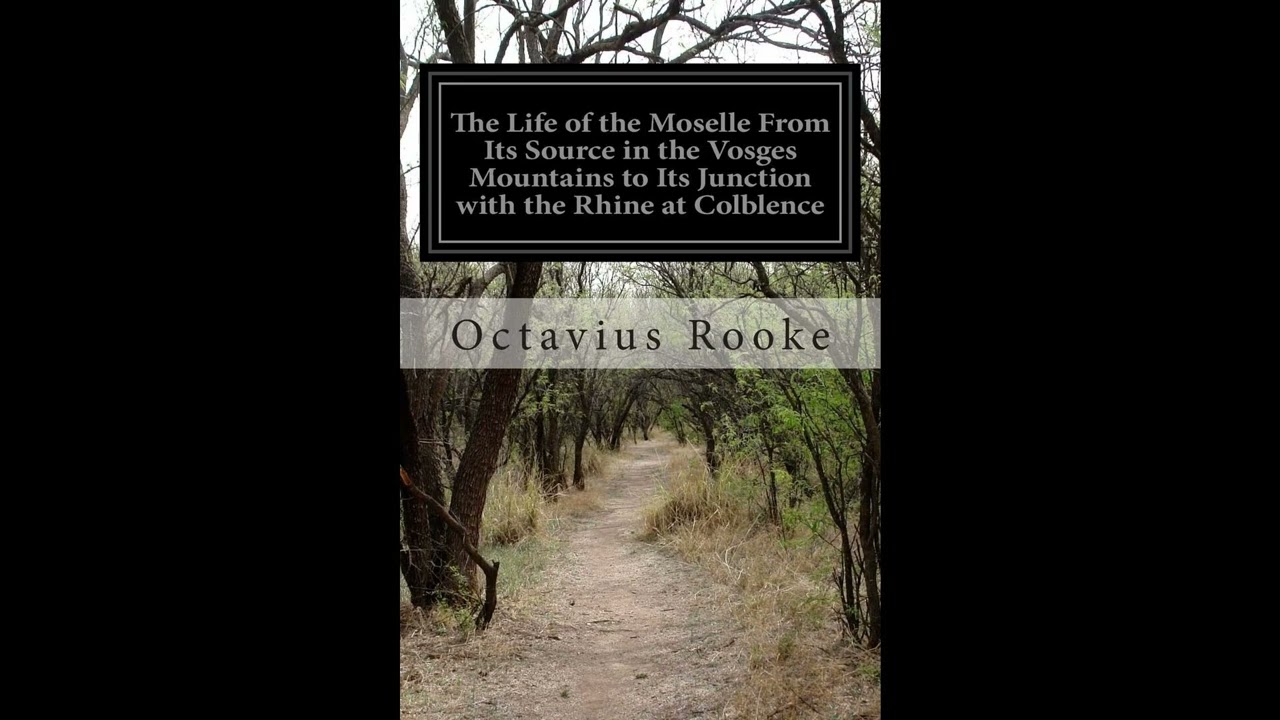
The Life of the Moselle From Its Source in the Vosges Mountains to Its Junction with- Full Audiobook
The very name, The Life of the Moselle From Its Source in the Vosges Mountains to Its Junction with- Full Audiobook, hints at a literary endeavor unlike many others. This is not a tale of human drama in the conventional sense, nor a historical chronicle focused solely on events. Instead, it offers an intimate, panoramic view of a river, treating it as a living entity, a protagonist whose story unfolds across landscapes and centuries. Why should a listener care about the biography of a river today? Because in tracing the Moselle's winding path, we encounter a profound meditation on geography, history, and the delicate balance between the natural world and human civilization. It is an invitation to witness the slow, deliberate work of nature, punctuated by the often-tumultuous impact of humankind, offering both a sense of enduring beauty and a poignant reflection on change. The narrative arc of The Life of the Moselle is dictated by the river itself, beginning high in the mist-shrouded Vosges Mountains, where the Moselle is but a humble stream, a mere whisper of its future grandeur. We are led from these secluded springs, through pastoral valleys where early settlements cling to its banks, witnessing the river's gradual transformation as it gathers strength from countless tributaries. The story progresses downstream, accompanying the Moselle as it meanders through what is now northeastern France, then defines a significant border, eventually winding into Germany before its grand confluence with the Rhine. Along this flow, the anonymous narrator serves as our observant guide, introducing us not to individual characters with complex motivations, but to the collective human spirit that has shaped and been shaped by the river for millennia. The "central conflict," if one can call it that, lies in the dynamic interplay between the river's relentless, unyielding current and the human desire to tame, utilize, and build upon its shores. As the Moselle grows in width and volume, the narrative expands to encompass a broader spectrum of human activity. We are shown ancient Roman ruins testament to long-vanished empires, sturdy medieval castles perched on strategic hillsides, and bustling market towns that owe their very existence to the river's trade routes. Vineyards, famous for their steep slopes and unique microclimates, become recurring images, illustrating human ingenuity in adapting to and cultivating the land. The story is one of observation, documenting the changing landscapes—from dense forests and rocky gorges to fertile plains—and the evolving ways of life of the people who reside there. It paints a picture of a region defined by its waterway, a thoroughfare for goods, ideas, and sometimes, conflict, without ever revealing the final destination or the conclusive state of the river. As the author of this work remains unknown and its original publication date is lost to time, we consider The Life of the Moselle as a testament to an ancient literary tradition, perhaps a collective endeavor or a distillation of generations of observation. This kind of descriptive prose, focusing on a natural landmark as its subject, aligns with traditions stretching back to classical antiquity, where geographical descriptions often intertwined with historical accounts and philosophical reflections. Such works served not only as practical guides for travelers and merchants but also as means of cultural preservation, documenting the character of a region before the advent of modern cartography and photography. It stands as an exemplar of an era when understanding one's physical world was a monumental intellectual undertaking, often expressed through meticulous, artful prose designed to transport the reader directly to the scene. This work embodies several profound themes. Firstly, it offers a powerful reflection on nature's enduring power and resilience. The Moselle, whether a trickling spring or a broad waterway, persists through time, outlasting civilizations and continually reshaping its own environment. One passage might describe a severe flood, sweeping away human structures, only for the river to recede, leaving behind new silt and altered banks, a testament to its cyclical, indifferent might. Secondly, the book speaks to the intertwined themes of history and memory. The river serves as a silent witness to countless human stories—battles fought on its banks, lovers strolling along its paths, merchants plying their trade. The narrator might pause at an ancient Roman bridge, prompting a moment of reflection on the layers of history embedded in the landscape, each stone whispering tales of previous ages. Thirdly, the text foregrounds the concept of regional identity. The Moselle shapes not just the land but also the people, their livelihoods, and their cultures. The distinct character of the wine produced along its course, the unique architectural styles of its towns, and even the local dialects, all bear the indelible mark of the river. The anonymous writer draws attention to how the Moselle unifies disparate communities, linking them in a shared destiny shaped by its waters. Finally, a significant theme is the act of observation itself—the meticulous, almost reverent attention paid to the details of the landscape, the flora, the fauna, and the human activities. The careful descriptions of light on the water, the texture of the soil in a vineyard, or the sound of watermills, elevate this descriptive account into a deeply personal engagement with the environment. The Life of the Moselle likely emerged from a period before the rapid industrialization of Europe, or perhaps as a poignant record of a natural world already feeling the first pressures of such changes. In literary terms, it represents a pre-modern form of what we might now call environmental writing or cultural geography, seeking to understand and appreciate a specific locale in its totality. It could stem from an Enlightenment-era desire for systematic knowledge and classification, or from the burgeoning Romantic impulse that celebrated the sublime beauty of nature and the unique character of specific regions. The Moselle region itself has always been a crossroads, a vital artery through central Europe, often contested by different powers. A descriptive work like this could have served to define and celebrate a specific geographic identity in a world where borders shifted and allegiances were complex. It encapsulates a human longing to comprehend our surroundings, to root ourselves in a specific place, and to appreciate the intricate relationship between humanity and the natural world. For an audiobook listener, The Life of the Moselle From Its Source in the Vosges Mountains to Its Junction with- offers an exceptionally immersive experience. The "several hours" of its run length allow for a slow, contemplative pace, perfectly matching the gentle, persistent flow of the river itself. Without the need to physically turn pages, listeners are free to let the narrator's voice guide them, allowing their imaginations to conjure the scenes described: the mist lifting from the Vosges peaks, the sun glinting on a broad expanse of water, the distant echo of church bells from a riverside village. The narration becomes the river current, carrying the listener through landscapes and histories, allowing them to absorb the details and atmosphere without interruption. It is an ideal listen for moments of quiet reflection, a soothing presence that transports one to the heart of Europe's natural grandeur and human legacy.
Enjoyed The Life of the Moselle From Its Source in the Vosges Mountains to Its Junction with- Full Audiobook? A few ways to support us
Audible & Amazon links are affiliate; we may earn a small commission at no extra cost.
About this production
Human narration by a volunteer reader from LibriVox.org, the public-domain audiobook project. LibriVox volunteers record literary works whose copyright has expired in the United States, releasing the resulting recordings into the public domain.
The Life of the Moselle From Its Source in the Vosges Mountains to Its Junction with- Full Audiobook by Decimus Magnus Ausonius. The underlying text is in the U.S. public domain. We do not republish any modern copyrighted edition, translation, or commentary.
The 4K cinematic visuals accompanying this audiobook are generated by an AI image model from prompts derived from the source text. No copyrighted photos, paintings, or stock footage are used. AI generation is disclosed on every video on our YouTube channel as required by YouTube's altered/synthetic content policy.
English subtitles are transcribed from the LibriVox recording with OpenAI Whisper. Translations into the 11 other supported languages are produced by Meta's NLLB-200 neural translation model. No human translator's copyrighted translation is used.
Questions about sourcing or rights? See our DMCA & Sourcing policy or contact us.
Enjoyed this audiobook?
If you'd like to own a copy of The Life of the Moselle From Its Source in the Vosges Mountains to Its Junction with- Full Audiobook or hear a professionally produced edition, the links below help support free audiobook production at no extra cost to you.
As an Amazon Associate we earn from qualifying purchases. Audible / print links are affiliate.