Sidonia, the Sorceress: the Supposed Destroyer of the Whole Reigning Ducal House
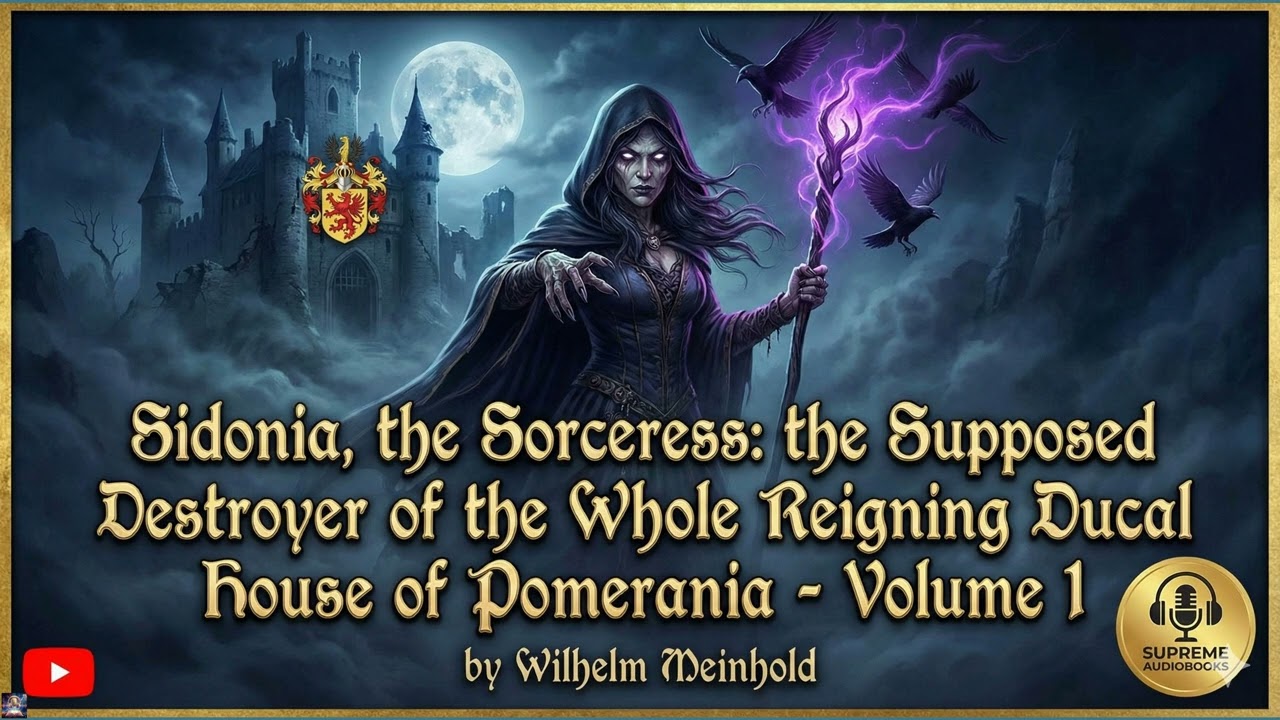
Imagine a world where a single accusation, whispered in fear or malice, could shatter a life, upend a family, and set a whole community on a terrifying path of persecution. Sidonia, the Sorceress: the Supposed Destroyer of the Whole Reigning Ducal House plunges listeners into precisely such a chilling reality, resurrecting a dark chapter from history where superstition held sway and the innocent were often deemed guilty by popular demand. This sprawling narrative, drawing from historical records and folk legend, remains compelling today for its stark portrayal of injustice, the insidious nature of mass hysteria, and the enduring human struggle against forces that seek to condemn without true evidence. It is a powerful testament to the fragility of individual freedom and the dangers of unchecked power, serving as a cautionary tale that echoes even in our modern world. The narrative unfolds in the German Duchy of Pomerania during the early 17th century, a time saturated with the paranoia of the European witch hunts. We are introduced to Sidonia von Borcke, a noblewoman of striking beauty and formidable spirit, whose life, initially marked by pride and independence, gradually transforms into a grim saga of relentless persecution. As misfortunes—including a series of unexplained deaths and illnesses—begin to plague the ducal house and the surrounding region, whispers turn to accusations. Sidonia, an unmarried woman of high birth but diminished fortune, whose strong will and unconventional demeanor set her apart, becomes an easy target for suspicion. Her very existence seems to defy societal expectations, making her a convenient scapegoat when calamity strikes. The story meticulously chronicles the escalating accusations against Sidonia. What begins as rumor soon solidifies into formal charges, fueled by the testimony of fearful peasants, envious courtiers, and opportunistic accusers. We witness the agonizing process of her arrest, imprisonment, and the escalating attempts to extract a confession through increasingly cruel methods. The legal system, meant to dispense justice, becomes a weapon in the hands of those convinced of her guilt, twisting every circumstance and every word spoken against her into irrefutable proof. The arc of the story charts her harrowing descent into a nightmare of interrogation and psychological torment, as the forces of religious zealotry and political expediency conspire to seal her fate, illustrating how deeply entrenched belief in witchcraft could overpower any semblance of fair trial. While the original legends and historical events surrounding Sidonia von Borcke date back to the early 17th century, the definitive literary version of her story, and the one most widely known as Sidonia, the Sorceress, emerged in the mid-19th century through the powerful pen of Wilhelm Meinhold. Born in 1797 on the island of Usedom in Pomerania, Meinhold was a Lutheran pastor who became an acclaimed novelist. His conservative views and deep skepticism toward the encroaching rationalism of his era led him to write historical romances steeped in folklore, often claiming they were genuine rediscoveries of ancient manuscripts. Meinhold’s approach to historical fiction blended meticulous research with a Gothic sensibility, creating works that blurred the lines between fact and imaginative reconstruction. He was celebrated for his ability to evoke the atmosphere of past centuries, vividly portraying the superstitions and social norms of earlier times. His other notable work, The Amber Witch (1843), similarly presented a tale of witchcraft and injustice as an authentic historical document. Meinhold’s novels, including Sidonia, the Sorceress, found significant popularity in their day, particularly among figures like Dante Gabriel Rossetti, who admired their dramatic power and detailed historical settings, solidifying Meinhold's place as a distinctive voice in German Romanticism, particularly its darker, historically oriented currents. The narrative powerfully articulates themes that remain perennially relevant. Foremost among them is scapegoating and mass hysteria. The events depict how an entire community, gripped by fear and superstition, can fixate on an individual as the cause of their woes. Sidonia becomes the embodiment of evil, her supposed magic a convenient explanation for every misfortune, whether natural disaster or dynastic ill health. For instance, the death of a ducal child or a crop failure is immediately attributed to her malevolent influence, illustrating how easily a collective delusion can overwhelm reason and compassion. Another potent theme is the perilous nature of female independence in a patriarchal society. Sidonia, as a strong-willed, unmarried noblewoman who refused to conform to conventional expectations regarding marriage and submissiveness, stood out. Her pride, her perceived aloofness, and her refusal to be easily controlled made her an ideal target in a society that often viewed independent women with suspicion, particularly when coupled with old age or unusual circumstances. The narrative subtly suggests that her supposed "sorcery" was, in part, a projection of societal discomfort with her defiance of traditional female roles. Furthermore, the book starkly showcases the corruption of justice. The legal proceedings against Sidonia are not a search for truth but a relentless drive toward predetermined guilt. Confessions are coerced under torture, evidence is manufactured, and rational explanations are dismissed in favor of supernatural ones, revealing how easily judicial systems can be perverted by prevailing prejudices and political pressures. When Wilhelm Meinhold penned Sidonia, the Sorceress in 1847, Germany was experiencing a vibrant period of cultural and literary awakening, marked by a deep interest in its historical past and national identity. The historical novel, popularized by Sir Walter Scott, was a dominant genre, and Meinhold’s contributions were part of a broader Romantic movement that reveled in the Gothic, the supernatural, and tales of moral fortitude or failure. This era also saw a tension between burgeoning scientific and rational thought and a nostalgic longing for a time when faith and tradition held greater sway. Meinhold, with his conservative, anti-rationalist stance, used stories like Sidonia’s not merely as historical reenactments but also as a means to express his own cultural critiques. He implicitly contrasted the perceived moral clarity and supernatural understanding of earlier centuries with the growing secularism and scientific materialism of his own time, perhaps seeing in the witch trials a dark manifestation of human nature but also an underlying reality of spiritual forces, which he felt modern society was too quick to dismiss. This blend of historical detail, supernatural drama, and a conservative moral outlook made his work resonate deeply with a segment of his 19th-century readership. Listening to Sidonia, the Sorceress as an audiobook offers an immersive and atmospheric experience perfectly suited to its dark, suspenseful narrative. The right narrator breathes life into the myriad characters—from the doomed Sidonia to her zealous accusers, the conflicted judges, and the terrified populace—allowing their distinct voices and motivations to emerge with clarity. The several hours of listening time provide ample opportunity to become thoroughly absorbed in the chilling atmosphere of 17th-century Pomerania, feeling the palpable dread and the slow, inexorable build-up of tension as Sidonia's fate hangs in the balance. Pay close attention to the narrator's pacing, which can emphasize the relentless nature of the persecution, and the subtle vocal shifts that convey emotion and character. The dialogue, filled with both desperate pleas and fanatical accusations, takes on a visceral quality when spoken aloud, transporting the listener directly into the heart of this historical tragedy and making the archaic language feel immediate and powerful.
Enjoyed Sidonia, the Sorceress: the Supposed Destroyer of the Whole Reigning Ducal House? A few ways to support us
Audible & Amazon links are affiliate; we may earn a small commission at no extra cost.
About this production
Human narration by a volunteer reader from LibriVox.org, the public-domain audiobook project. LibriVox volunteers record literary works whose copyright has expired in the United States, releasing the resulting recordings into the public domain.
Sidonia, the Sorceress: the Supposed Destroyer of the Whole Reigning Ducal House by Wilhelm Meinhold. The underlying text is in the U.S. public domain. We do not republish any modern copyrighted edition, translation, or commentary.
The 4K cinematic visuals accompanying this audiobook are generated by an AI image model from prompts derived from the source text. No copyrighted photos, paintings, or stock footage are used. AI generation is disclosed on every video on our YouTube channel as required by YouTube's altered/synthetic content policy.
English subtitles are transcribed from the LibriVox recording with OpenAI Whisper. Translations into the 11 other supported languages are produced by Meta's NLLB-200 neural translation model. No human translator's copyrighted translation is used.
Questions about sourcing or rights? See our DMCA & Sourcing policy or contact us.
Enjoyed this audiobook?
If you'd like to own a copy of Sidonia, the Sorceress: the Supposed Destroyer of the Whole Reigning Ducal House or hear a professionally produced edition, the links below help support free audiobook production at no extra cost to you.
As an Amazon Associate we earn from qualifying purchases. Audible / print links are affiliate.