Running Water
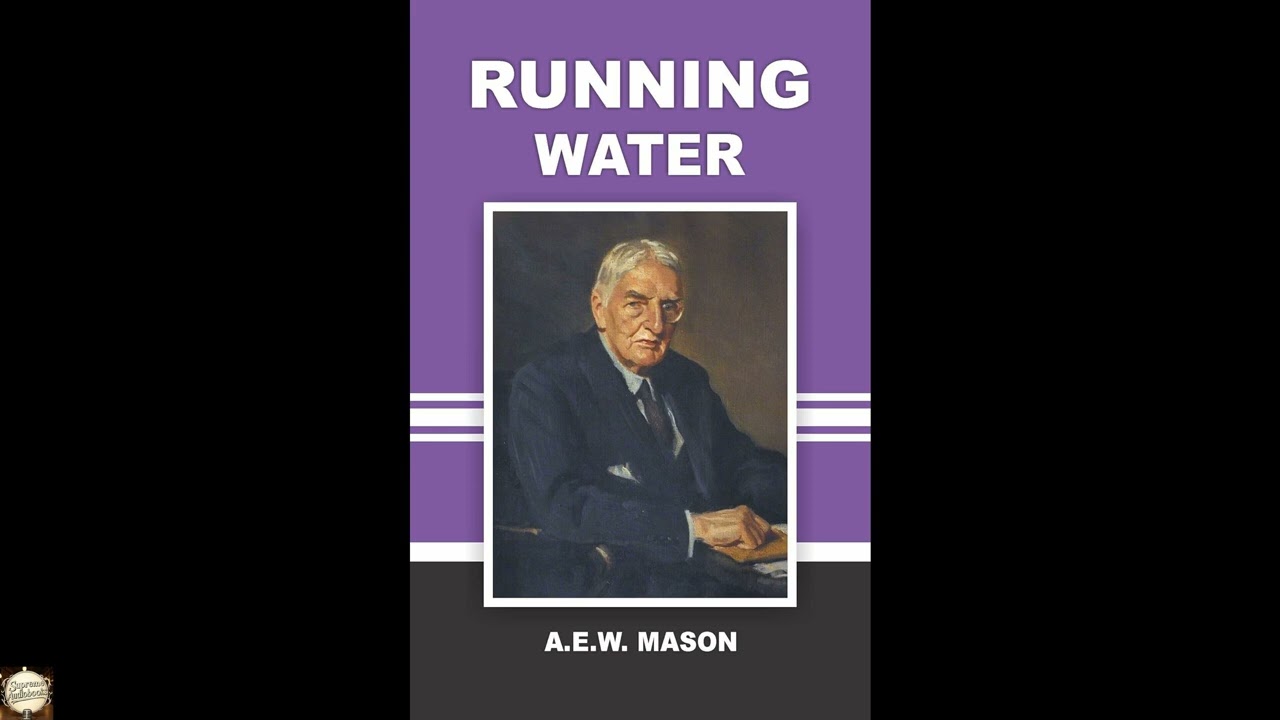
Amidst the grandeur of the Swiss Alps, where the air is pure and the peaks speak of ancient truths, a young woman finds herself caught in a web of deceit and danger that will eventually drag her into the murky depths of Edwardian London society. A.E.W. Mason's "Running Water" is a compelling drama of moral courage, insidious manipulation, and the enduring power of a hidden past, a tale that asks profound questions about innocence, sacrifice, and the true cost of human connection. Why should you care about a story from over a century ago? Because its core concerns—the vulnerability of the pure-hearted, the corrosive nature of greed, and the unwavering commitment required to stand against injustice—remain as resonant and urgent in our complex world today as they were when Mason first penned this gripping narrative. The story opens with Sylvia Thesiger, a seemingly guileless and ethereal young woman, living a precarious existence in a secluded chalet high in the Swiss mountains. Orphaned in all but name, Sylvia is effectively under the thumb of her charming yet utterly ruthless stepmother, a woman whose outward sophistication conceals a heart of cold calculation and a past shrouded in ambiguity. It is in this serene, almost idyllic setting that Sylvia crosses paths with Denis Esmond, a thoughtful and principled young climber who is immediately struck by her fragile beauty and the palpable undercurrent of unease surrounding her. Denis, a man whose life has been shaped by a strong sense of duty and integrity, quickly discerns that Sylvia is not merely unhappy, but actively imperiled by the machinations of those closest to her. As Denis attempts to unravel the threads of Sylvia's predicament, he uncovers a sinister plot orchestrated by the stepmother, Mrs. Thesiger, and her shady confederates. Their goal is to exploit Sylvia's innocence, either through a financially advantageous but morally repugnant marriage, or by drawing her into a scandal that would serve their own monetary ends. The conflict escalates as Sylvia is reluctantly pulled away from the clarifying influence of the Alps and plunged into the superficial, often hypocritical world of London's upper crust. Here, the dangers are not overt precipices or treacherous crevasses, but the subtle, venomous whispers of gossip, the calculated smiles of deceivers, and the suffocating pressure of social expectation. Denis finds himself battling not only for Sylvia's freedom but for her very soul, against forces that are adept at hiding their true intentions behind a veneer of respectability. Alfred Edward Woodley Mason, born in London in 1865, was a figure of remarkable versatility, contributing significantly to British literature, politics, and even intelligence work. Educated at Dulwich College and Trinity College, Oxford, Mason initially pursued a career as an actor before dedicating himself fully to writing. His talents extended beyond the page, however; he served as a Liberal Member of Parliament for Coventry from 1906 to 1910, demonstrating a commitment to public service that would resurface during the First World War when he distinguished himself in naval intelligence, attaining the rank of Major. These varied experiences undoubtedly enriched his narrative perspective, providing him with insights into both the grand stage of human affairs and the hidden mechanisms of power. Mason is perhaps best remembered for his enduring adventure novel, "The Four Feathers" (1902), a profound examination of courage, cowardice, and redemption set against the backdrop of the British Empire. Yet, his literary output was diverse, encompassing popular detective fiction, such as the Inspector Hanaud series beginning with "At the Villa Rose" (1910), and historical novels. He stood as a prominent voice during the Edwardian era, crafting meticulously plotted stories that combined elements of romance, suspense, and keen psychological observation. Mason’s place in the literary canon is that of a skilled storyteller who consistently delivered intelligent, well-structured narratives that were both commercially successful and critically respected for their sophisticated character development and compelling moral quandaries. "Running Water" enacts several powerful themes through its dramatic narrative. One central idea is the stark contrast between natural innocence and societal corruption. Sylvia, with her innate purity and spiritual connection to the untamed beauty of the mountains, stands as a symbol of unblemished truth. Her discomfort in London's social circles, where motives are often masked and appearances are paramount, highlights the artificiality and moral decay lurking beneath the polished surface of Edwardian gentility. For example, her initial reluctance to leave the clear mountain air for the 'polite' society of her stepmother’s world underscores her intuitive rejection of its inherent duplicity. Another significant theme is that of moral courage and the burden of duty. Denis Esmond embodies this steadfastness. He is not merely physically brave, as demonstrated by his expertise in mountaineering, but possesses an unwavering moral compass. His quiet determination to uncover the truth behind Mrs. Thesiger’s schemes, his refusal to be intimidated by veiled threats, and his persistent efforts to act honorably even when faced with ambiguous information, reveal a profound sense of responsibility. This commitment to justice, even for a near-stranger, shows how personal conviction can stand against pervasive wrong. The book also subtly but powerfully addresses the weight of the past; the entire plot hinges on secrets, prior misdeeds, and a history that refuses to stay buried, constantly impacting the present decisions and fates of the characters. "Running Water" was published in 1907, firmly placing it within the Edwardian period, a transitional decade in British history. This era, following the long reign of Queen Victoria, was characterized by an uneasy blend of lingering Victorian social strictures and burgeoning modern sensibilities. It was a time of immense economic disparity, where the pursuit of wealth and social status often dictated personal choices and relationships, leading to the kind of manipulative schemes depicted in Mason's novel. Women, particularly those without independent means, were often vulnerable to exploitation, their lives frequently determined by marriage prospects or the goodwill of male relatives, a precarious reality vividly illustrated by Sylvia’s situation. In the literary world, the Edwardian period saw a continued appetite for well-crafted narratives that balanced adventure with psychological depth, a style at which Mason excelled. While realism was gaining ground, authors like Mason maintained a broad readership by combining compelling plotlines with examinations of character and moral dilemmas, often set against a backdrop of exotic locales or intricate social maneuvering. His blend of romance, mystery, and social commentary resonated with an audience that appreciated intelligent entertainment, positioning his work as a bridge between the more overt moralizing of Victorian literature and the emerging complexities of 20th-century narratives. Listening to "Running Water" as an audiobook offers a singular experience, allowing the listener to become fully immersed in its intricate plot and evocative atmosphere. A skilled narrator can bring Mason’s carefully constructed world to life, giving distinct voices to the innocent Sylvia, the determined Denis, and the chillingly manipulative Mrs. Thesiger, enhancing the tension and emotional resonance of their interactions. The book's run length, several hours long, makes it an ideal companion for extended listening sessions—whether during a lengthy commute, while tackling household tasks, or simply relaxing after a demanding day. The pacing, which gracefully shifts from the quiet, contemplative beauty of the Swiss mountains to the high-stakes social drama of London, benefits immensely from vocal interpretation, capturing the nuances of Mason's prose and building suspense at just the right moments. The dialogue, which often carries layers of unspoken meaning, becomes particularly potent when delivered by a talented voice artist, allowing the listener to fully appreciate the subtle threats, heartfelt pleas, and critical revelations that drive this unforgettable story.
Enjoyed Running Water? A few ways to support us
Audible & Amazon links are affiliate; we may earn a small commission at no extra cost.
About this production
Human narration by a volunteer reader from LibriVox.org, the public-domain audiobook project. LibriVox volunteers record literary works whose copyright has expired in the United States, releasing the resulting recordings into the public domain.
Running Water by A.E.W. Mason. The underlying text is in the U.S. public domain. We do not republish any modern copyrighted edition, translation, or commentary.
The 4K cinematic visuals accompanying this audiobook are generated by an AI image model from prompts derived from the source text. No copyrighted photos, paintings, or stock footage are used. AI generation is disclosed on every video on our YouTube channel as required by YouTube's altered/synthetic content policy.
English subtitles are transcribed from the LibriVox recording with OpenAI Whisper. Translations into the 11 other supported languages are produced by Meta's NLLB-200 neural translation model. No human translator's copyrighted translation is used.
Questions about sourcing or rights? See our DMCA & Sourcing policy or contact us.
Enjoyed this audiobook?
If you'd like to own a copy of Running Water or hear a professionally produced edition, the links below help support free audiobook production at no extra cost to you.
As an Amazon Associate we earn from qualifying purchases. Audible / print links are affiliate.