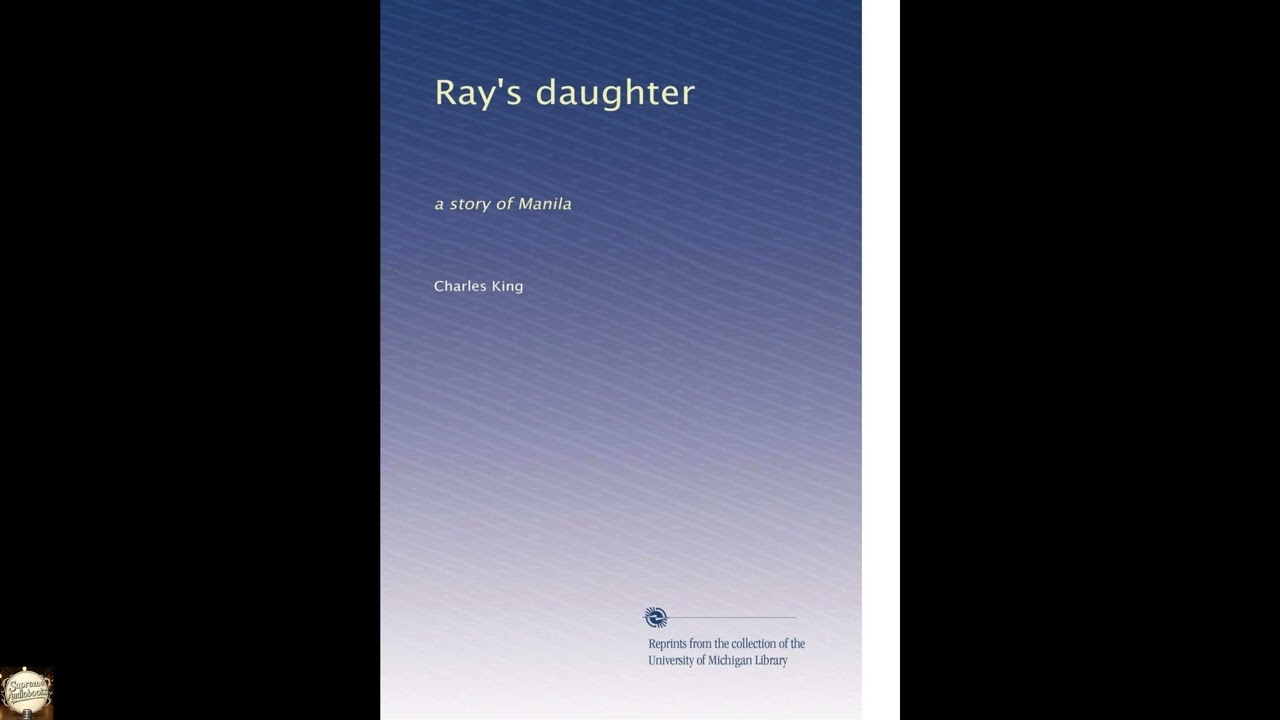
Ray's daughter: a story of Manila
Step into a colonial past with Charles King’s Ray's Daughter: A Story of Manila, a classic tale that transports listeners to the sun-drenched, complex world of the Philippines under American rule. This story offers more than just romance or military adventure; it provides a window into an era of profound cultural clash, duty-bound decisions, and personal sacrifice that still resonates with questions of identity and belonging in a globalized world. It is a narrative where honor and affection frequently collide, where the exotic backdrop of Manila challenges the very fabric of American ideals, and where the human heart grapples with loyalty to both nation and loved ones. The narrative unfolds in the bustling, humid heart of Manila, a city caught between its Spanish heritage and its nascent American influence. We meet Colonel Ray, a seasoned American military officer stationed in this distant outpost, a man whose life is defined by service and a profound, if sometimes stern, devotion to his only child. His daughter, Eleanor, a spirited and intelligent young woman, finds herself navigating the unique social landscape of the American expatriate community—a world of military balls, formal dinners, and strict social codes—all set against the vibrant, sometimes unsettling, panorama of Filipino life. Her youthful spirit and independent mind often chafe against the expectations placed upon her as an officer’s daughter, particularly when her affections begin to stray beyond the approved circles. The central conflict arises with the arrival of Lieutenant Thorne, a promising young officer whose ideals and ambitions seem to perfectly align with Colonel Ray's hopes for his daughter. However, Eleanor's heart is drawn elsewhere, perhaps to a man whose background or allegiances are less conventional, or whose connection to the local culture is stronger. This burgeoning romance, or perhaps a forbidden friendship, creates a powerful tension, forcing Eleanor to confront the expectations of her father, the strictures of military society, and her own desires. As political and social unrest simmers in Manila, mirroring the personal turmoil within the American community, Eleanor's choices become intertwined with the larger struggles of her environment, pitting her sense of duty against the powerful dictates of her heart, and threatening to unravel the carefully constructed world around her. The story follows her as she grapples with these competing forces, her decisions carrying weight for her family's honor and her future happiness. The author, Charles King (1844-1933), was a remarkable figure whose life was as rich with experience as his stories were with detail. A graduate of West Point, King served with distinction in the Union Army during the American Civil War, seeing action at critical engagements before being severely wounded. His military career continued through the American Indian Wars, where he again demonstrated courage and leadership. He later taught tactics at the University of Wisconsin and, in a testament to his enduring commitment, volunteered for service during the Spanish-American War and the subsequent Philippine-American War, rising to the rank of brigadier general. This firsthand military experience, spanning decades and continents, deeply informed his prolific writing. King became one of the most popular American novelists of his time, penning over sixty books, many of them celebrated for their authentic portrayal of military life. Works like The Colonel's Daughter and Marion's Faith established his reputation as a master of the military romance, often blending adventure, duty, and affection within the rigorous setting of frontier outposts or foreign garrisons. His writing style was direct and engaging, offering readers a glimpse into the everyday lives, social dynamics, and moral dilemmas faced by soldiers and their families. He carved out a unique place in American letters, virtually inventing the genre of military fiction that would influence countless writers after him, capturing the public imagination with his tales of heroism, honor, and the complexities of life in uniform. Ray's Daughter enacts several significant themes, perhaps most notably the enduring conflict between personal desire and the strictures of duty. Eleanor, as the story unfolds, grapples with her affections while facing the implicit, and sometimes explicit, expectations of her father and the tightly knit military community. A scene might show her torn between a private meeting with a suitor her father disapproves of and attending a formal function critical to maintaining her family's standing, illustrating the constant pressure to conform to an honor code that dictates more than just military conduct. This internal struggle highlights the sacrifices often demanded by a life of service and the unique challenges faced by women within that world. Additionally, the story foregrounds the often-unseen complexities of colonialism and cultural encounter. The Manila setting is not merely a backdrop but an active participant, a place where American ideals clash with local customs and where notions of "civilization" are questioned. One example might be the stark contrast between the ordered, English-speaking world of the American compound and the vibrant, Tagalog-speaking streets of the city, or a moment where characters misunderstand or dismiss indigenous traditions. This showcases the prevailing attitudes of the period and the frequently difficult, sometimes tragic, consequences of imperial expansion, prompting reflection on how different cultures interact and misunderstand one another under conditions of power imbalance. When Ray's Daughter: A Story of Manila first appeared, America was in a period of intense self-definition and expansion. The closing decades of the nineteenth century and the early years of the twentieth saw the nation grappling with its new status as a world power, particularly after the Spanish-American War effectively transferred colonial control of the Philippines from Spain to the United States. There was a burgeoning interest in stories that reflected this new international presence, stories that could both inform and entertain a public curious about these distant lands and the Americans serving there. Charles King's experiences as an officer who had personally served in the Philippines positioned him perfectly to fulfill this demand, offering narratives steeped in realism that resonated with the nation's contemporary geopolitical concerns and its fascination with military adventure. Listening to Ray's Daughter: A Story of Manila as an audiobook offers a unique connection to its historical setting and emotional core. The several hours of narration allow listeners to become fully immersed in the meticulously crafted atmosphere of late nineteenth or early twentieth-century Manila, as the narrator's voice brings to life the sounds of the city, the hushed tension of military quarters, and the passionate exchanges between characters. Listen for the subtle shifts in pacing that underscore moments of high drama or quiet contemplation, and appreciate how the narrator’s voice distinguishes the varied personalities—from the gruff but loving Colonel Ray to the headstrong Eleanor, and the array of officers and local inhabitants. The spoken word adds a layer of immediacy and intimacy to the period dialogue and descriptive passages, making the distant past feel remarkably present.
Enjoyed Ray's daughter: a story of Manila? A few ways to support us
Audible & Amazon links are affiliate; we may earn a small commission at no extra cost.
About this production
Human narration by a volunteer reader from LibriVox.org, the public-domain audiobook project. LibriVox volunteers record literary works whose copyright has expired in the United States, releasing the resulting recordings into the public domain.
Ray's daughter: a story of Manila by Charles King. The underlying text is in the U.S. public domain. We do not republish any modern copyrighted edition, translation, or commentary.
The 4K cinematic visuals accompanying this audiobook are generated by an AI image model from prompts derived from the source text. No copyrighted photos, paintings, or stock footage are used. AI generation is disclosed on every video on our YouTube channel as required by YouTube's altered/synthetic content policy.
English subtitles are transcribed from the LibriVox recording with OpenAI Whisper. Translations into the 11 other supported languages are produced by Meta's NLLB-200 neural translation model. No human translator's copyrighted translation is used.
Questions about sourcing or rights? See our DMCA & Sourcing policy or contact us.
Enjoyed this audiobook?
If you'd like to own a copy of Ray's daughter: a story of Manila or hear a professionally produced edition, the links below help support free audiobook production at no extra cost to you.
As an Amazon Associate we earn from qualifying purchases. Audible / print links are affiliate.