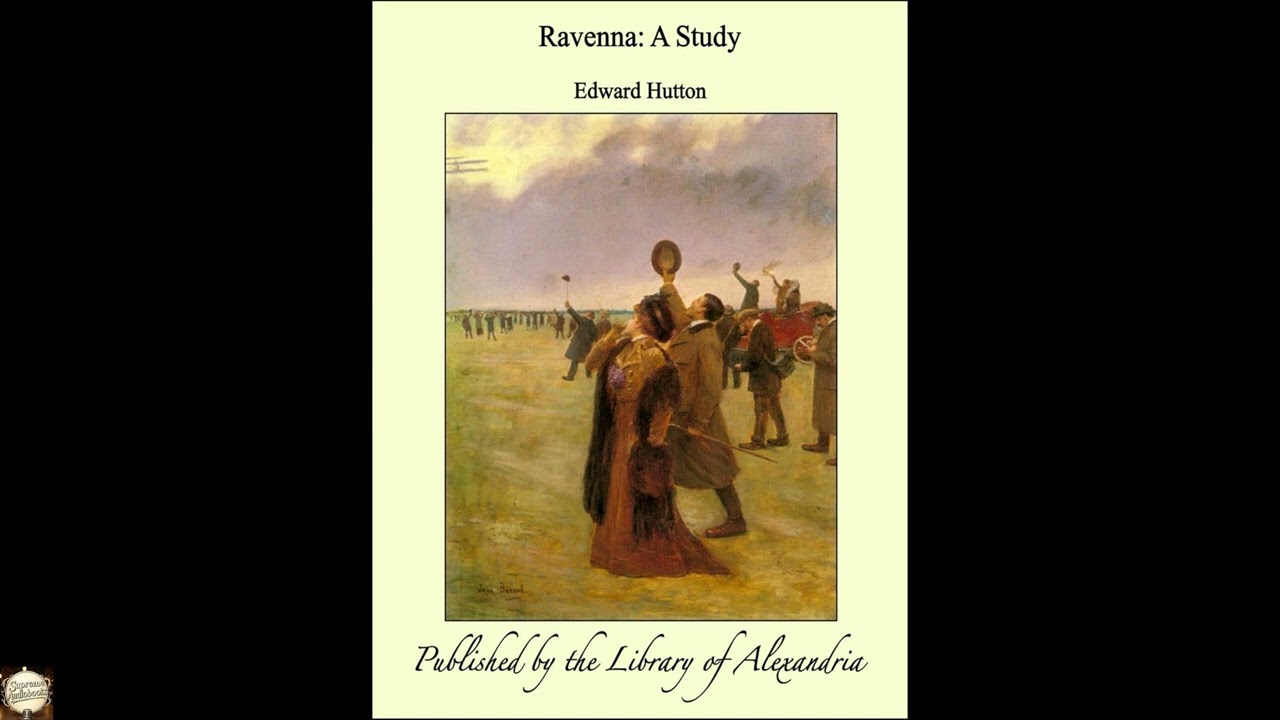
Ravenna:A Study
Ravenna: A Study stands as a unique testament to the enduring power of place, a foundational examination of one of Europe’s most historically resonant cities. More than a mere historical account, this extraordinary text functions as a sustained meditation on Ravenna’s profound significance, tracing its ascent from a strategic Roman outpost to the capital of the Western Roman Empire, the seat of an Ostrogothic kingdom, and finally, a pivotal center of Byzantine power in the West. It is a work that captures the essence of a city where East met West, where classical antiquity transitioned into the early Middle Ages, and where some of the most breathtaking mosaics in the world still speak of faith and empire. For the modern listener, this "Study" offers not just facts, but a deeply felt understanding of how geography, power, and artistic expression converge to forge a civilization's identity, providing crucial insight into the ebb and flow of human endeavor that shaped the continent we know today. The unfolding narrative of Ravenna: A Study centers on the very evolution of the city itself, treating Ravenna's transformations as the "plot" of its existence. The setting is vividly established: a marsh-girt city on the Adriatic coast, its strategic isolation proving both its strength and its vulnerability. The initial chapters lay the groundwork, introducing Ravenna as a burgeoning Roman port, a place of canals and bridges, before detailing its elevation to imperial status under Honorius in the 5th century. This shift marks the entry of the text's primary "characters"—not individuals, but the successive cultures and rulers who shaped its destiny: the weary Romans attempting to preserve a crumbling empire, the robust Ostrogoths under figures like Theodoric seeking to establish a new order, and the distant but influential Byzantines, extending their reach from Constantinople. The central conflict animating the "Study" arises from Ravenna’s unique position as a cultural crucible. The city becomes a battleground of ideas and identities: the lingering traditions of Rome clashing with barbarian vigor, pagan beliefs contending with ascendant Christianity, and later, the distinct theological and artistic expressions of Arianism confronting Nicene orthodoxy. The narrative arc moves through Ravenna's golden age, marked by the construction of magnificent churches and mausoleums adorned with unparalleled mosaics, each building a silent witness to political shifts and religious fervor. The "Study" meticulously observes how each wave of influence left its indelible mark, culminating in a synthesis of styles and philosophies that is uniquely Ravennate. The listener follows the city's fortunes through periods of grand architectural ambition, theological debate, and eventual decline from its imperial zenith, yet always with an underlying sense of its enduring spirit. The exact authorship of Ravenna: A Study remains a compelling enigma, a testament to its deep roots in a shared cultural tradition rather than the singular vision of one individual. Dating from a time before modern bibliographic practices, this work stands as a foundational text whose origins are less about a specific person and more about a collective, evolving understanding of Ravenna's significance. It is not a historical treatise penned in a modern academic sense, but rather a literary and reflective distillation, possibly a compilation or a sustained philosophical reflection born from generations of observation, scholarship, and perhaps even poetic interpretation. Such anonymous works often hold a unique authority, as they represent an accumulated wisdom—a distillation of knowledge that transcends individual biases to present what was, at the time of its writing, a consensus understanding of the city's role in the broader sweep of history. This makes the "Study" a cornerstone for anyone seeking to comprehend Ravenna, its perspectives having implicitly shaped subsequent artistic, historical, and literary considerations of the city. Among the specific themes Ravenna: A Study enacts, the concept of the fragility and resilience of empire stands out. The text vividly portrays how Ravenna, despite its shifting allegiances—from Roman to Ostrogothic to Byzantine—maintained a core identity and administrative function. One concrete example lies in its description of the Imperial Palace of Honorius, later adapted and reused by Theodoric, and ultimately informing the design of the exarchate's seat. This architectural continuity, despite changing rulers, highlights the enduring structures of governance even as political power fractured. A second significant theme is the synthesis of cultures and beliefs. The "Study" meticulously details how different peoples and faiths left their mark, not in isolation, but in a blending that produced something new. Consider its discussion of the mosaics within the Arian Baptistery and the Orthodox Baptistery. While distinct in their theological emphasis, both borrow heavily from Roman artistic conventions and represent a shared, though contested, visual language of faith in a period of intense religious flux. Furthermore, the work powerfully conveys the theme of art and architecture as historical records and expressions of identity. The elaborate descriptions of the city’s early Christian and Byzantine monuments—the Basilica of San Vitale, the Mausoleum of Galla Placidia, the churches of Sant'Apollinare Nuovo and Sant'Apollinare in Classe—are not mere architectural tours. Instead, the text presents these structures and their mosaic programs as living documents, illustrating political aspirations, theological debates, and the evolving self-perception of rulers and their subjects. The emperors and empresses, saints and martyrs, depicted in glittering tesserae, are not just figures; they are active participants in Ravenna's ongoing history, their images serving as enduring statements of power and piety. The "Study" shows how these artistic achievements are inextricably linked to the narrative of the city itself, reflecting its tumultuous yet gloriously creative existence. The historical context surrounding Ravenna: A Study positions it as either an extraordinarily early foundational work or a later scholarly reflection born from an era deeply engaged with antiquity. Given its "unknown" author and "year 0" designation, it likely represents a moment when understanding the past began to solidify into a coherent narrative. If interpreted as an ancient or early medieval work, it emerged during or immediately after the periods of profound transformation it describes, possibly as an effort to document or make sense of the momentous shifts occurring in a world transitioning from classical to Christian, Roman to barbarian. Alternatively, if it is a foundational "classic literature" piece of later provenance—say, from Renaissance humanism or early modern antiquarianism—it would reflect a renewed fascination with the fallen grandeur of Rome and its successor states, and a desire to piece together the fragments of a lost age. It would have served to re-establish the significance of places like Ravenna for an audience seeking to connect with the roots of European civilization, providing a literary and historical anchor in a world rediscovering its past. Listening to Ravenna: A Study as an audiobook offers an immersive experience, allowing the city's layered history to unfold with an unhurried, reflective pace. The "several hours" duration is perfectly suited for a deep, contemplative listening session, inviting listeners to absorb the nuanced descriptions and historical insights without rushing. The narrator's voice becomes crucial, guiding you through the intricate details of mosaic art, the strategic geography of the lagoons, and the complex political maneuverings that shaped Ravenna. Listen for the evocative language used to describe the grandeur of ancient basilicas and the quiet solemnity of royal tombs. The pacing allows ample time for mental imagery to form, making the rich historical landscape and architectural splendor feel tangible. It's an opportunity to experience this foundational text as a guided intellectual stroll, with the narrator's thoughtful delivery bringing Ravenna’s unique spirit and enduring legacy vividly to life.
Enjoyed Ravenna:A Study? A few ways to support us
Audible & Amazon links are affiliate; we may earn a small commission at no extra cost.
About this production
Human narration by a volunteer reader from LibriVox.org, the public-domain audiobook project. LibriVox volunteers record literary works whose copyright has expired in the United States, releasing the resulting recordings into the public domain.
Ravenna:A Study by Edward Hutton. The underlying text is in the U.S. public domain. We do not republish any modern copyrighted edition, translation, or commentary.
The 4K cinematic visuals accompanying this audiobook are generated by an AI image model from prompts derived from the source text. No copyrighted photos, paintings, or stock footage are used. AI generation is disclosed on every video on our YouTube channel as required by YouTube's altered/synthetic content policy.
English subtitles are transcribed from the LibriVox recording with OpenAI Whisper. Translations into the 11 other supported languages are produced by Meta's NLLB-200 neural translation model. No human translator's copyrighted translation is used.
Questions about sourcing or rights? See our DMCA & Sourcing policy or contact us.
Enjoyed this audiobook?
If you'd like to own a copy of Ravenna:A Study or hear a professionally produced edition, the links below help support free audiobook production at no extra cost to you.
As an Amazon Associate we earn from qualifying purchases. Audible / print links are affiliate.