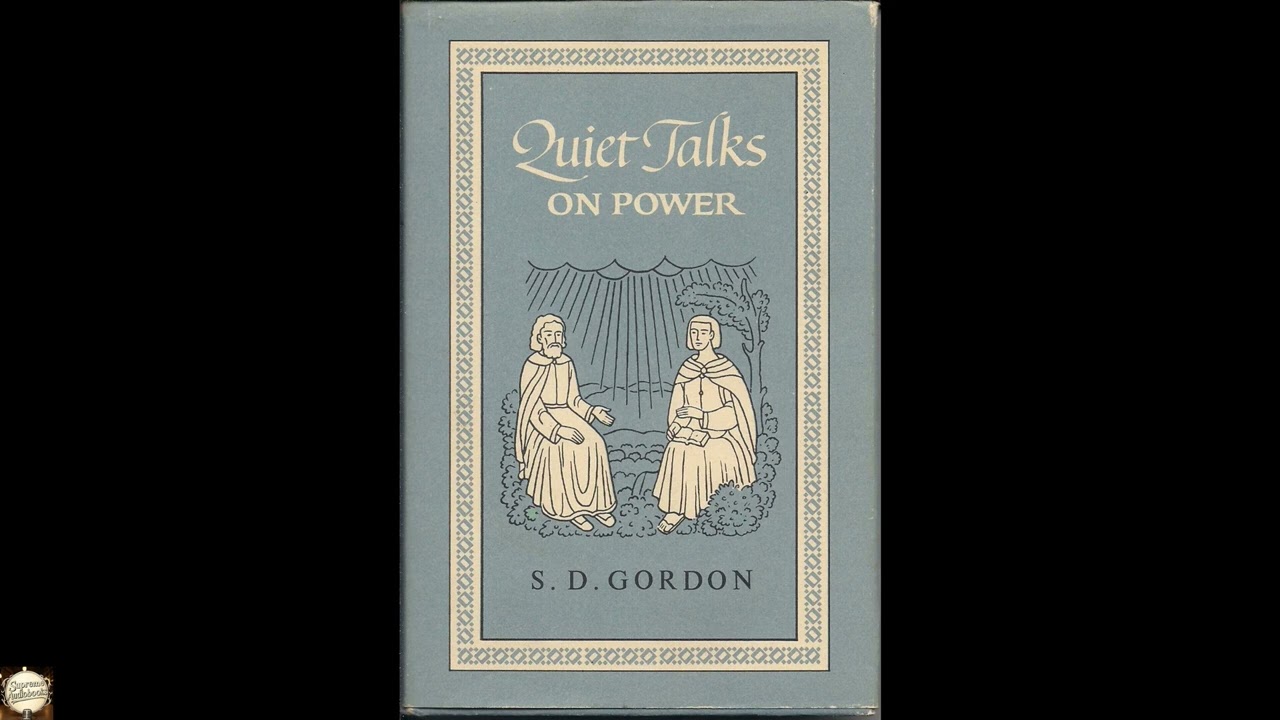
Quiet Talks on Power
In a world clamoring with noise and the relentless pursuit of external achievement, S.D. Gordon's "Quiet Talks on Power" arrives as an invitation to a different kind of strength, a profound influence rooted not in human striving but in divine connection. This classic work, first penned in the early twentieth century, continues to resonate with compelling urgency today, offering listeners a profound shift in perspective. It challenges the conventional understanding of power, redirecting attention from outward displays of force to an inner spiritual capacity available to all who seek it. This is more than a book of religious instruction; it is a guidebook to personal transformation, a whispered conversation that promises to unlock a deeper wellspring of resilience, purpose, and impact that feels particularly vital in our fragmented modern lives. Rather than a conventional narrative with characters and a linear plot, "Quiet Talks on Power" unfolds as a meticulously structured series of reflective essays, each building upon the last to illuminate a core spiritual truth. The setting for this profound exploration is less a geographical location and more the inner landscape of the human heart, mind, and spirit. The primary "characters" are, in a sense, the listener themselves, who are invited to enter into a contemplative dialogue with Gordon's gentle guidance. Gordon himself acts as the quiet mentor, leading the reader through a systematic argument designed to reveal the source and nature of true spiritual power. The central conflict isn't between individuals or factions, but rather an internal struggle: the human tendency to rely on personal strength and worldly wisdom versus the call to surrender to a greater, divine influence. Gordon articulates the common experience of spiritual weakness and inadequacy, presenting it as a problem with a definitive, accessible solution. The arc of this reflective "story" begins with Gordon clearly defining what he means by "power" – distinguishing it sharply from human will or might. He then systematically identifies the divine source of this extraordinary strength, drawing heavily from specific theological understandings. From there, he carefully outlines the conditions necessary for an individual to receive and effectively wield this power: a genuine desire, an attitude of surrender, consistent prayer, and a commitment to obedience. Gordon doesn't simply present abstract concepts; he then moves to the practical application, showing how these spiritual principles can be integrated into everyday living, personal relationships, service to others, and effectively sharing one's faith. The work progresses like a patient tutor unveiling layers of understanding, guiding the listener from an initial curiosity to a comprehensive grasp of what it means to be truly empowered by a divine force, culminating in a vision of a life lived in spiritual abundance and effectiveness. Samuel Dickey Gordon, born in 1859 and passing in 1936, was an American evangelist and writer whose "Quiet Talks" series earned him widespread recognition in early 20th-century Protestant circles. Though details of his early life are somewhat scarce, it is known that he suffered from chronic ill health throughout much of his adult life. This personal struggle, far from hindering his ministry, seemed to profoundly shape it, leading him to a deep interior life and an understanding of divine power that transcended physical limitations. Often confined, he poured his energies into writing, allowing his thoughtful meditations to reach far more people than his physical presence ever could. His unassuming demeanor and conversational writing style contrasted with the fiery rhetoric of some of his contemporaries, making his messages accessible and deeply personal. Gordon became an influential voice, known for his unique ability to explain profound spiritual truths in simple, relatable terms. His other notable works, such as "Quiet Talks on Prayer," "Quiet Talks on Service," and "Quiet Talks with Jesus," all share the same characteristic intimate tone and focus on practical spirituality. He was closely associated with the Keswickian holiness movement, a tradition that emphasized the availability of the Holy Spirit's power for daily living and for achieving victory over sin. Gordon’s place in the canon is primarily within Christian devotional literature, where his books are considered classics, valued for their spiritual depth and their non-academic, heart-centered approach to theology. He preferred to speak directly to the believer's experience, offering comfort, challenge, and guidance without resorting to complex doctrinal arguments. "Quiet Talks on Power" particularly enacts several core themes. Foremost among them is The Nature of Spiritual Power itself. Gordon meticulously differentiates this power from human will, intellect, or material resources. He illustrates this by continuously pointing to the Holy Spirit as the true source, suggesting that reliance on self or earthly systems always results in spiritual depletion, whereas tapping into divine energy brings inexhaustible strength. Another prominent theme is Surrender and Obedience, which Gordon presents not as weakness, but as the paradoxical pathway to true empowerment. He repeatedly uses the analogy of an empty vessel needing to be filled, demonstrating that until one fully yields their own agenda and capacity, they cannot receive the greater, sustaining power from above. An illustration of this can be seen in his discussions comparing human effort to spiritual fruit – one is fleeting and burdensome, the other effortless and abundant when truly aligned with divine will. A third central theme is The Immanence and Efficacy of the Holy Spirit. For Gordon, the Holy Spirit is not an abstract theological concept but a living, active presence, constantly available to guide, empower, and transform. He offers concrete examples of how this spiritual agent works within the believer, providing insight, courage, and the ability to live a life beyond human limitations. He often speaks of the Spirit as an internal guide, a quiet voice prompting and directing, rather than an external force that pushes one unwillingly. Finally, the book highlights Practical Application of Faith. Gordon never leaves his listener in the realm of abstract theology; he consistently brings his arguments back to the lived experience, demonstrating how these profound spiritual truths translate into everyday decisions, acts of kindness, overcoming temptation, and effective communication of one's beliefs. He shows how inner spiritual power profoundly impacts outward behavior and personal effectiveness. This work emerged during a significant period of cultural and spiritual flux in the late nineteenth and early twentieth centuries. America was undergoing rapid industrialization and urbanization, leading to profound social changes and often a sense of alienation. Scientific advancements were challenging traditional religious narratives, prompting many to seek a more personal, experiential faith rather than one based purely on dogma or ritual. It was a time of burgeoning evangelicalism and revival movements, where there was a strong desire for a tangible, empowering connection with the divine that could address the complexities of modern life. "Quiet Talks on Power" fit squarely into this cultural moment, offering a practical, accessible pathway to spiritual vitality for ordinary believers who felt overwhelmed by the pace of change and the perceived erosion of traditional values. It provided a spiritual anchor, a guide to inner strength amidst external upheaval, appealing to a broad audience looking for answers beyond mere intellectual assent. Listening to "Quiet Talks on Power" as an audiobook offers a unique and particularly fitting experience for its content. The very title suggests a quiet, reflective engagement, and a skilled narrator can embody this gentle, guiding presence, turning the listening experience into a personal, intimate conversation. The run length of several hours makes it ideal for sustained periods of contemplation, whether during a quiet morning routine, a long walk, or a dedicated listening session. Listen for the narrator's pacing, which should be unhurried and thoughtful, allowing Gordon's ideas to sink in and resonate without feeling rushed. The lack of traditional dialogue means the narrator acts as the sole voice, carrying the reflective atmosphere throughout. A clear, calm voice can enhance the feeling of being personally mentored, inviting the listener into a space of quiet introspection where Gordon's profound insights on spiritual strength can truly take root and flourish.
Enjoyed Quiet Talks on Power? A few ways to support us
Audible & Amazon links are affiliate; we may earn a small commission at no extra cost.
About this production
Human narration by a volunteer reader from LibriVox.org, the public-domain audiobook project. LibriVox volunteers record literary works whose copyright has expired in the United States, releasing the resulting recordings into the public domain.
Quiet Talks on Power by S.D. Gordon. The underlying text is in the U.S. public domain. We do not republish any modern copyrighted edition, translation, or commentary.
The 4K cinematic visuals accompanying this audiobook are generated by an AI image model from prompts derived from the source text. No copyrighted photos, paintings, or stock footage are used. AI generation is disclosed on every video on our YouTube channel as required by YouTube's altered/synthetic content policy.
English subtitles are transcribed from the LibriVox recording with OpenAI Whisper. Translations into the 11 other supported languages are produced by Meta's NLLB-200 neural translation model. No human translator's copyrighted translation is used.
Questions about sourcing or rights? See our DMCA & Sourcing policy or contact us.
Enjoyed this audiobook?
If you'd like to own a copy of Quiet Talks on Power or hear a professionally produced edition, the links below help support free audiobook production at no extra cost to you.
As an Amazon Associate we earn from qualifying purchases. Audible / print links are affiliate.