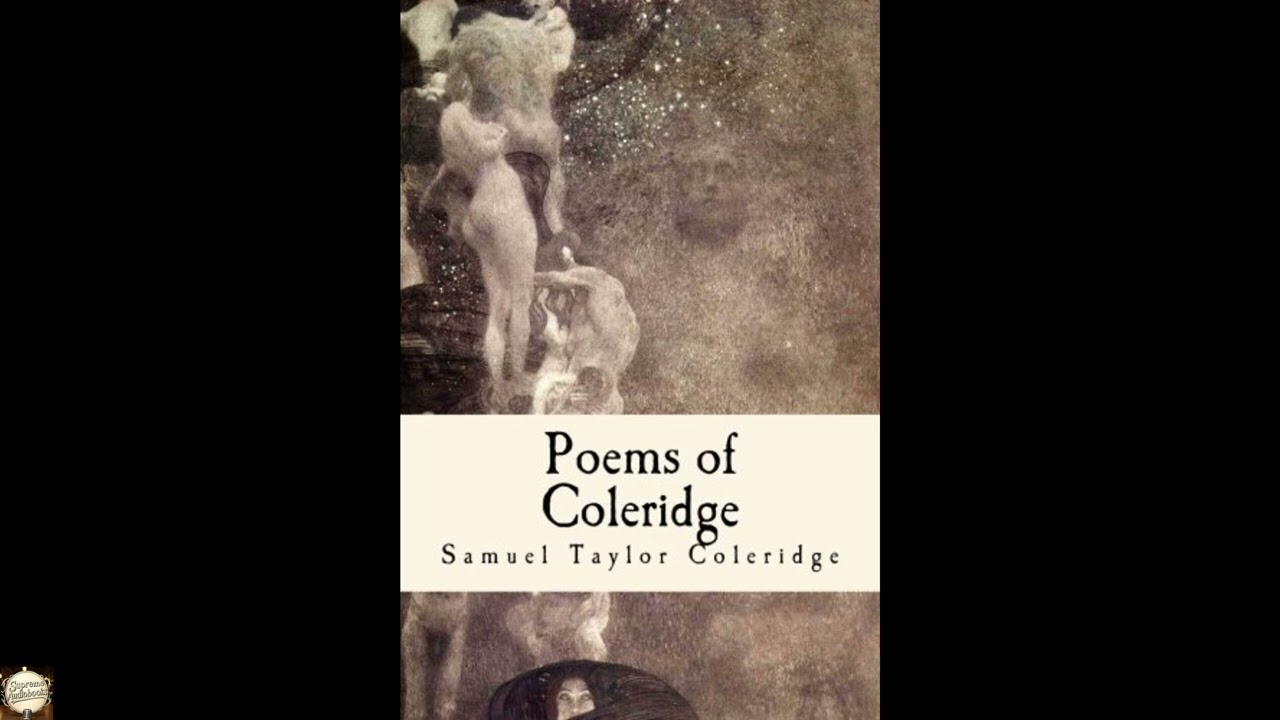
Poems of Coleridge
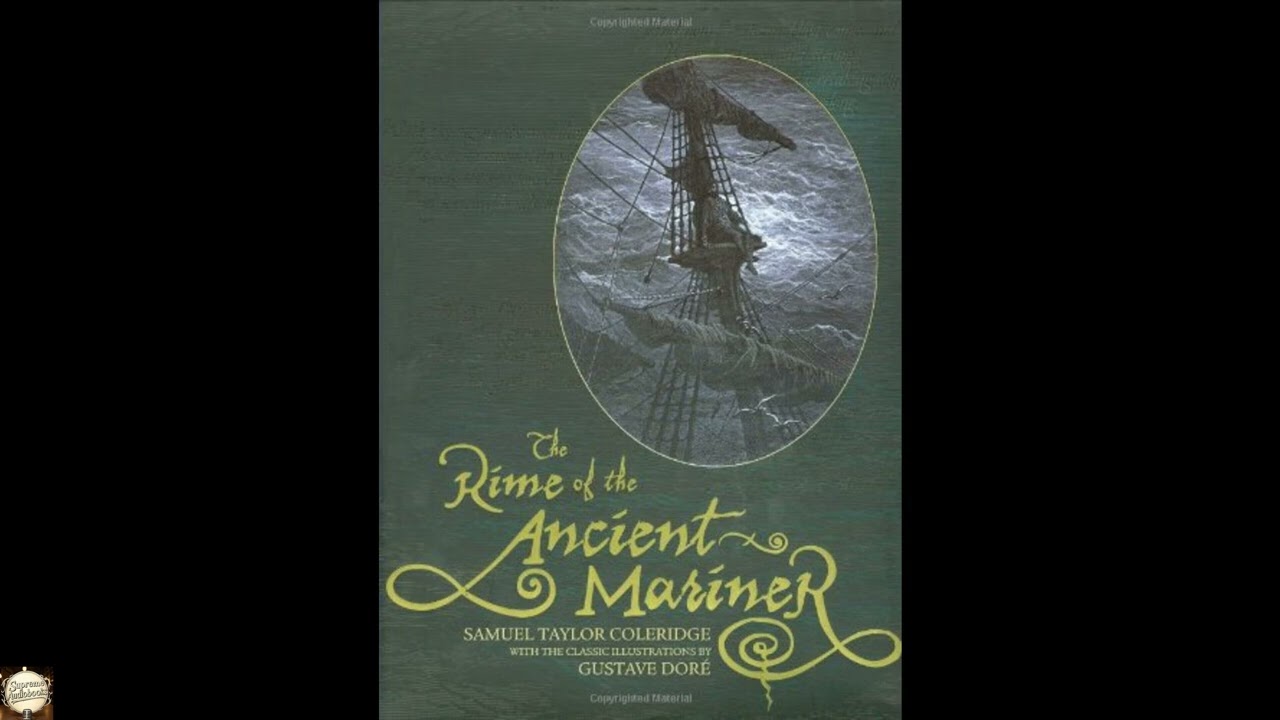
Stepping into the world of Samuel Taylor Coleridge is to open a door onto the very essence of human imagination, a realm where the familiar dissolves into the strange, and dreams take on a vivid, haunting reality. This collection, Poems of Coleridge, gathers the incandescent verses of one of English literature's most original minds, offering listeners not merely words, but an invitation to witness the birth of wonder, dread, and profound psychological insight. More than two centuries after their first appearance, these poems continue to challenge our perceptions of reality, to probe the depths of guilt and redemption, and to celebrate the sublime power of the natural world and the human spirit. They speak to anyone who has ever felt the pull of the mysterious, the weight of a secret, or the quiet beauty of a starlit night, proving that true art resonates far beyond its original moment, forever shaping our understanding of ourselves and the universe around us. Within these pages, the listener will encounter narratives that twist and turn with the inevitability of fate, and lyrical flights that seem to transcend earthly bounds. Perhaps most famously, the chilling tale of "The Rime of the Ancient Mariner" unfolds, recounting the spectral odyssey of an old sailor who accosts a wedding guest with his harrowing story. On a doomed voyage, a thoughtless act against a benevolent albatross triggers a cascade of supernatural misfortunes. The crew perishes, leaving the Mariner alone on a becalmed ocean, surrounded by grotesque visions and the heavy burden of his sin. His penance, he discovers, is to forever wander, sharing his cautionary tale and the hard-won wisdom he gleaned from the jaws of despair. The poem presents an epic struggle for spiritual survival, painting vivid pictures of nature's wrath and the slow, agonizing path toward absolution. Then there is "Kubla Khan," a fragment born, as legend holds, from an opium-induced dream. It transports the mind to Xanadu, where a stately pleasure-dome rises amidst gardens bright with sinuous rills and an ancient forest. Here, a sacred river runs through caverns immeasurable to man, ultimately plunging into a sunless sea. The poem is a sensory feast, a vision of creation both magnificent and menacing, where the seeds of paradise seem to hold the potential for ruin. Its unfinished nature only adds to its mystique, leaving the listener to contemplate the ephemeral nature of inspiration and the overwhelming power of a fleeting dream. Alongside these grand narratives stand other poetic wonders, such as the gothic mystery of "Christabel," a tale of innocence threatened by a creature of sinister beauty, and the profound introspection of the "conversation poems" like "Frost at Midnight," where the speaker's quiet contemplation of his sleeping child and the crackling fire leads to a meditation on memory, nature, and the passing of time. Samuel Taylor Coleridge, born in Ottery St Mary, Devon, in 1772, was a figure of immense intellectual curiosity and poetic genius, though his life was often marked by struggle and self-doubt. A precocious and solitary child, he immersed himself in books and philosophical thought from an early age. His time at Christ's Hospital school in London and later at Jesus College, Cambridge, cemented his reputation as a brilliant, if somewhat undisciplined, student. It was his friendship with William Wordsworth, forged in the serene landscapes of Somerset in the late 1790s, that would ignite a literary revolution. Together, Coleridge and Wordsworth published Lyrical Ballads in 1798, a slim volume that forever altered the course of English poetry. Wordsworth contributed poems on common life, rendered with the fresh glow of imagination, while Coleridge provided the collection's more supernatural and philosophical elements, including "The Rime of the Ancient Mariner." Despite this early success, Coleridge grappled with chronic illness and addiction to opium, which he initially used for pain relief. These struggles profoundly influenced his work, often lending it a sense of melancholic introspection and a yearning for an idealized past. In his later years, he became a renowned lecturer and critic, publishing Biographia Literaria (1817), a sprawling work of autobiography and literary theory that established him as a foundational thinker of the Romantic movement, solidifying his place as one of its most innovative and influential voices. Central to Coleridge's poetic vision is the concept of the imagination, which he viewed not merely as a faculty for forming images, but as a shaping, creative power that synthesizes and unifies human experience. In "Kubla Khan," this "primary imagination" manifests as the spontaneous creation of a magnificent, dreamlike world, while in "The Rime of the Ancient Mariner," the power of imagination compels both the Mariner to tell his tale and the wedding guest to hear it, creating a shared reality of the supernatural. Another key theme is the encounter with the sublime and the uncanny, the sense of awe and terror inspired by forces beyond human control or comprehension. The spectral ship and the reanimated crew in "Ancient Mariner" exemplify this, as does the subtly malevolent presence that infiltrates the sanctity of Christabel's home. Furthermore, Coleridge often confronts themes of guilt, penance, and redemption. The Mariner's agonizing remorse for killing the albatross and his subsequent forced confession speak to a deep moral reckoning, suggesting that true absolution can only come through acknowledgment and the sharing of one's burdens. In quieter moments, as seen in "Frost at Midnight," the poet contemplates the profound connection between nature and the human soul, suggesting that the tranquil beauty of the natural world can inspire introspection and spiritual growth, fostering a deeper understanding of one's place within the cosmic order and the gentle unfolding of personal memory. Coleridge's most impactful work emerged during a period of profound social and intellectual upheaval in Europe. The late 18th and early 19th centuries witnessed the seismic shockwaves of the French Revolution, with its promises of liberty and its subsequent Reign of Terror, followed by the Napoleonic Wars that reshaped the geopolitical landscape. At home, Britain was on the cusp of the Industrial Revolution, leading to rapid urbanization and dramatic social changes. Culturally, there was a growing weariness with the rigid rationalism and decorum of the Enlightenment and Neoclassical periods. This environment fostered the rise of Romanticism, a movement that championed emotion, individualism, the beauty and terror of nature, and the power of the subjective experience. Coleridge, with his emphasis on the supernatural, the psychological, and the transformative potential of the imagination, was a pivotal figure in this shift. His collaboration on Lyrical Ballads was a direct challenge to prevailing poetic conventions, advocating for a poetry that could make the ordinary seem extraordinary, and the extraordinary seem believable. His poems often served as a means to grapple with the anxieties and aspirations of an era caught between old certainties and a rapidly emerging, uncertain future, giving voice to a yearning for deeper meaning and a spiritual connection to the world. Listening to Poems of Coleridge as an audiobook offers a singular opportunity to fully immerse oneself in the sound and rhythm of his verse. Poetry, at its heart, is an oral art form, and a skilled narrator can unlock the musicality inherent in Coleridge's language, allowing the listener to appreciate the nuanced pacing of the Mariner's desperate narration, the lyrical flow of "Kubla Khan's" dream-vision, or the quiet, meditative quality of "Frost at Midnight." The several hours of listening time provide ample space to lose oneself in the atmospheric settings, to feel the chill of the polar sea, the exotic warmth of Xanadu, or the cozy stillness of a winter's night. A good voice actor can bring out the dramatic tension, the subtle shifts in tone, and the emotional resonance that might be missed on the silent page, transforming the act of reading into a vivid, spoken experience that lingers long after the final word.
Enjoyed Poems of Coleridge? A few ways to support us
Audible & Amazon links are affiliate; we may earn a small commission at no extra cost.
About this production
Human narration by a volunteer reader from LibriVox.org, the public-domain audiobook project. LibriVox volunteers record literary works whose copyright has expired in the United States, releasing the resulting recordings into the public domain.
Poems of Coleridge by Samuel Taylor Coleridge. The underlying text is in the U.S. public domain. We do not republish any modern copyrighted edition, translation, or commentary.
The 4K cinematic visuals accompanying this audiobook are generated by an AI image model from prompts derived from the source text. No copyrighted photos, paintings, or stock footage are used. AI generation is disclosed on every video on our YouTube channel as required by YouTube's altered/synthetic content policy.
English subtitles are transcribed from the LibriVox recording with OpenAI Whisper. Translations into the 11 other supported languages are produced by Meta's NLLB-200 neural translation model. No human translator's copyrighted translation is used.
Questions about sourcing or rights? See our DMCA & Sourcing policy or contact us.
Enjoyed this audiobook?
If you'd like to own a copy of Poems of Coleridge or hear a professionally produced edition, the links below help support free audiobook production at no extra cost to you.
As an Amazon Associate we earn from qualifying purchases. Audible / print links are affiliate.