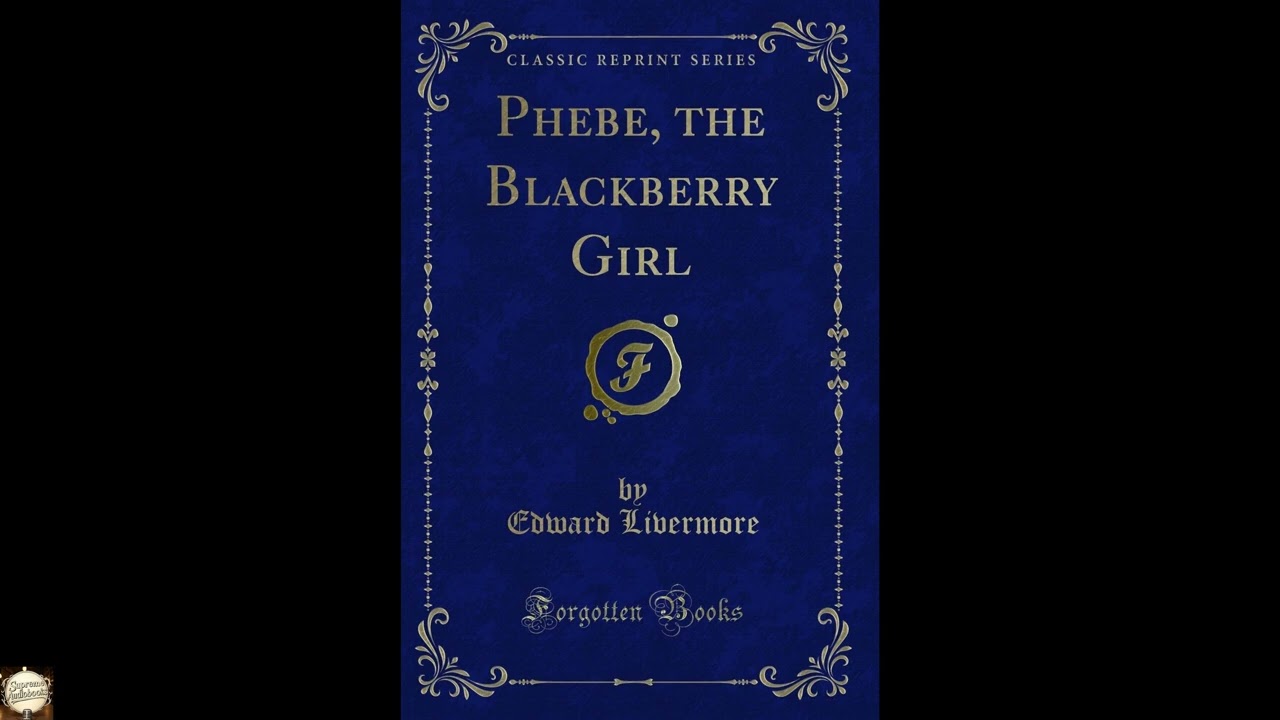
Phebe, the Blackberry Girl
Step into a simpler, yet profoundly challenging, world with Phebe, the Blackberry Girl by Edward Livermore. This cherished, though perhaps less widely known, classic offers more than a quaint recollection of bygone days; it presents a piercing examination of resilience, community, and the quiet strength found in unexpected places. At its heart lies the story of a young woman navigating the often-harsh realities of rural life, her spirit burning bright against a backdrop of hardship and expectation. This narrative, with its genuine emotional resonance and sharply drawn characters, speaks to enduring human experiences—the longing for belonging, the ache of injustice, and the triumph of integrity. It is a story that reminds us of the power of individual goodness and the profound impact of small acts of kindness, themes that resonate as strongly today as they did when first penned. The story unfolds in a sun-dappled, yet frequently mud-splashed, corner of the countryside, a place where the seasons dictate the rhythm of life and the land demands its due. Here, we meet Phebe, a girl whose name evokes the light, but whose early life is shadowed by circumstance. Orphaned and left to the care of a distant relative, she finds solace and purpose in the bounty of nature, particularly in the wild blackberry patches that dot the hillsides. Her days are spent tending to chores, assisting her stern aunt, and gathering the sweet, dark fruit, which she then sells in the nearby village. This meager trade provides a vital, if small, income, setting her apart from other children and marking her with both independence and a certain solitary grace. The narrative establishes her as an unassuming observer, often quiet, yet possessed of a keen sense of justice and an unshakeable inner compass. The central conflict arises with the arrival of a new family in the village, particularly a prosperous landowner who brings with him modern ideas and a disdain for the established, if old-fashioned, ways of the community. This newcomer’s actions begin to disrupt the delicate balance of village life, affecting everyone, but Phebe most directly. A dispute over the traditional foraging grounds, specifically the blackberry patches that are Phebe’s livelihood, throws her into an unexpected position of advocacy. She finds herself caught between her desire for peace and her inherent need to protect what is rightfully hers and, by extension, the unwritten laws of her community. This tension forces her out of her quiet existence and into direct confrontations, testing her resolve and revealing the depths of her character to both herself and those around her. The story follows Phebe as she grapples with these challenges, learning to voice her concerns and stand firm against pressures that threaten her simple world. Edward Livermore, the quiet observer behind Phebe, the Blackberry Girl, was a writer deeply attuned to the rhythms of rural American life. Born in the mid-19th century in a small, agricultural community in New England, Livermore came of age during a period of significant social and economic transformation. His formative years were spent amidst the changing seasons, the routines of farm work, and the close-knit dynamics of village society, experiences that profoundly shaped his perspective. Though he pursued a modest career as a schoolteacher for many years, his true calling lay in recording the nuances of character and the quiet dramas playing out in everyday lives. Livermore was known for his meticulous notes, his careful observation of dialect, and his uncanny ability to capture the authentic voice of the common person. Livermore’s literary output, while not extensive, consistently demonstrated his commitment to realism and his gentle, yet firm, moral sensibility. Prior to Phebe, the Blackberry Girl, he published a collection of short stories, "Echoes from the Valley," which garnered local acclaim for its genuine portrayal of regional customs and struggles. His novella, "The Millstone's Turn," a poignant account of an aging miller facing obsolescence, further solidified his reputation as a sympathetic chronicler of lives lived close to the land. He rarely sought the spotlight, preferring to let his stories speak for themselves, earning him a place among those regional writers who, in the late 19th and early 20th centuries, diligently preserved the spirit and narratives of vanishing American communities. Livermore’s work stands as a testament to the idea that profound human truths can be found in the seemingly small corners of the world. Phebe, the Blackberry Girl powerfully illustrates several enduring themes. Foremost among them is resilience in the face of adversity. Phebe, orphaned and reliant on her own efforts, continually demonstrates an unwavering ability to confront hardship without losing her inherent goodness. An early scene, where she silently endures a particularly harsh scolding from her aunt while continuing her meticulous sorting of berries, serves as an early indicator of her fortitude. Another prominent theme is the importance of community and tradition. The long-held customs of foraging, sharing, and mutual support within the village are challenged by external pressures, and Phebe’s fight for her berry patches becomes a symbol for the defense of these collective values. The way neighbors, despite their initial skepticism, eventually rally to her side underscores the strength of these unspoken bonds. Beyond personal resilience and communal spirit, the book also thoughtfully examines social justice and fairness. Phebe, though young and without formal power, becomes a voice for what is right, questioning the new landowner’s arbitrary decisions and standing up for principles that extend beyond simple property rights. Her simple plea for "what's always been," spoken with quiet dignity, highlights the tension between formal law and equitable tradition. The narrative also delicately touches upon the dignity of labor, showcasing Phebe’s pride in her work and the value she creates through her own efforts, contrasting it with the perceived idleness or unearned privilege of others. These themes are not preached, but rather woven subtly into the fabric of Phebe’s daily life and interactions, giving the story its lasting resonance and moral depth. The period in which Phebe, the Blackberry Girl likely emerged was one of significant change in America, broadly encompassing the late 19th and early 20th centuries. This era saw the rapid expansion of industrialization, drawing populations from rural areas into burgeoning cities and transforming traditional ways of life. Alongside this economic shift came a growing emphasis on realism in literature, with authors seeking to depict life as it truly was, often focusing on regional dialects, local customs, and the everyday struggles of ordinary people. There was also a burgeoning awareness of social inequities, spurred by industrial exploitation and the challenges faced by immigrant communities and the working poor. The literary landscape was therefore ripe for stories that either celebrated or lamented the fading agrarian ideal, or examined the moral quandaries arising from progress. Phebe, the Blackberry Girl can be understood as a direct response to these cultural currents. Its focus on a self-sufficient rural protagonist, clinging to her traditional livelihood against encroaching "modern" ideals, perfectly mirrors the broader societal anxieties of the time. The book offers a gentle counter-narrative to the glorification of unchecked progress, instead advocating for a return to fundamental values: hard work, honesty, and community solidarity. It subtly critiques the impersonal nature of developing economic systems by celebrating the personal connections inherent in Phebe's simple trade. Livermore's portrayal of a young woman's quiet agency also reflects an evolving discussion about individual rights and the power of the marginalized, even within seemingly static social structures, giving the book a subtle yet potent connection to the progressive spirit of its age. Listening to Phebe, the Blackberry Girl as an audiobook offers a singular opportunity to immerse oneself fully in its world. The performance becomes an extension of Livermore's prose, allowing the listener to experience the narrative not just through words on a page, but through the cadence and texture of a skilled voice. A sensitive narration can perfectly capture the story's gentle pacing, allowing the listener time to reflect on Phebe’s quiet fortitude and the nuances of village life. Hear the distinct voices given to the various characters—the gruffness of the stern aunt, the booming authority of the newcomer, the humble, yet resolute, tone of Phebe herself. The subtle atmospheric sounds or inflections in the voice can evoke the rustle of leaves in the blackberry patch, the quiet footsteps on a dirt road, or the murmurs of a village gathering, creating a truly absorbing experience. For several hours, you can let this tale unfold directly into your imagination, a perfect companion for quiet evenings, contemplative walks, or moments when you seek solace in a story both modest in scale and expansive in heart.
Enjoyed Phebe, the Blackberry Girl? A few ways to support us
Audible & Amazon links are affiliate; we may earn a small commission at no extra cost.
About this production
Human narration by a volunteer reader from LibriVox.org, the public-domain audiobook project. LibriVox volunteers record literary works whose copyright has expired in the United States, releasing the resulting recordings into the public domain.
Phebe, the Blackberry Girl by Edward Livermore. The underlying text is in the U.S. public domain. We do not republish any modern copyrighted edition, translation, or commentary.
The 4K cinematic visuals accompanying this audiobook are generated by an AI image model from prompts derived from the source text. No copyrighted photos, paintings, or stock footage are used. AI generation is disclosed on every video on our YouTube channel as required by YouTube's altered/synthetic content policy.
English subtitles are transcribed from the LibriVox recording with OpenAI Whisper. Translations into the 11 other supported languages are produced by Meta's NLLB-200 neural translation model. No human translator's copyrighted translation is used.
Questions about sourcing or rights? See our DMCA & Sourcing policy or contact us.
View 10 famous quotes from this book →
Enjoyed this audiobook?
If you'd like to own a copy of Phebe, the Blackberry Girl or hear a professionally produced edition, the links below help support free audiobook production at no extra cost to you.
As an Amazon Associate we earn from qualifying purchases. Audible / print links are affiliate.