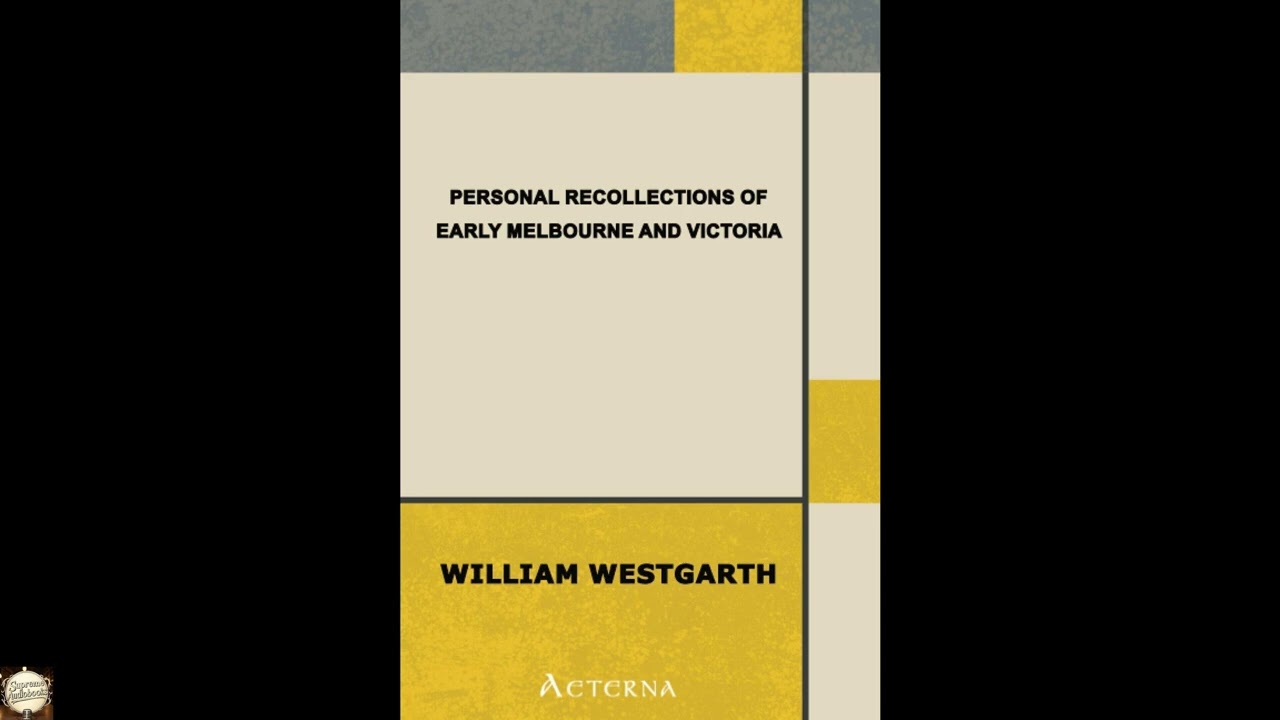
Personal Recollections of Early Melbourne and Victoria
Step back into a nascent world, a continent on the cusp of transformation, as William Westgarth’s Personal Recollections of Early Melbourne and Victoria offers a rare, first-hand account of a pivotal era. This is more than a historical document; it is a direct portal to the very origins of a great modern city and state, narrated by a man who not only witnessed its birth but played an active role in shaping its early destiny. For anyone curious about the human spirit of enterprise, the challenges of colonial settlement, and the raw foundations upon which today’s Australia was built, Westgarth’s observations provide an intimate and essential perspective, linking the ambitious decisions of the past to the enduring landscape of the present. The story Westgarth unfolds is not a fictional tale, but the lived experience of a district awakening into a bustling colony. We are introduced to the Port Phillip District – the area now known as Victoria – in the 1840s, a place of immense potential still largely untamed. Westgarth himself arrives in Melbourne as a young merchant, observing a settlement barely a few years old, consisting of little more than a scattering of buildings amidst the natural bushland. His narrative traces the gradual, sometimes tumultuous, growth of this outpost, from its early struggles with basic infrastructure and governance to its explosion of activity following the discovery of gold in the 1850s. The arc of his story is the progression from a remote pastoral region to a self-aware, rapidly developing society. Within these pages, the main "characters" are less individuals and more the collective spirit of the early settlers – squatters, merchants, administrators, and later, the throng of gold-seekers from around the globe. Westgarth keenly observes the interactions among these groups, the nascent social hierarchies, and the persistent challenges posed by the environment and economic volatility. He chronicles the day-to-day life, the anxieties of land ownership, the burgeoning wool trade, and the constant push for greater autonomy from the distant colonial administration in Sydney. The central tension is the constant struggle to establish order, build institutions, and forge a distinct identity in a land that was both bountiful and demanding, reflecting the often-unspoken conflicts inherent in rapid colonial expansion. William Westgarth, born in Edinburgh in 1815, was a figure of considerable importance in the development of colonial Australia. He arrived in the Port Phillip District in 1840, initially establishing himself as a successful merchant in Melbourne. His early years were spent observing and participating in the frantic commercial and social life of the burgeoning settlement, giving him an unparalleled vantage point on its growth. Possessing a keen intellect and a deep interest in public affairs, he quickly became a respected voice in the community, not merely as a businessman but as a public intellectual. His active engagement with the colony's future led him into politics, and by 1853, he was elected to the Victorian Legislative Council, a critical period during which the colony was pushing for greater self-governance and preparing for the influx of population spurred by the gold rushes. Westgarth was a vocal advocate for responsible government and played a role in shaping early colonial policy. In 1857, he returned to England, but his connection to Australia remained strong. He dedicated the rest of his life to writing extensively about the colonies, becoming a respected authority on Australian affairs in Britain. His other notable works include Australia; Its Rise, Progress, and Present Position (1861) and The Colony of Victoria (1864), cementing his place as one of the most significant chroniclers of mid-19th century Australian colonial life. The book vividly enacts several key themes that resonate far beyond the specifics of Melbourne’s founding. One prominent theme is the spirit of colonial enterprise and resilience. Westgarth details the practicalities and ambitions of early commerce, describing, for instance, the struggles of establishing trade routes, the fluctuations of market prices for wool and other goods, and the speculative fever that often gripped the nascent community. He shows how individuals, through sheer determination and often considerable risk, laid the groundwork for future prosperity, transforming a raw landscape into a productive economic engine. His accounts of the early struggles with infrastructure, from rudimentary jetties to the first attempts at public transport, highlight the constant need for innovation and adaptation. Another powerful theme is the rapid urban and social transformation brought about by events like the gold rushes. Westgarth’s observations capture the sheer shock of population influx, describing how a quiet pastoral town could swell almost overnight with people from across the globe. He notes the strains this placed on existing services, the sudden appearance of new wealth, and the subsequent growth of social institutions, from schools and churches to nascent legislative bodies. We hear of the chaotic energy, the widespread hopes, and the inevitable challenges of trying to manage such explosive growth, turning the focus to how a community copes with radical, sudden change. The cultural and political landscape of the late 19th century, when Personal Recollections was published posthumously in 1888, provides crucial context for its emergence. The work looks back on a period roughly from the 1840s to the 1850s, a time of immense change in Australia. The British Empire was at its zenith, and its colonial outposts were evolving from distant possessions to self-governing entities. Victoria, having separated from New South Wales in 1851, was at the forefront of this political evolution, simultaneously experiencing the profound social and economic impact of the gold rushes. Westgarth’s book thus appeared during a time when Australians were increasingly interested in their national origins and the "founding fathers" who shaped their society. Writing from London, Westgarth offered a retrospective account, a personal history infused with the authority of direct experience, at a moment when the Victorian era’s appetite for memoirs, historical narratives, and tales of imperial expansion was strong. Listening to Personal Recollections of Early Melbourne and Victoria as an audiobook offers a unique way to connect with this formative history. A skilled narrator breathes life into Westgarth’s methodical yet often reflective prose, allowing the listener to absorb the intricate details of colonial life and the author’s insightful commentary at their own pace. The several-hour run length makes it an ideal companion for extended commutes, a focused session of historical listening, or even as an informative backdrop to daily tasks. Pay attention to the precise details Westgarth provides – the names of early streets, the descriptions of early buildings, the nuances of political debates – which, when delivered vocally, acquire an immediacy that might be less apparent on the printed page. The measured cadence often found in 19th-century writing comes alive through narration, making the unfolding of historical events a compelling, almost conversational, experience.
Enjoyed Personal Recollections of Early Melbourne and Victoria? A few ways to support us
Audible & Amazon links are affiliate; we may earn a small commission at no extra cost.
About this production
Human narration by a volunteer reader from LibriVox.org, the public-domain audiobook project. LibriVox volunteers record literary works whose copyright has expired in the United States, releasing the resulting recordings into the public domain.
Personal Recollections of Early Melbourne and Victoria by William Westgarth. The underlying text is in the U.S. public domain. We do not republish any modern copyrighted edition, translation, or commentary.
The 4K cinematic visuals accompanying this audiobook are generated by an AI image model from prompts derived from the source text. No copyrighted photos, paintings, or stock footage are used. AI generation is disclosed on every video on our YouTube channel as required by YouTube's altered/synthetic content policy.
English subtitles are transcribed from the LibriVox recording with OpenAI Whisper. Translations into the 11 other supported languages are produced by Meta's NLLB-200 neural translation model. No human translator's copyrighted translation is used.
Questions about sourcing or rights? See our DMCA & Sourcing policy or contact us.
Enjoyed this audiobook?
If you'd like to own a copy of Personal Recollections of Early Melbourne and Victoria or hear a professionally produced edition, the links below help support free audiobook production at no extra cost to you.
As an Amazon Associate we earn from qualifying purchases. Audible / print links are affiliate.
More Audiobooks
Victoria: The Queen: An Intimate Biography of the Woman Who Ruled an Empire
Glimpses of King William IV. and Queen Adelaide; In Letters of the Late Miss Clither- Full Audiobook
In the Days of Queen Victoria (Yesterday's Classics)
Foster's Letter Of Marque - A Tale Of Old Sydney - 1901