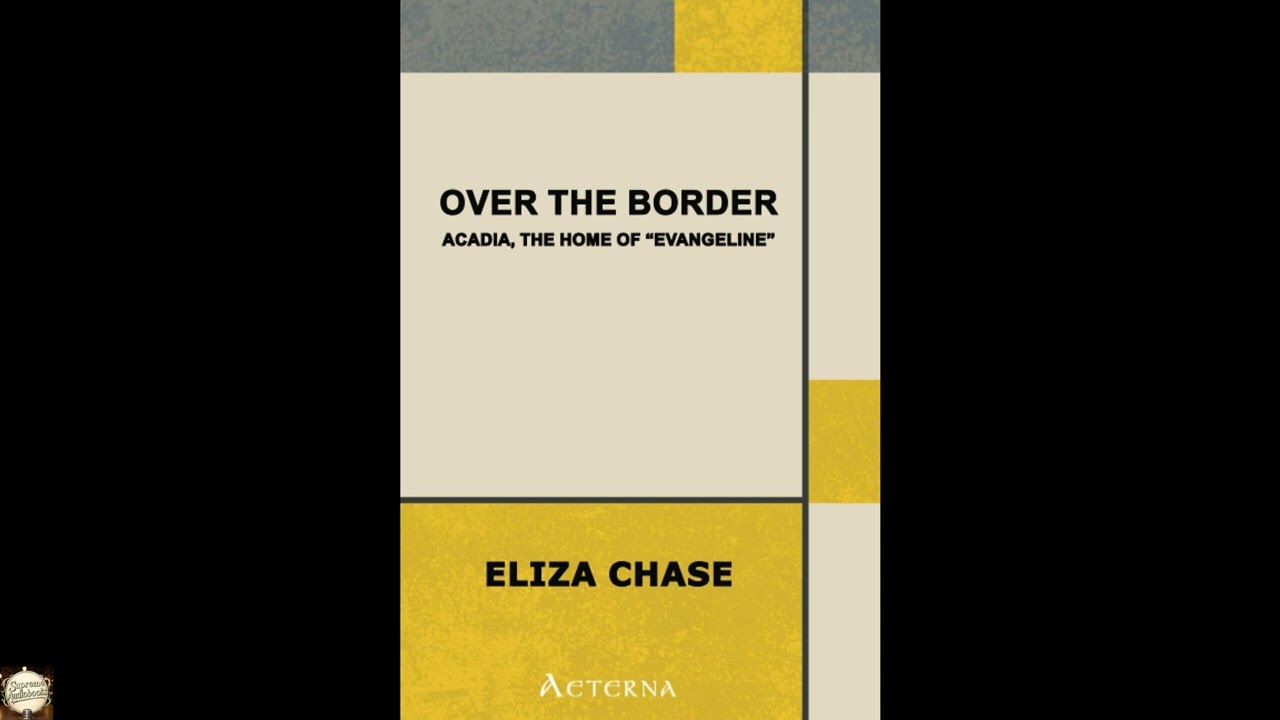
Over the Border: Acadia, the Home of "Evangeline"
Step into a world where history and poetry intertwine, where the echoes of a tragic past resonate across lush landscapes and through the enduring spirit of a displaced people. Eliza B. Chase's "Over the Border: Acadia, the Home of 'Evangeline'" offers a profound look at the storied land of Acadia, delving beyond the well-known verses of Henry Wadsworth Longfellow to unearth the complex realities and persistent legacies that define this unique corner of North America. This is more than a historical account; it is an invitation to witness the making of a myth, to understand the human cost behind a celebrated poem, and to appreciate how places themselves can bear witness to generations of joy and sorrow. For anyone fascinated by historical memory, the interplay of literature and fact, or the enduring resilience of cultural identity, Chase's meticulous yet accessible writing provides an essential, engaging perspective. Chase guides her audience through the historic regions of Acadia, primarily focusing on the modern-day Canadian Maritimes, which were once the heartland of the French-speaking Acadian people. Her narrative begins by establishing the idyllic pre-expulsion existence of the Acadians, painting a picture of a close-knit, agrarian society thriving amidst fertile lands and abundant waters. She sets the scene in the mid-18th century, a period marked by shifting colonial powers and escalating tensions between the British and French empires in North America. The Acadians, a peace-loving community striving for neutrality, found themselves caught in the brutal political machinations of the era. The central subject of the book is the infamous Great Expulsion, or Le Grand Dérangement, of 1755, when British forces forcibly removed thousands of Acadians from their homes, scattering them across the North American colonies and sending many back to France. Chase recounts this forced migration with both historical rigor and a profound sense of human empathy, detailing the confusion, despair, and sheer scale of the displacement. Her objective is not simply to narrate events, but to connect them directly to Longfellow's "Evangeline," examining how the widely read poem shaped, and perhaps simplified, public understanding of this historical atrocity. The arc of the account follows Chase's own investigations, moving from the poetic ideal to the historical record, observing the landscapes that inspired the poem and meeting the descendants who still carry the memory of their ancestors' ordeal, demonstrating the enduring impact of this cataclysmic event on both the land and its people. Eliza Boardman Chase (1837-1915) was an American author and poet who left a significant mark on late 19th-century American letters through her travel writing and historical observations. Born in Massachusetts, she spent much of her life engaged with intellectual pursuits, contributing to a vibrant literary scene that valued both careful scholarship and accessible prose. Her literary output often focused on uncovering the historical layers of places, making them come alive for her readers. Before "Over the Border," published in 1884, Chase had already gained recognition for works such as "A Glimpse of the World and its Women," which appeared in 1876, showcasing her early interest in broader cultural and historical topics. Chase belonged to a generation of American writers who saw travel not merely as recreation, but as an opportunity for intellectual discovery and historical reflection. Her writing style aligned with a period that appreciated detailed description, moral earnestness, and a clear, informative voice. While perhaps not a canonical figure on the scale of Longfellow himself, she represents the educated, engaged woman writer of her time, actively contributing to public discourse on history, culture, and national identity. Her later works, including "A Sketch of the Life of Edward Follansbee" (1896) and "The Story of the American Flag" (1903), further underscore her consistent interest in American historical narratives and the lives of significant figures. "Over the Border" addresses several crucial themes, chief among them the indelible nature of memory and history on a physical landscape and its inhabitants. Chase frequently describes the fertile fields and placid rivers of Acadia, noting how these seemingly tranquil settings belie the profound suffering that occurred there, turning the land itself into a silent witness. For instance, she might detail a seemingly ordinary village, then pivot to recount the precise moment British soldiers descended upon it, drawing a stark contrast between present peace and past violence, reminding us that history is not abstract but deeply embedded in place. Another prominent theme is the profound power of literature to shape perception. Longfellow's "Evangeline," published in 1847, had by Chase's time become the definitive popular narrative of the Acadian expulsion. Chase directly engages with the poem, using its widespread recognition as a springboard to present the often harsher historical truths, comparing the romanticized sorrow of Evangeline to the collective, systemic trauma experienced by thousands of real Acadians. The book also grapples with cultural identity and displacement, observing how the Acadian people, despite forced removals and generations of dispersion, managed to retain a distinct sense of heritage, language, and tradition. Chase's observations of Acadian communities in the late 19th century highlight their resilience and their efforts to reclaim and preserve their unique culture in the face of immense historical pressure. A fourth significant theme is the delicate balance between romanticized ideals and historical reality. Chase frequently juxtaposes the poetic imagery of "Evangeline" – a beautiful heroine, a simple, devout people – with the often brutal, unadorned facts of imperial conflict and human suffering. This comparison serves to ground the emotional resonance of the poem in a more concrete, verifiable understanding of the past, challenging readers to consider both the beauty of fiction and the gravity of fact. When "Over the Border" was published in 1884, the United States was still navigating the complexities of its post-Civil War era, experiencing rapid industrialization, westward expansion, and a burgeoning sense of national identity. This period fostered a keen interest in American history and increasingly, the histories of neighboring North American regions. Travel writing was a highly popular genre, as improved transportation made more remote areas accessible to a curious public eager for firsthand accounts of foreign lands, even those "over the border" in Canada. Longfellow's "Evangeline" remained a foundational text in American literary culture, nearly four decades after its publication, keeping the story of Acadia fresh in the public imagination. This cultural environment created fertile ground for Chase's specific blend of historical investigation, travelogue, and literary criticism. Her book emerged at a time when readers were interested in understanding the authentic historical roots behind popular narratives, seeking to distinguish between poetic embellishment and documented fact. It spoke to a growing desire to understand the shared historical narratives of North America, especially those that touched upon themes of displacement, colonial conflict, and cultural perseverance. Chase's work provided a substantive, accessible account that satisfied both the lingering romantic interest in "Evangeline" and the era's increasing appetite for historical accuracy. Listening to "Over the Border: Acadia, the Home of 'Evangeline'" as an audiobook provides an intimate connection to Chase's thoughtful prose and her measured pace of revelation. The narrator's voice, clear and steady, guides the listener through the detailed historical accounts and descriptive passages, allowing the full weight of the Acadian story to sink in without distraction. Over its several hours, the book unfolds like a guided tour, where the listener can absorb the nuances of the historical context, the biographical details of the author's observations, and the evocative descriptions of the land itself. The absence of hurried pacing allows moments of historical gravity and poetic reflection to truly resonate, drawing the listener into the atmosphere of a bygone era, where every landscape seems to whisper tales of past lives and lingering legacies.
Enjoyed Over the Border: Acadia, the Home of "Evangeline"? A few ways to support us
Audible & Amazon links are affiliate; we may earn a small commission at no extra cost.
About this production
Human narration by a volunteer reader from LibriVox.org, the public-domain audiobook project. LibriVox volunteers record literary works whose copyright has expired in the United States, releasing the resulting recordings into the public domain.
Over the Border: Acadia, the Home of "Evangeline" by Eliza B. Chase. The underlying text is in the U.S. public domain. We do not republish any modern copyrighted edition, translation, or commentary.
The 4K cinematic visuals accompanying this audiobook are generated by an AI image model from prompts derived from the source text. No copyrighted photos, paintings, or stock footage are used. AI generation is disclosed on every video on our YouTube channel as required by YouTube's altered/synthetic content policy.
English subtitles are transcribed from the LibriVox recording with OpenAI Whisper. Translations into the 11 other supported languages are produced by Meta's NLLB-200 neural translation model. No human translator's copyrighted translation is used.
Questions about sourcing or rights? See our DMCA & Sourcing policy or contact us.
Enjoyed this audiobook?
If you'd like to own a copy of Over the Border: Acadia, the Home of "Evangeline" or hear a professionally produced edition, the links below help support free audiobook production at no extra cost to you.
As an Amazon Associate we earn from qualifying purchases. Audible / print links are affiliate.