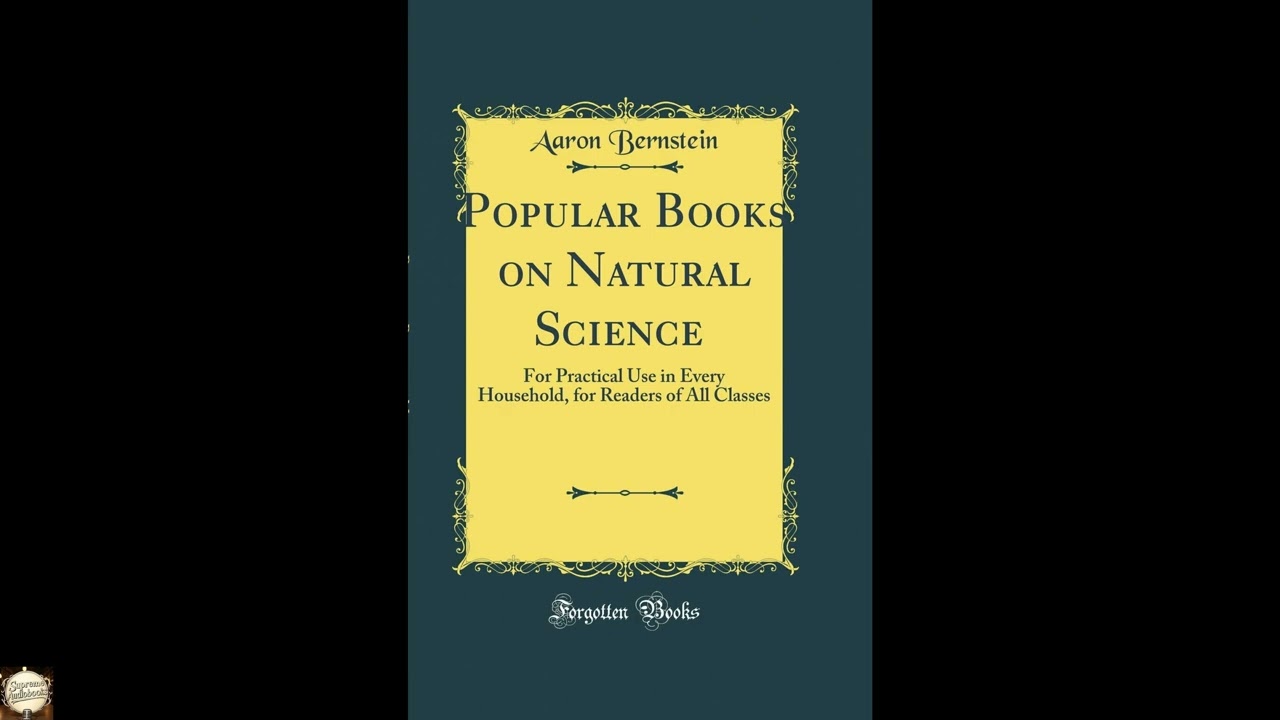
On Natural Science: For Practical Use in Every Household, for Readers of All Classe
Step back in time to an era when curiosity was a domestic virtue and understanding the natural world was not just an academic pursuit but a practical necessity for every home. "On Natural Science: For Practical Use in Every Household, for Readers of All Classes" stands as a remarkable testament to the enduring human desire to comprehend the universe and apply its principles to daily life. This isn't merely a historical curiosity; it's a living document revealing the foundations of modern scientific thought, a guide that once empowered countless individuals to observe, experiment, and innovate within their own four walls. Listening today offers a unique perspective on how knowledge was democratized, how critical thinking was fostered, and how the seeds of technological advancement were sown in kitchens, gardens, and workshops long before laboratories became commonplace. The "story" within "On Natural Science" unfolds not through characters and dialogue, but through the patient unveiling of universal principles and their tangible manifestations. The setting is ubiquitous: the world itself, viewed through the lens of a keen, inquiring mind. Imagine a fireside discussion, a lesson delivered in the parlor, or a quiet moment of contemplation in a bustling household. The narrator, a calm and authoritative guide, addresses the reader directly, transforming them into the central figure in this ongoing quest for understanding. This unseen mentor doesn't present abstract theories but grounds every explanation in observable phenomena—the boiling kettle, the changing weather, the growth of a plant, the workings of a simple machine. The central "conflict" isn't external, but an internal one: the overcoming of ignorance and superstition through the application of reason and empirical evidence. It’s the challenge of making sense of everyday occurrences, deciphering the mechanics behind the seemingly miraculous, and building a practical knowledge base for self-sufficiency. The arc of this narrative builds steadily, starting with fundamental concepts of physics and chemistry—light, heat, air, water—and progresses to their biological implications in gardening, cooking, and even basic health. Without revealing specific examples, the reader is systematically guided through observations that clarify why certain foods spoil, how simple machines multiply force, or why the sky appears blue, equipping them with a framework for understanding and manipulation rather than passive acceptance. The goal is to cultivate a mind that questions, tests, and ultimately thrives by embracing the logic of the natural order. While the author of "On Natural Science" remains unknown, their identity is perhaps less significant than the spirit and tradition they represent. This is a voice born from a period when formal education was not universally accessible, and the spread of knowledge often relied on self-study and popular instructional texts. Such works were frequently compiled by dedicated educators, polymaths, or even collective efforts, aiming to distill complex academic ideas into comprehensible terms for a broad audience. The anonymity itself speaks to a focus on the content and its utility rather than individual celebrity. It places the emphasis squarely on the accessible wisdom being conveyed, positioning the author as a facilitator of learning rather than a personality. This book belongs to a venerable tradition of popular science writing and domestic manuals that flourished during periods of societal change and increased literacy. These texts served as crucial bridges between the burgeoning scientific advancements being made in universities and academies, and the practical needs of the everyday citizen. They aimed to empower individuals, particularly those outside of elite scholarly circles, with the tools to navigate a rapidly industrializing and intellectually awakening world. The very existence of such a comprehensive yet approachable book suggests a strong societal demand for practical knowledge, indicating a cultural shift towards self-improvement and a broader appreciation for rational inquiry. At its core, "On Natural Science" champions themes of enlightenment and empowerment through understanding. One prominent theme is the democratization of knowledge, exemplified by its explicit intention "for Readers of All Classes." The book systematically breaks down complex scientific principles into easily digestible segments, making subjects once reserved for scholars available to homemakers, artisans, and anyone with a curious mind. For instance, explaining the principles of leverage through the simple act of using a crowbar, or demonstrating atmospheric pressure with a common water pump, directly shows how academic concepts find their utility in the most ordinary of settings. Another central theme is practicality and utility, emphasizing that science is not merely abstract theory but a tool for better living. The text continually links observed phenomena to immediate, tangible benefits in daily household management or personal well-being. Consider a section that might discuss the expansion and contraction of materials due to temperature changes; this isn't presented as an isolated fact, but rather to explain why a lid might stick on a jar or how a specific type of heating system works efficiently. Such concrete applications transform theoretical understanding into actionable wisdom, fostering a sense of mastery over one's immediate environment. A third enduring theme is the promotion of observation and rational inquiry. The "author" encourages readers to look closely at the world around them, to question assumptions, and to test hypotheses through simple experimentation, effectively nurturing a scientific mindset. The methodical way it describes how to discern the properties of different substances or understand weather patterns—by direct attention to sensory details and logical deduction—serves as a compelling argument for disciplined thought. The emergence of a work like "On Natural Science" can be situated within the broader historical currents of the Enlightenment and the Scientific Revolution's continuing impact. During the eighteenth and nineteenth centuries, an era marked by significant advancements in physics, chemistry, and biology, there was a growing desire to disseminate this knowledge beyond the academic and aristocratic spheres. The rise of a literate middle class, coupled with improvements in printing technology, created a fertile ground for popular educational texts. Politically, movements valuing individual reason and self-improvement gained traction, aligning perfectly with a book that sought to arm every citizen with intellectual tools. Culturally, there was a widespread belief in progress and the idea that knowledge could elevate society, making practical science a key component of a well-ordered and productive household. This period saw a shift from purely theoretical scientific speculation to a focus on how science could solve practical problems, improve agriculture, enhance manufacturing, and generally better human lives—a sentiment that this particular book embodies so completely. Listening to "On Natural Science" as an audiobook offers a unique and intimate way to connect with this important historical document. The spoken word brings a different kind of authority and clarity to the methodical explanations, allowing the principles to unfold almost as if a learned teacher were speaking directly to you. The narration style itself becomes a crucial element, carrying the earnestness and precision of the original text. The run length, measured in "several hours," makes it perfectly suited for sustained learning, whether you absorb it in dedicated sessions or allow it to play softly during quiet tasks, much like its original readers might have consulted it while engaged in household duties. Pay attention to the steady pacing and the even, considered tone of the voice, which allows each concept to sink in without rush, echoing the deliberate pace of discovery and understanding that was encouraged in the past. Hearing the clear articulation of terms and descriptions helps to dissolve any potential unfamiliarity with historical language, making the practical wisdom of a bygone era feel remarkably accessible and relevant even today.
Enjoyed On Natural Science: For Practical Use in Every Household, for Readers of All Classe? A few ways to support us
Audible & Amazon links are affiliate; we may earn a small commission at no extra cost.
About this production
Human narration by a volunteer reader from LibriVox.org, the public-domain audiobook project. LibriVox volunteers record literary works whose copyright has expired in the United States, releasing the resulting recordings into the public domain.
On Natural Science: For Practical Use in Every Household, for Readers of All Classe by Johann Gottfried Wenzel. The underlying text is in the U.S. public domain. We do not republish any modern copyrighted edition, translation, or commentary.
The 4K cinematic visuals accompanying this audiobook are generated by an AI image model from prompts derived from the source text. No copyrighted photos, paintings, or stock footage are used. AI generation is disclosed on every video on our YouTube channel as required by YouTube's altered/synthetic content policy.
English subtitles are transcribed from the LibriVox recording with OpenAI Whisper. Translations into the 11 other supported languages are produced by Meta's NLLB-200 neural translation model. No human translator's copyrighted translation is used.
Questions about sourcing or rights? See our DMCA & Sourcing policy or contact us.
Enjoyed this audiobook?
If you'd like to own a copy of On Natural Science: For Practical Use in Every Household, for Readers of All Classe or hear a professionally produced edition, the links below help support free audiobook production at no extra cost to you.
As an Amazon Associate we earn from qualifying purchases. Audible / print links are affiliate.