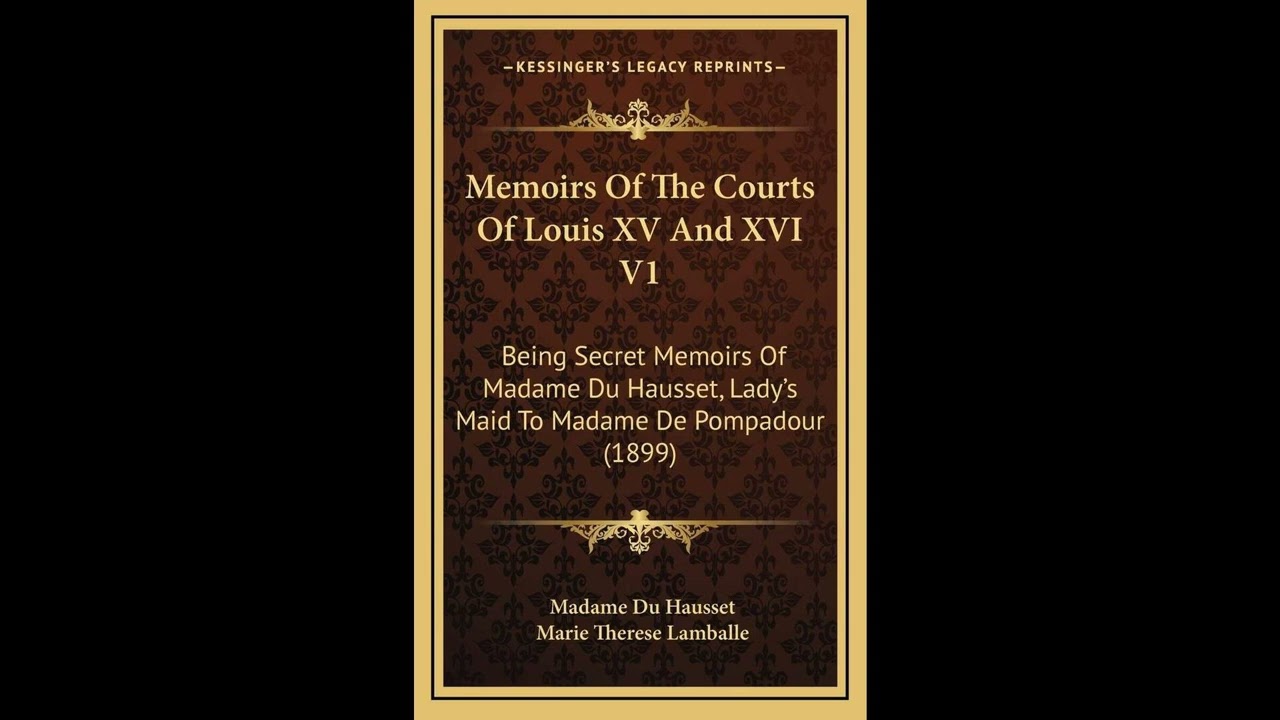
Memoirs Of The Courts Of Louis XV And XVI V1: Being Secret Memoirs Of Madame Du Haus- Full Audiobook
Imagine stepping through a hidden door into the opulent, whispered world of pre-Revolutionary France. Picture Versailles not as a monument, but as a gilded cage teeming with ambition, scandal, and the faint, unsettling tremor of impending doom. Memoirs Of The Courts Of Louis XV And XVI V1: Being Secret Memoirs Of Madame Du Hausset offers just such an unprecedented view—a clandestine glimpse behind the powdered wigs and elaborate silks into the very chambers where power was wielded and history was unwittingly forged. This isn't merely a recounting of historical facts; it's a descent into the human drama that played out as an entire system teetered on the brink, revealing the intimate anxieties and grand follies of those destined to witness—or perhaps hasten—the end of an era. For anyone fascinated by the mechanics of power, the fragility of empires, and the spectacle of human nature under extreme pressure, these whispered revelations remain compelling today. The narrative unfurls from the unique vantage point of Madame Du Hausset, lady-in-waiting to the formidable Madame de Pompadour, chief mistress and trusted confidante of Louis XV. Her position granted her unparalleled access to the private lives and political machinations simmering beneath the polished surface of the French court, primarily within the grand complex of Versailles. We see Louis XV, not just as the monarch, but as a man—charming yet increasingly detached, swayed by his favorites, and burdened by a kingdom heading towards an uncertain future. Through Du Hausset's eyes, the listener becomes an unseen observer to the daily routines, the whispered councils, and the nightly entertainments, witnessing the intricate web of relationships, from Pompadour's astute navigation of rivalries to the lesser-known figures whose ambitions shaped the court's destiny. As the account progresses, the focus shifts subtly towards the reign of Louis XVI and his ill-fated queen, Marie Antoinette. Du Hausset’s underlying narrative captures the growing sense of unease, the escalating financial crises, and the increasing disconnect between the monarchy and the French people. The narrative builds not towards a single dramatic climax, but rather a slow, inexorable revelation of an entire societal structure crumbling from within, piece by agonizing piece. It lays bare the human cost of absolute power and the poignant irony of a court so insulated by its own grandeur that it failed to heed the rumblings of a revolution at its gates. The designation 'Secret Memoirs' hints at the intriguing mystery surrounding the origins of this compelling account, as the author is listed as unknown. This was a common feature for texts detailing sensitive information from a bygone era, often published anonymously or pseudonymously to protect the writer. While the precise circumstances of its composition and initial dissemination remain shrouded, historical records confirm a Madame Du Hausset served as lady-in-waiting to Madame de Pompadour, placing the purported author directly at the heart of the court’s inner circle. This tradition of anonymous memoirs from court insiders provides invaluable, if sometimes subjective, windows into historical periods, capturing the gossip, personal biases, and human frailties that official documents often omit. Such accounts fall within a broader literary tradition of tell-all narratives from former courtiers or confidantes, a genre that flourished following major political upheavals. They offered later generations a chance to peer behind the curtain of power, to understand the personal dynamics that underpinned grand historical events. The enduring power of these memoirs lies in their vivid detail and apparent candor, offering a richer, more nuanced, and certainly more entertaining perspective than public pronouncements alone. One of the most prominent themes running through Du Hausset’s observations is the insidious nature of power and its corrupting influence. We see this acutely in the court of Louis XV, where the king’s personal preferences often dictated national policy. Madame de Pompadour, despite her unofficial status, wielded immense power, orchestrating appointments, influencing foreign policy, and even guiding royal opinion through her intimate access to the monarch. An example is her subtle maneuvers to undermine a disliked minister, or her strategic promotion of an artist she favored, demonstrating how personal relationships could trump official protocol and illustrate the concentration of power in a few hands. Another key theme is the precariousness and illusion of stability that permeated court life. Beneath the dazzling surface of balls and theatrical productions, a constant undercurrent of anxiety and jockeying for position existed. Courtiers lived in perpetual fear of falling out of favor, their fortunes tied to the whims of the monarch or his influential mistresses. The very rigidity of court etiquette, meant to enforce order, inadvertently highlighted the fragile foundations upon which this entire edifice rested. The text expertly conveys the atmosphere where fortunes could be made or lost on a single word, where rumors held significant sway, and where the appearance of unwavering grandeur masked a deep-seated vulnerability that would ultimately prove fatal to the monarchy itself. These memoirs emerged from a specific historical moment, likely compiled and published in the period following the French Revolution. The cataclysmic events of the late 18th century, which saw the complete overthrow of the monarchy, fostered a fervent interest in understanding why such a dramatic transformation occurred. There was a hunger for insider accounts, for documents that could shed light on the inner workings of the courts of Louis XV and XVI—the very institutions that had been so utterly destroyed. This era saw a proliferation of personal histories, letters, and memoirs, all attempting to either justify past actions or provide a comprehensive record. For a document like Du Hausset's memoirs, its 'secret' nature and detailed observations of the private lives of monarchs and their favorites would have been particularly compelling, offering a scandalous, intimate perspective that contrasted sharply with official histories and fed the public's fascination with the downfall of the old order. Listening to Memoirs Of The Courts Of Louis XV And XVI V1 as an audiobook transforms it from a historical document into an immersive experience. Over several hours, a skilled narrator can evoke the very atmosphere of Versailles, bringing to life the hushed grandeur, the whispered intrigues, and the dramatic personalities that populate these pages. The pacing of the narration can underscore the gradual unfolding of events, allowing listeners to truly appreciate the slow burn of political tensions and the subtle shifts in court dynamics. A good performance will differentiate between the various voices and attitudes—the imperious tones of a monarch, the shrewd calculation of a mistress, the nervous energy of a hopeful courtier—creating a rich auditory landscape. It's a chance to hear these 'secret' observations as they might have been originally shared: intimately, with a sense of urgency, and with every nuance of human emotion laid bare, placing the listener directly within the confidence of Madame Du Hausset.
Enjoyed Memoirs Of The Courts Of Louis XV And XVI V1: Being Secret Memoirs Of Madame Du Haus- Full Audiobook? A few ways to support us
Audible & Amazon links are affiliate; we may earn a small commission at no extra cost.
About this production
Human narration by a volunteer reader from LibriVox.org, the public-domain audiobook project. LibriVox volunteers record literary works whose copyright has expired in the United States, releasing the resulting recordings into the public domain.
Memoirs Of The Courts Of Louis XV And XVI V1: Being Secret Memoirs Of Madame Du Haus- Full Audiobook by Madame Du Hausset. The underlying text is in the U.S. public domain. We do not republish any modern copyrighted edition, translation, or commentary.
The 4K cinematic visuals accompanying this audiobook are generated by an AI image model from prompts derived from the source text. No copyrighted photos, paintings, or stock footage are used. AI generation is disclosed on every video on our YouTube channel as required by YouTube's altered/synthetic content policy.
English subtitles are transcribed from the LibriVox recording with OpenAI Whisper. Translations into the 11 other supported languages are produced by Meta's NLLB-200 neural translation model. No human translator's copyrighted translation is used.
Questions about sourcing or rights? See our DMCA & Sourcing policy or contact us.
Enjoyed this audiobook?
If you'd like to own a copy of Memoirs Of The Courts Of Louis XV And XVI V1: Being Secret Memoirs Of Madame Du Haus- Full Audiobook or hear a professionally produced edition, the links below help support free audiobook production at no extra cost to you.
As an Amazon Associate we earn from qualifying purchases. Audible / print links are affiliate.
More Audiobooks
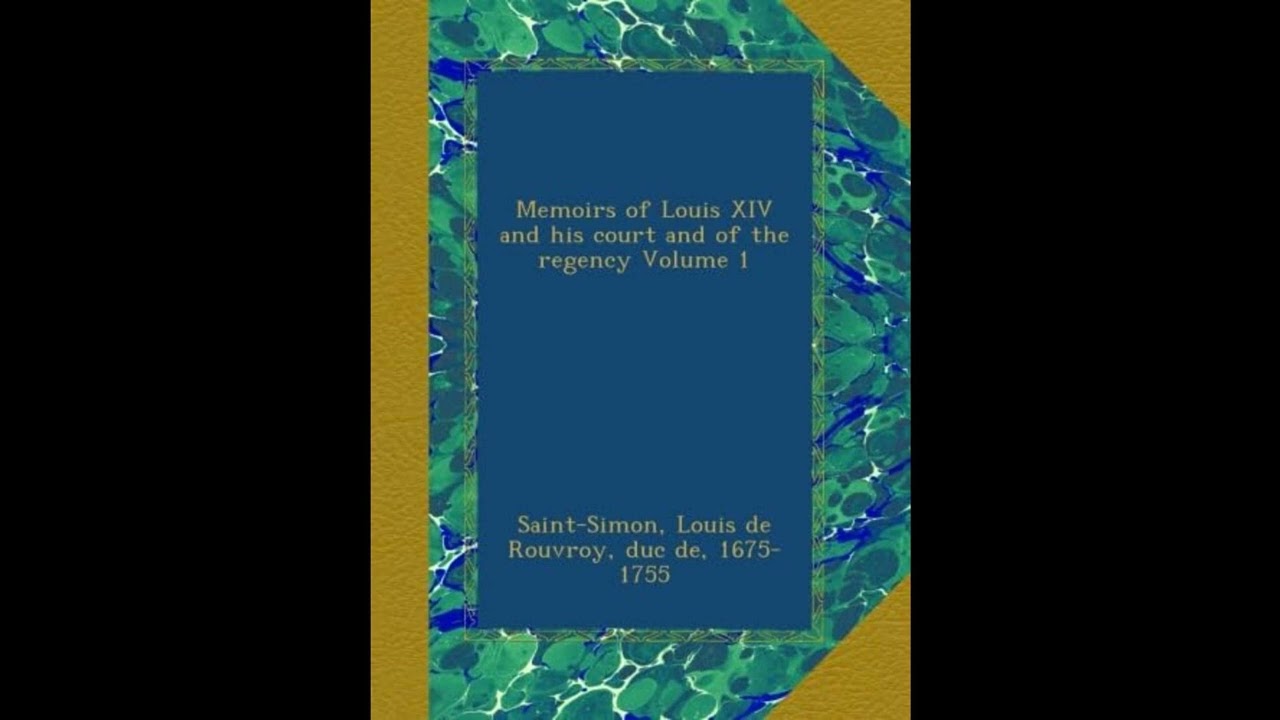
Memoirs of Louis XIV and his court and of the regency Volume 1
Memoirs of Madame la Marquise de Montespan
Memoirs of the Court of St. Cloud (Being secret letters from a gentleman at Paris to- Full Audiobook

Memoirs of Jean François Paul de Gondi, Cardinal de Retz — Volume 1