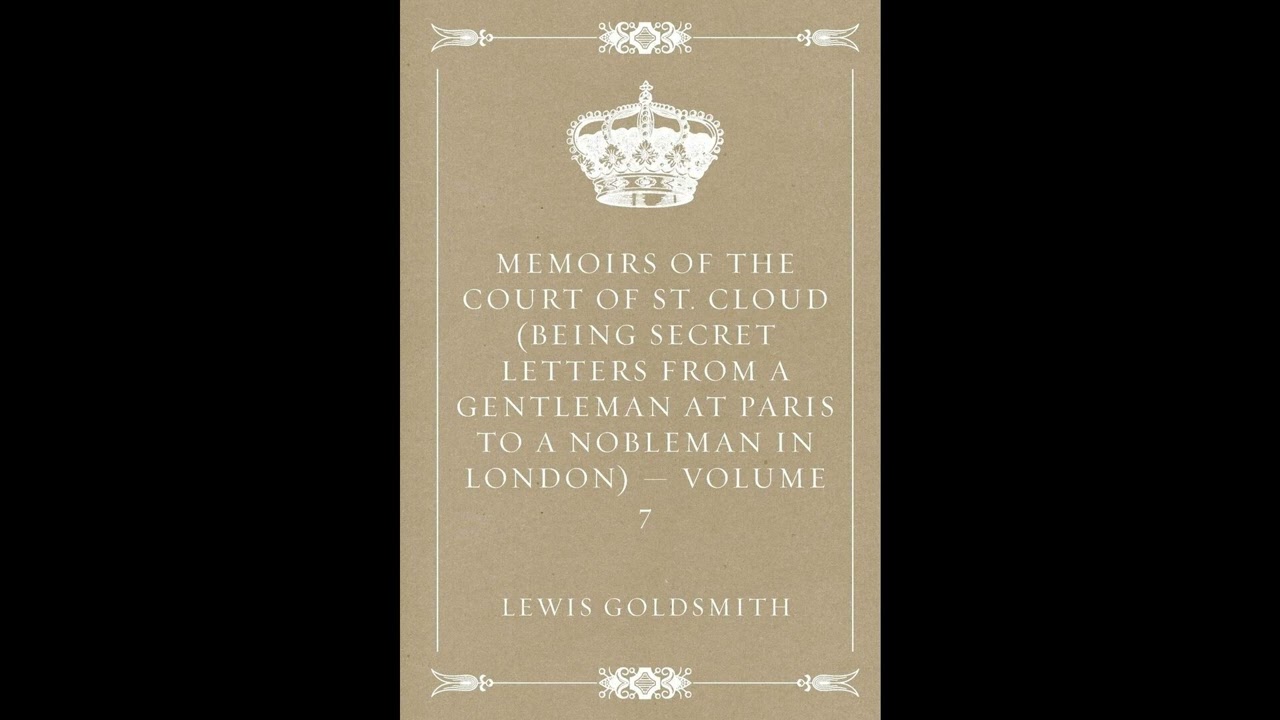
Memoirs of the Court of St. Cloud (Being secret letters from a gentleman at Paris to- Full Audiobook
Step into the clandestine world of Parisian high society during one of history's most tumultuous and glamorous periods with "Memoirs of the Court of St. Cloud." This extraordinary collection of "secret letters" offers an unparalleled, unfiltered glimpse behind the gilded façade of Napoleon Bonaparte's imperial court, revealing the intricate web of ambition, scandal, and intrigue that defined the era. Why should a listener care today? Because the relentless pursuit of power, the clash between public image and private reality, and the perennial human drama unfolding in these pages are as resonant now as they were two centuries ago. It's a testament to the enduring fascination with political machinations and the intimate lives of those who shape history, delivered with the urgency and danger inherent in a whispered secret. The setting for these fascinating missives is none other than the opulent palaces of the First French Empire, primarily the magnificent residence of St. Cloud, during the early 19th century. From this vantage point, a shrewd and remarkably well-informed "gentleman at Paris" chronicles the daily machinations of Napoleon, his formidable Empress Josephine, and the vast constellation of generals, ministers, courtiers, and ambitious social climbers who revolved around their sun. The letters, penned for an unnamed recipient abroad, function as a running commentary, a clandestine diary of a world obsessed with appearances and deeply entrenched in power struggles. The narrative unfolds not as a conventional story with a single protagonist, but as a series of penetrating observations that gradually paint a panoramic portrait of a court teetering between revolutionary ideals and burgeoning imperial pomp. The central conflict, subtle yet pervasive, lies in the stark contrast between the carefully constructed public image of Napoleon's regime—one of order, glory, and prosperity—and the often petty, venal, and scandalous realities described in the letters. We witness courtiers vying for influence, alliances shifting with the political winds, and personal peccadillos threatening to unravel carefully maintained reputations. The "gentleman's" prose dissects the characters inhabiting this elevated sphere, from the emperor's calculated charm to Josephine's domestic anxieties, and the varying degrees of moral compromise found among their entourage. The arc of the story is the gradual unveiling of these truths, the peeling back of layers to expose the human frailties and political maneuvering beneath the surface of grand pronouncements and lavish spectacles. The letters do not build to a singular climax, but instead accumulate a mosaic of revelations, allowing the listener to piece together the true atmosphere of a legendary court in flux. The authorship of "Memoirs of the Court of St. Cloud" remains shrouded in mystery, contributing significantly to its enduring appeal and historical intrigue. Published anonymously, as was common for works of this revealing nature, the identity of the "gentleman at Paris" has been the subject of speculation for generations. Was it a disgruntled insider, perhaps a former courtier or diplomat with access to the highest echelons of power? Or perhaps a keen foreign observer, carefully gathering intelligence and impressions to convey to a distant patron? This anonymity was not merely a stylistic choice but often a necessary protection for writers who dared to reveal uncomfortable truths about powerful figures, particularly during a period marked by political suppression and vigilant surveillance. The very lack of a confirmed author heightens the sense of forbidden knowledge and authentic, unfiltered reporting. This work stands within a historical tradition of "secret histories" or chroniques scandaleuses—texts that purported to reveal the hidden lives and true characters of historical figures, often offering a corrective or alternative to official narratives. Without the burden of a known name, the author gains a certain authority, presenting observations that feel raw and immediate, untainted by overt personal agenda or the need for self-preservation. This absence allows the reader to focus entirely on the substance of the letters, speculating not on the writer's biography, but on their unique vantage point and the courage (or daring) involved in committing such intimate details to paper, even in coded or indirect forms. It is the work itself, rather than its creator, that demands our attention, an enduring testament to the anonymous chronicler's keen eye and sharp pen. Among the specific themes permeating these pages, the pervasive nature of power and its corrupting influence stands out. We see firsthand how absolute authority, personified by Napoleon, shaped not just national policy but the individual morality of those in his orbit. For instance, the letters frequently describe courtiers engaging in relentless flattery and back-stabbing, prioritizing favor and proximity to the emperor above all else, often at the expense of integrity or genuine relationships. Another central theme is the constant tension between appearance and reality. The elaborate rituals, the sumptuous attire, and the carefully choreographed public events of the court are meticulously detailed, yet the author consistently peels away this veneer to expose the raw ambition, secret love affairs, or petty jealousies simmering beneath. A vivid example might be the description of a grand ball, outwardly a spectacle of elegance, which the author then undermines by revealing the whispered intrigues and cynical political deals being brokered in the shadows. A third significant theme is the pervasive atmosphere of surveillance and secrecy. In a world where a misplaced word could ruin a career or even endanger a life, the very act of writing and sending these "secret letters" speaks volumes about the culture of guarded communication. The author subtly illustrates this through observations of how individuals protect their reputations, the delicate dance of conveying information without direct accusation, and the implicit understanding that few confidences are truly safe. Finally, the letters bring to light the human cost of empire. Beyond the grand narratives of military conquest and political reform, the memoirs reveal the personal anxieties and sacrifices demanded of those closest to the throne—Josephine's worries about succession, the burdens placed on Napoleon's family, and the ever-present pressure on courtiers to maintain their standing. These specific human dilemmas ground the larger historical context in individual experience. The period in which "Memoirs of the Court of St. Cloud" emerged was one of profound transformation and paradox in France. The early 19th century witnessed the dramatic consolidation of Napoleon's power, moving from the chaos of the French Revolution to the authoritarian grandeur of the First Empire. Culturally, there was a deep fascination with both classical ideals—reflected in the imperial aesthetic—and the romantic individualism that would soon flourish. Politically, the memory of the Revolution's violence was fresh, leading to a desire for stability, but also a lingering suspicion of absolute power. Napoleon's regime, while bringing order, was also characterized by strict censorship and the creation of an extensive network of spies. This environment fueled a hunger for uncensored information, for stories that dared to speak truth to power, even if that truth was disseminated through anonymous, illicit channels. The work thus emerged as a direct response to this climate: a clandestine chronicle for a public starved of objective reporting and eager to understand the private lives of their public figures, especially those whose rise to power had been so meteoric and controversial. It offers a vital counterpoint to the official histories sponsored by the imperial government, providing insight into the anxieties and moral complexities of a society caught between revolutionary fervor and autocratic rule. Listening to "Memoirs of the Court of St. Cloud" as an audiobook offers a uniquely intimate and immersive experience. The very format of "secret letters" lends itself perfectly to audio, as the skilled narrator can embody the conspiratorial tone, the careful observation, and the almost hushed urgency of someone relaying forbidden knowledge. Over several hours of listening, the listener is transported directly into the salons and backrooms of the Napoleonic court, becoming the privileged recipient of these revelations. The pacing of the narration often reflects the ebb and flow of court life—sometimes rapid and breathless as scandals break, other times measured and reflective as the author offers deeper character analyses. Pay close attention to the subtle inflections in the narrator's voice, which can highlight the irony, the skepticism, or the sheer amusement with which certain anecdotes are delivered. The spoken word brings a palpable atmosphere to the opulent yet politically charged settings, allowing the details of dialogue and description to resonate with a vividness that enhances the sense of being an eavesdropper on history. It is a chance to absorb the full weight and texture of these revelations, one carefully chosen word at a time.
Enjoyed Memoirs of the Court of St. Cloud (Being secret letters from a gentleman at Paris to- Full Audiobook? A few ways to support us
Audible & Amazon links are affiliate; we may earn a small commission at no extra cost.
About this production
Human narration by a volunteer reader from LibriVox.org, the public-domain audiobook project. LibriVox volunteers record literary works whose copyright has expired in the United States, releasing the resulting recordings into the public domain.
Memoirs of the Court of St. Cloud (Being secret letters from a gentleman at Paris to- Full Audiobook by Stewarton. The underlying text is in the U.S. public domain. We do not republish any modern copyrighted edition, translation, or commentary.
The 4K cinematic visuals accompanying this audiobook are generated by an AI image model from prompts derived from the source text. No copyrighted photos, paintings, or stock footage are used. AI generation is disclosed on every video on our YouTube channel as required by YouTube's altered/synthetic content policy.
English subtitles are transcribed from the LibriVox recording with OpenAI Whisper. Translations into the 11 other supported languages are produced by Meta's NLLB-200 neural translation model. No human translator's copyrighted translation is used.
Questions about sourcing or rights? See our DMCA & Sourcing policy or contact us.
View 10 famous quotes from this book →
Enjoyed this audiobook?
If you'd like to own a copy of Memoirs of the Court of St. Cloud (Being secret letters from a gentleman at Paris to- Full Audiobook or hear a professionally produced edition, the links below help support free audiobook production at no extra cost to you.
As an Amazon Associate we earn from qualifying purchases. Audible / print links are affiliate.
More Audiobooks
Memoirs of the Court of Louis XIV. and of the Regency — Volume 01Orléans, Cha
Memoirs of Louis XIV and his court and of the regency Volume 1
Memoirs of Madame la Marquise de Montespan
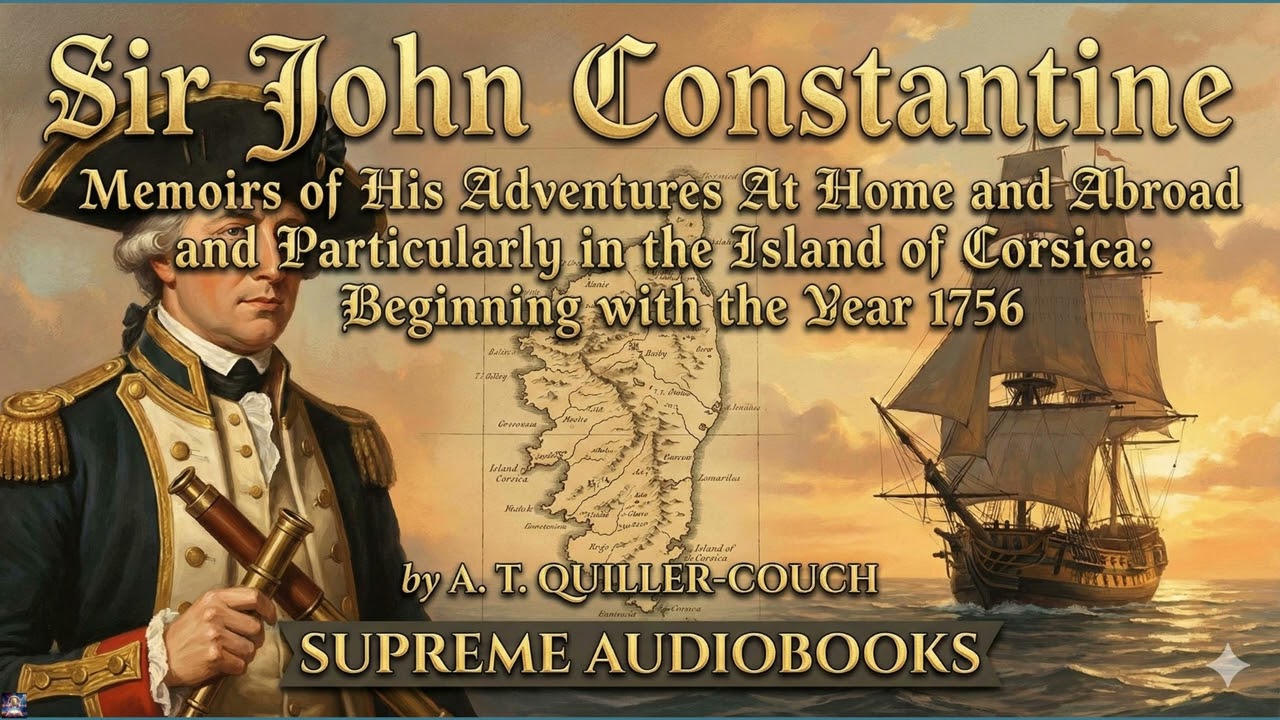
Sir John Constantine Memoirs of His Adventures At Home and Abroad and Particularly